Quick Answer (TL;DR)
October 9 is Hangul Day, a public holiday marking the 1446 publication of the Hunminjeongeum, the document that introduced the Korean alphabet. Korea treats that date as the moment ordinary people were finally given a way to read and write. Very few countries give a writing system a national holiday of its own, and Korea is one of them. It is also a country that once took the holiday off its own calendar for twenty-two years.
This article is part of my series on Hangul and the Korean language.
Why This Question Comes Up
If you visit Korea in early October, you hit two red days on the calendar within a single week. October 3 is National Foundation Day. October 9 is Hangul Day, and banks, post offices, government offices and schools all close for it.
This is usually where visitors get stuck. Plenty of countries celebrate an independence, a founder, a war. Very few shut the office for a set of letters.
The explanation you will find almost everywhere online is that Hangul is scientific, logical, and learnable in an afternoon. All of that is true. None of it explains why a country would hand out a paid holiday for it. Nobody gets a day off for the Latin alphabet.
The real answer is not about the letters at all. It is about who could use them.
The Cultural Context
What did Koreans write with before Hangul?
Korean and Chinese are unrelated languages. They sound nothing alike, and their grammar works in different directions. But for well over a thousand years Korea had no script of its own, so Koreans wrote using borrowed Chinese characters. Scribes built systems, called idu and hyangchal, that bent those characters into recording Korean words and word endings. It worked, awkwardly. It also still required learning thousands of Chinese characters before you could write a single Korean sentence.
That was the barrier. Mastering it took years of study, which in practice meant writing belonged to aristocratic men with the time and the money to train. Everyone else lived inside a spoken language they had no way to set down. A farmer with a grievance could not write his own petition. A mother could not read what a letter from her son said.
King Sejong created a new script in 1443 and promulgated it in 1446. The preface he wrote is startlingly plain about his reasoning: the speech of this country differs from China’s, so many ordinary people have things they wish to say and no way to set them down. He made twenty-eight letters so that anyone could learn them easily and use them comfortably every day.
Why did Korea’s own scholars resist it?
The court did not receive this as a gift. Senior Confucian scholars submitted a formal protest in 1444. For centuries afterward the elite called the script eonmun, the vulgar writing, and kept Classical Chinese as the language of real power: law, government, examinations, scholarship.
So Hangul spent most of its first four hundred years as a second-class script. It survived wherever power was not looking: women’s letters, popular fiction, household records. Buddhist texts were the exception, because the court itself used the new script to publish them. It was useful, and it was beneath notice, which turned out to be a good way to stay alive.
Why did Korea cancel its own alphabet holiday?
The rest of the story explains the holiday. It began in 1926, on the 480th anniversary of the promulgation, when a language research society — the group now known as the Korean Language Society — held the first commemoration and called it Gagyanal, after the first syllables children learn when they start reading. The name changed to Hangul Day in 1928. All of this happened under Japanese colonial rule, while the colonial government pushed Korean out of public life, so celebrating the alphabet was not a cultural festival. It was a political statement about whether Korea would continue to exist.
It became a public holiday in 1949. Then, in November 1990, the cabinet removed it, taking up an argument from business groups that the country had too many holidays and that lost working days were holding back economic growth. From 1991 Hangul Day was a commemoration with no day off. It stayed that way for twenty-two years. Public pressure eventually turned it around: the cabinet reversed the decision in December 2012, and Koreans got the day back in 2013.
That is the part I find most honest about this holiday. It is not a story of uninterrupted national pride. Korea gave the alphabet a day, took it back for productivity, and twenty-two years later decided that had been a mistake.
Where did the four lost letters go?
One more thing changed along the way. Sejong made twenty-eight letters. Korean today uses twenty-four. Four of them fell out of use over the centuries, which means the alphabet you can supposedly learn in an afternoon is a slightly shorter version of the one published in 1446.
Except that one of them never really left. Millions of Koreans type on a keypad called Cheonjiin, which builds every vowel out of just three marks: a dot for heaven, a horizontal line for earth, a vertical line for a standing person. Samsung made it the default on its phones, and iPhone users can switch to it as well. Those three marks are what Sejong used to construct his vowels, and the dot is the shape of a letter that left the official alphabet centuries ago. It is not among the twenty-four letters. It is on millions of phones. The sound survived too. Jeju Island still speaks it, and still writes it with the dot.
My Personal Experience
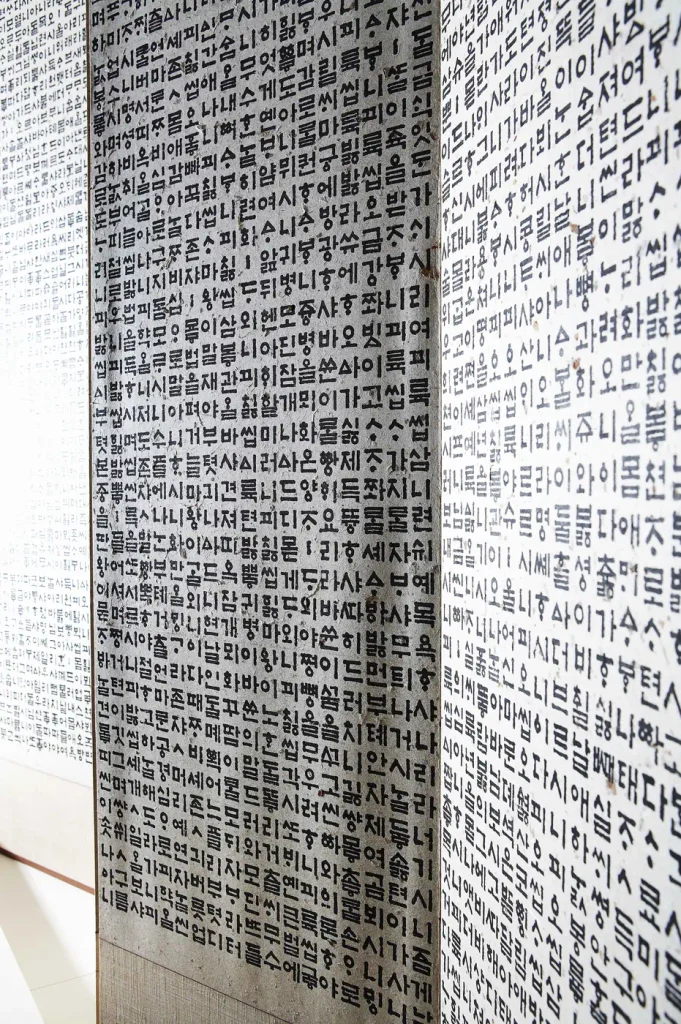
I learned the Hunminjeongeum preface in a Korean literature class in school, and I could not read it.
Not the modern translation. The original, in fifteenth-century Korean, which we had to memorize: Narat malssami Dyunggwige dara — the speech of our country differs from that of China. It is written in a form of Korean that no longer exists. There are tone marks beside the syllables. There are letters that have since fallen out of use entirely. Our teacher drilled us through the pronunciation, and I remember the specific embarrassment of being a native Korean speaker, staring at a Korean sentence, and having no idea what sound to make.
At the time the irony felt cruel. This was the alphabet a wise man could supposedly learn in a morning and a fool in ten days. I had a textbook, a teacher, and a lifetime of speaking Korean, and I was failing at it.
It took me years to understand that I had the difficulty backwards. The sentence was hard because six hundred years had passed and the language underneath it had moved. The script had not. Those letters still work. I could sound out a 1446 document badly, but I could sound it out, which is more than most people can do with their own language at that distance.
School had taught me the opposite of the lesson, without anyone intending it. It handed me Hangul as a hard text to survive an exam on. Sejong built it so that it would not be one.
Practical Tips
- October 9 is a full public holiday. Banks, post offices and government offices close. Shops, restaurants, cafés and public transport run normally, so it is a good day to be a visitor and a bad day to need a government document.
- Early October is holiday-dense. October 3 (National Foundation Day) and October 9 fall in the same week, and Koreans often stitch them together with annual leave. Book accommodation and intercity trains early.
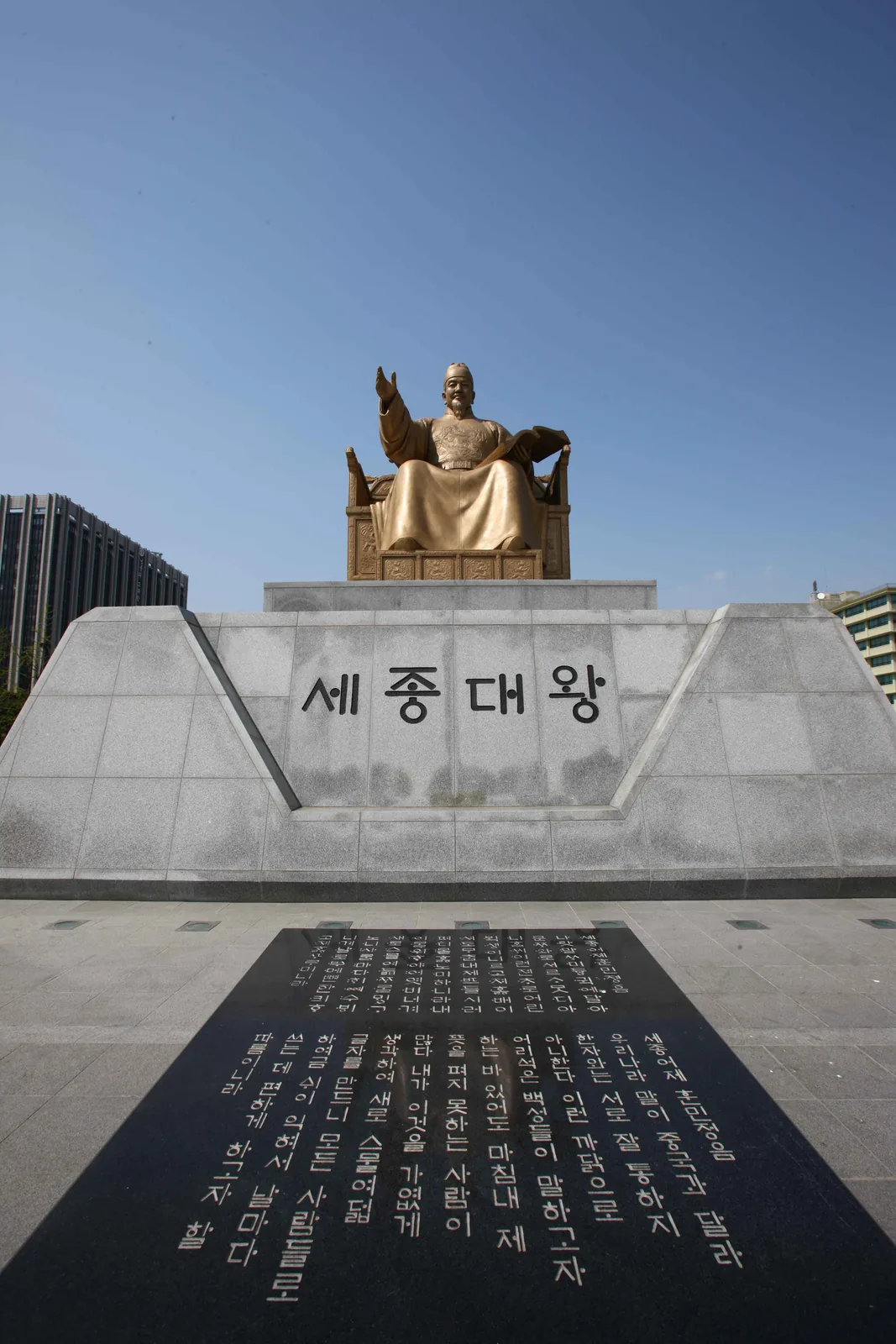
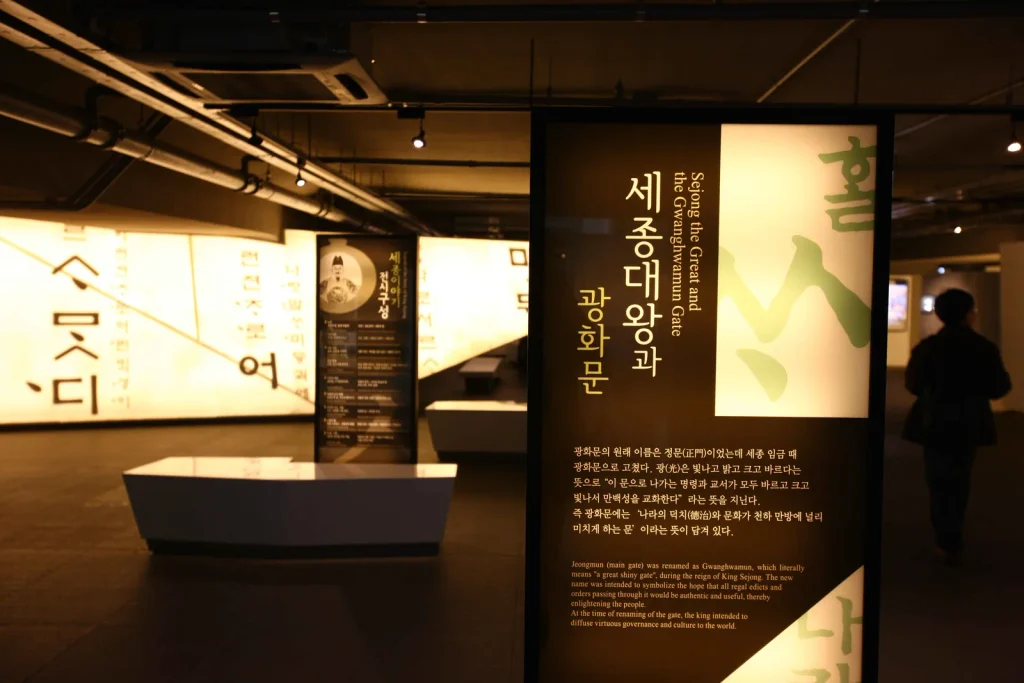
- Gwanghwamun Square in central Seoul has the King Sejong statue, with an exhibition space underneath it. The National Hangeul Museum in Yongsan has been closed since 2024, first for expansion work and then for repairs after a fire on the site. It is not expected to reopen until 2028, so do not build a trip around it.
- Do not expect greetings. There is no “Happy Hangul Day” exchanged between people, no special food, no gift. For most Koreans it is a day off with a good reason behind it, and that is the extent of it. If you want to observe the day meaningfully, learning to write your own name in Hangul is closer to the spirit of it than anything else you could do.
Frequently Asked Questions
Is Hangul Day a public holiday in Korea? Yes. October 9 is a public holiday in South Korea. Government offices, banks and schools close, while shops, restaurants and public transport run as normal.
Do Koreans actually celebrate Hangul Day? Not in any visible way. There is no greeting, no special food, no gift-giving. For most people it is a day off with a good reason attached to it. Schools and cultural institutions hold events, and that is about the extent of it.
How many letters did Hangul originally have? Twenty-eight, as published in 1446. The modern alphabet has twenty-four. The other four fell out of use over the following centuries.
Why was Hangul Day not a holiday for twenty-two years? The cabinet removed it in 1990, effective from 1991, after business groups argued that Korea had too many public holidays and that the lost working days were slowing economic growth. Koreans got it back in 2013.
Related Questions You Might Have
- Why does Hangul have 24 letters when King Sejong made 28?
- Why Do Koreans Eat Samgyeopsal with Soju?
- What Is a Norigae? The Korean Lucky Charm You’ve Seen in K-Dramas
I write about Korean culture, food, and history from the inside — the things that are obvious to Koreans and invisible to everyone else.
Shared by Oldtree of Mindgrove
Stories of Korea © 2026
Leave a Reply