
Quick Answer (TL;DR)
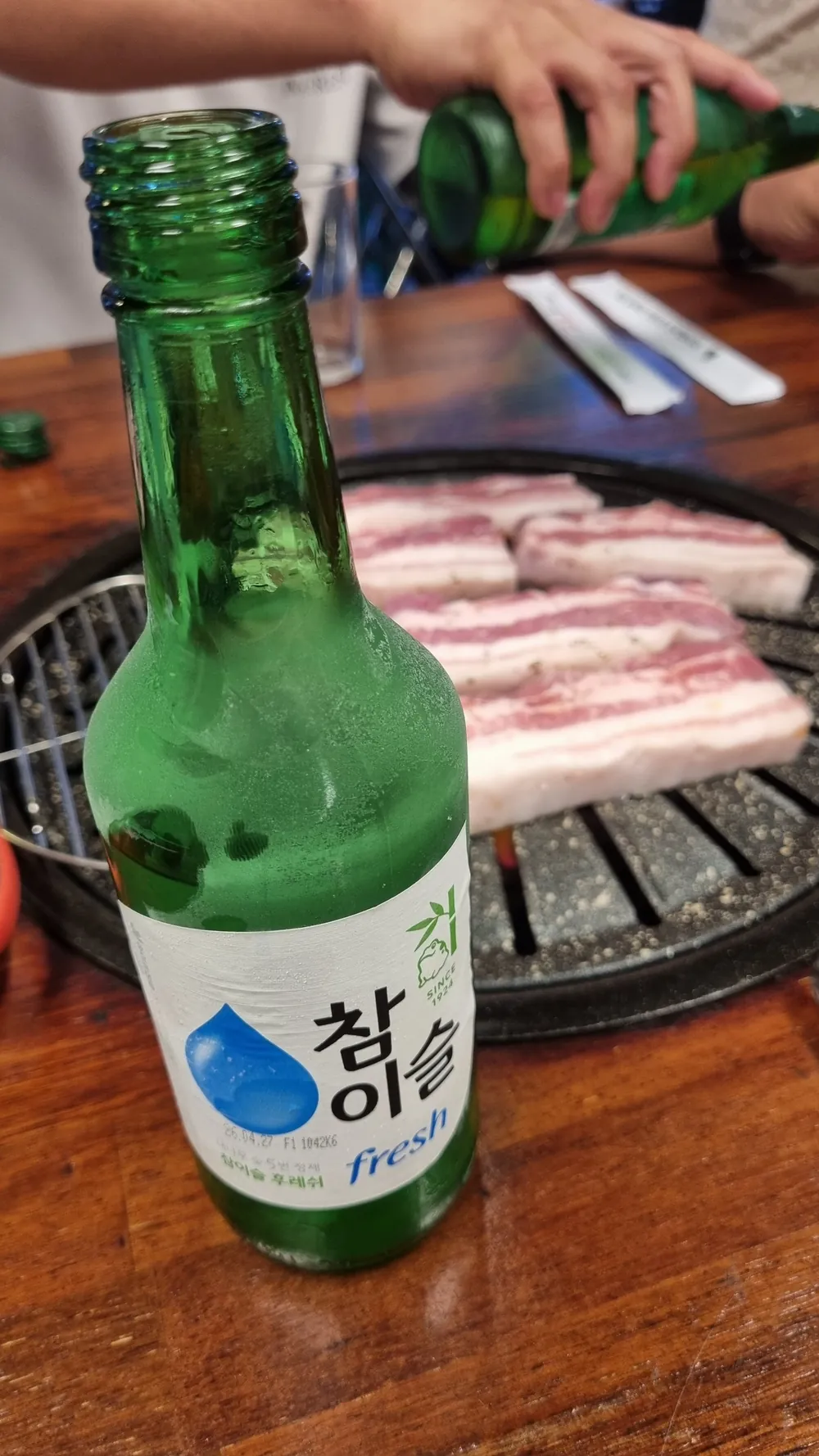
Koreans pair samgyeopsal with soju because the two balance each other perfectly: the rich fat of grilled pork belly softens soju’s sharp alcohol bite, while the clean, neutral spirit cuts through the grease. But the deeper reason is historical. Both became cheap working-class staples in the 1960s and 70s, and they grew into Korea’s national comfort pairing together.
Why This Question Comes Up
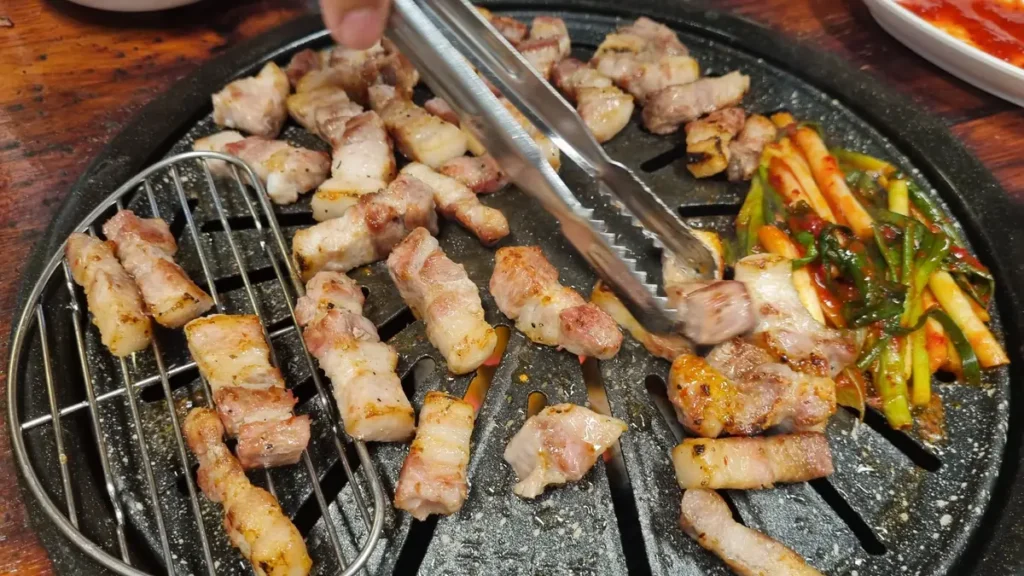
If you watch Korean dramas, you have seen this scene a hundred times. Characters sit around a tabletop grill, pork belly sizzling, green bottles multiplying. Nobody orders wine. Nobody orders whiskey. It is always soju.
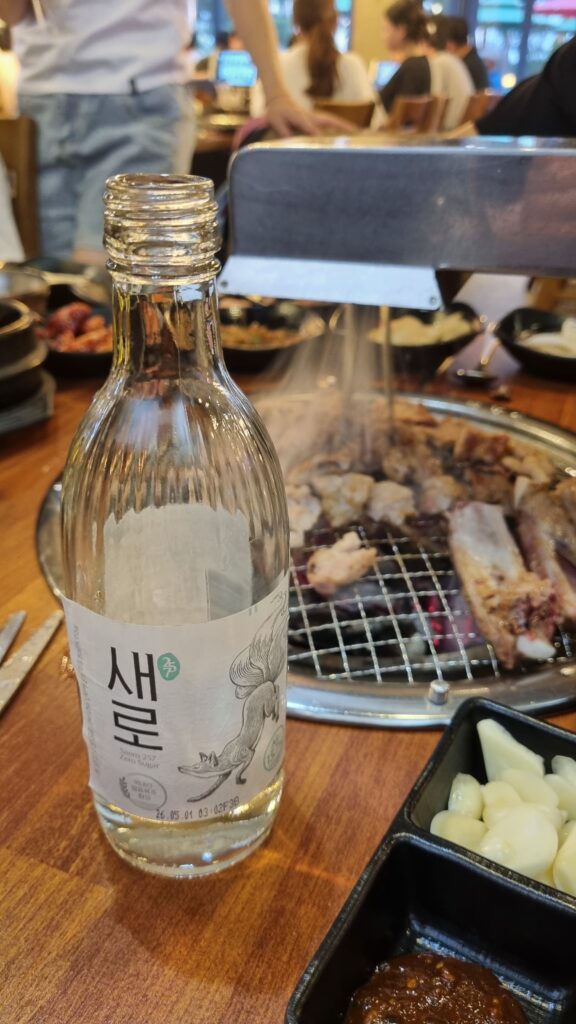
Visitors to Korea notice the same thing. Walk past any Korean BBQ restaurant on a Friday night, and almost every table shows the same setup: samgyeopsal on the grill, soju glasses in hand. The pairing is so fixed that Koreans have a slang word for it — samsso (삼쏘), short for samgyeopsal and soju.
This raises an obvious question for outsiders. Korea makes beer, makgeolli, and many other drinks. Pork goes well with plenty of them. So why this one combination, every time?
The Cultural Context
The short answer is that samgyeopsal and soju grew up together — both as food for ordinary working people.
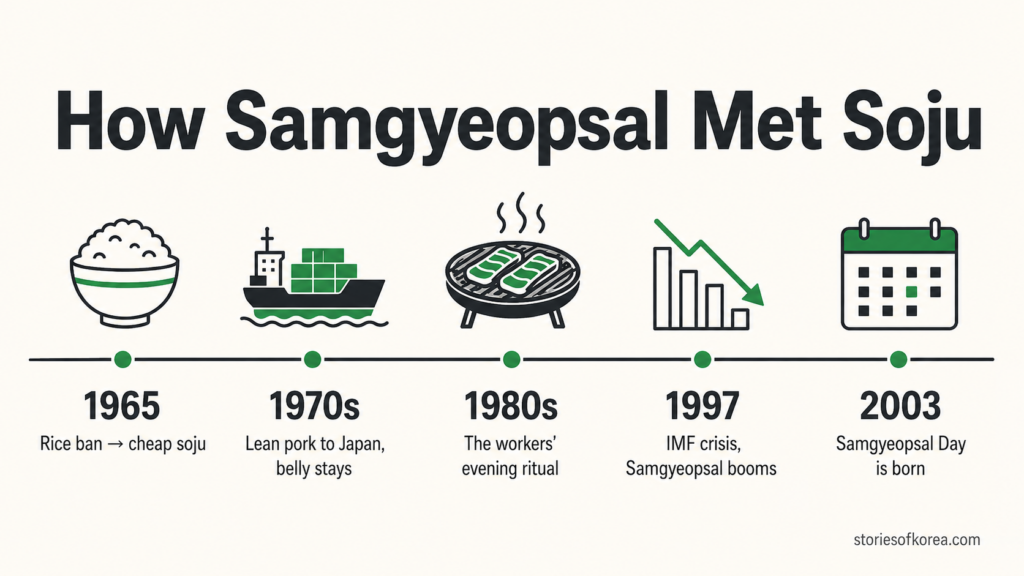
Soju became the people’s drink by law. In 1965, the Korean government banned the use of rice in distilling because the country faced chronic grain shortages. Distillers switched to diluting cheap industrial ethanol with water and sweeteners. The result was the green-bottle soju we know today: mass-produced, nearly flavorless, and astonishingly cheap. I explain this full story in my article on [why soju is so cheap in Korea]. For this article, one fact matters most: by the 1970s, soju was the only alcohol that laborers could afford every night.
Samgyeopsal became the people’s meat by accident. Pork belly was not always Korea’s favorite cut. The most cited explanation points to the export economy of the 1970s. Korea began exporting pork to Japan, and Japanese buyers wanted lean cuts like loin and ham. The fatty belly stayed behind in the domestic market, which kept its price low. Cheap, fatty, and delicious when grilled — pork belly became the meat that ordinary families and workers could actually put on a fire.
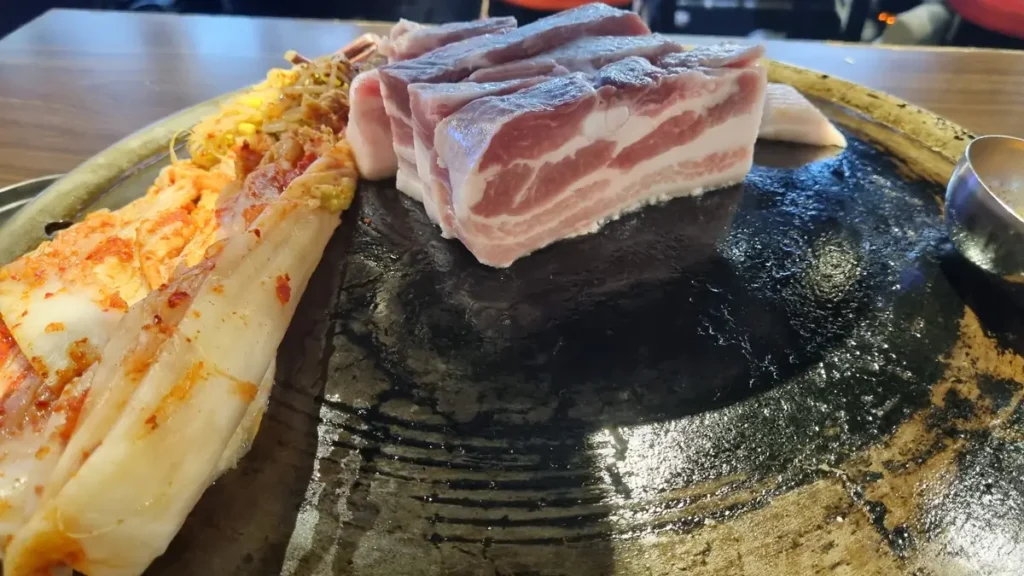
A folk belief sealed the bond. Korean miners, construction workers, and factory laborers long believed that fatty pork “washes the dust” from the throat after a day of hard work. Modern science does not support this idea, but the belief shaped real behavior. After a shift, coworkers would gather around a grill, order pork belly, and pour soju. The meal was not fine dining. It was recovery, solidarity, and reward — all for a few thousand won.
By the 1980s, the pairing had a fixed social meaning: this is how working Korea ends its day. The 1997 financial crisis reinforced it further, as cheap samgyeopsal restaurants boomed while expensive beef became a luxury. There is even a national Samgyeopsal Day on March 3, created in 2003 to boost pork consumption.
The flavor logic, meanwhile, is real. Soju is high in alcohol but neutral in taste. It does not compete with garlic, ssamjang, or kimchi on the table — and if you want to understand that ssamjang on your wrap, my [Korean fermented sauces guide] covers it. Each shot of soju resets your palate, and each bite of fatty pork smooths the next shot. Koreans describe this as a cycle: the pork calls for the soju, and the soju calls for the pork.
My Personal Experience
I still remember the first time I understood the pairing rather than just eating it.
It was a weeknight company dinner years ago, the kind Koreans call hoesik. We sat at a low table, charcoal already glowing. Nobody looked at a drink menu. The most junior employee simply called out, “Samgyeopsal for five, and two bottles of soju.” That was the entire order. The decision had been made decades before any of us were born.
What struck me was the rhythm. The first pieces of pork came off the grill, and only then did the glasses go up. First bite, first shot. The fat coated my mouth, and the soju — which tastes harsh on its own — suddenly went down clean and almost sweet. Around the table, shoulders dropped. Conversation loosened. The senior manager, stiff all day at the office, started telling stories.
I realized then that the pairing is not really about taste. It is a small ritual that turns coworkers into companions for two hours. The grill gives everyone something to do with their hands. The shared bottle gives everyone a reason to look after each other’s glass. The cheap price means nobody owes anybody anything afterward. Samgyeopsal and soju is less a menu choice than a social technology — one that Korea perfected at smoke-filled tables over fifty years.
Practical Tips
If you want to try the pairing the way locals do:
- Order the food first, drink second. In Korea, soju follows the meal. Say “samgyeopsal for two” before mentioning drinks.
- Wait for the meat. The first toast usually happens when the first batch of pork is ready, not before.
- Pour for others, never for yourself. Refill your neighbor’s glass when it is empty. Someone will return the favor.
- Wrap it. Put grilled pork, garlic, and a dab of ssamjang in a lettuce leaf. Eat it in one bite, then sip.
- Pace yourself. Soju is around 16% alcohol — stronger than wine and easy to underestimate when the food is this good.
Related Questions You Might Have
- [Why is soju so cheap in Korea?] — The 1965 law that created the green bottle.
- [What is ssamjang? My guide to Korean fermented sauces] — The paste that ties the whole wrap together.
- [Why was home brewing banned in Korea?] — Coming soon in this series on Korean alcohol culture.
Shared by Oldtree of Mindgrove
Stories of Korea © 2026