This article is part of my series on Korean Traditional Crafts and Symbols.
Quick Answer (TL;DR)
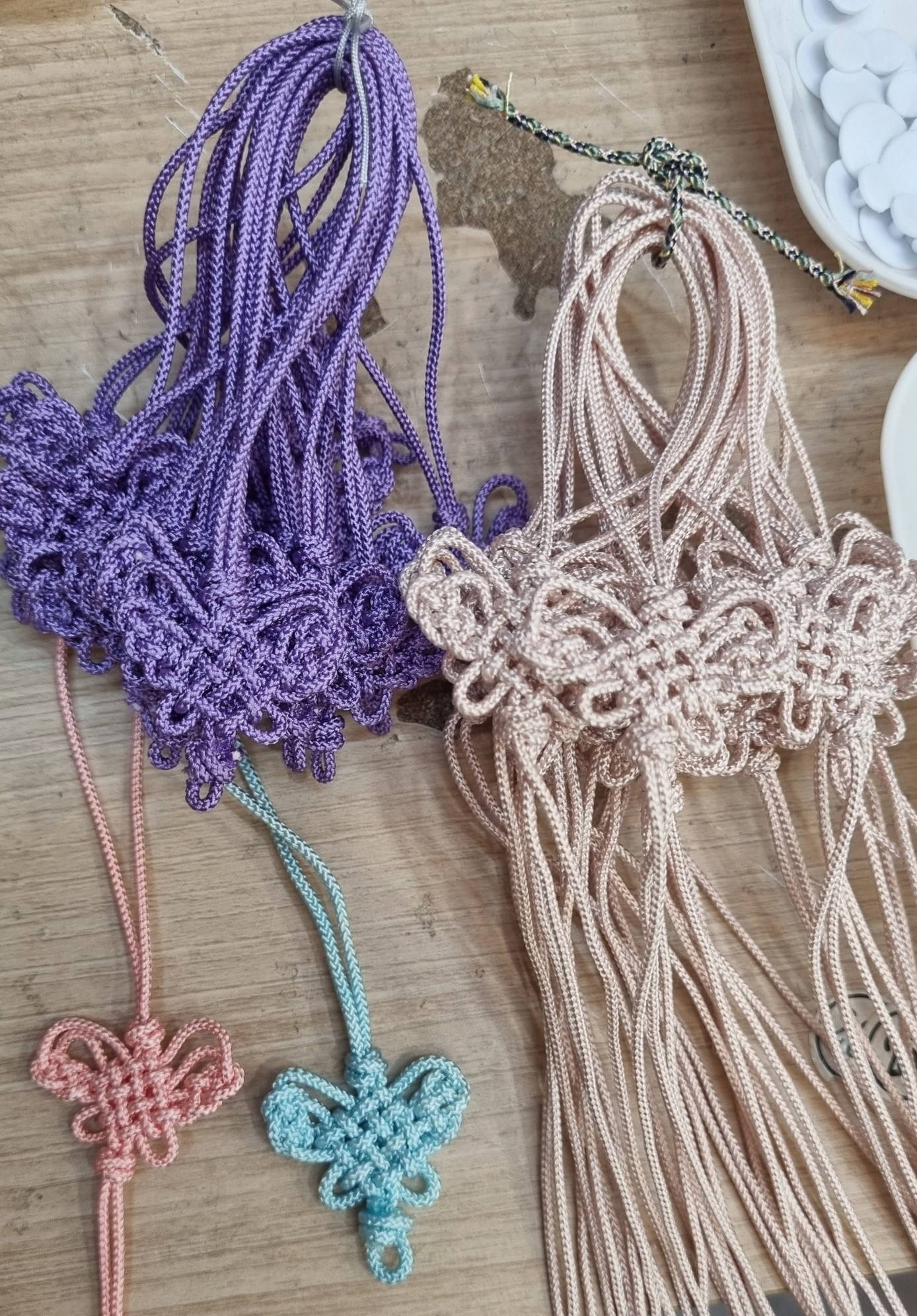
A norigae (노리개) is a traditional Korean decorative pendant worn on hanbok — the pendant you’ve seen swaying from the tie of a woman’s jacket in every Korean period drama. Korean dictionaries list a second meaning for the word: something you keep around for enjoyment. That tells you how Koreans saw these objects — not solemn heirlooms, but things you liked having. Each one is made of hand-tied silk knots, an ornament, and a tassel, and each carried a specific wish: wealth, children, long life, or protection. Women of every class wore them, from market vendors to queens. In short, it was Korea’s original good luck charm — and it’s suddenly everywhere again, on bags, keychains, and K-pop stages.
Why This Question Comes Up
You’ve seen it and had no idea what you were looking at.
A woman in a silk hanbok sits very still in a sageuk. Something small hangs from the tie of her jacket, catching the light when she moves. It’s clearly not just decoration — it’s too deliberate for that. But the subtitle says nothing, and the scene moves on.
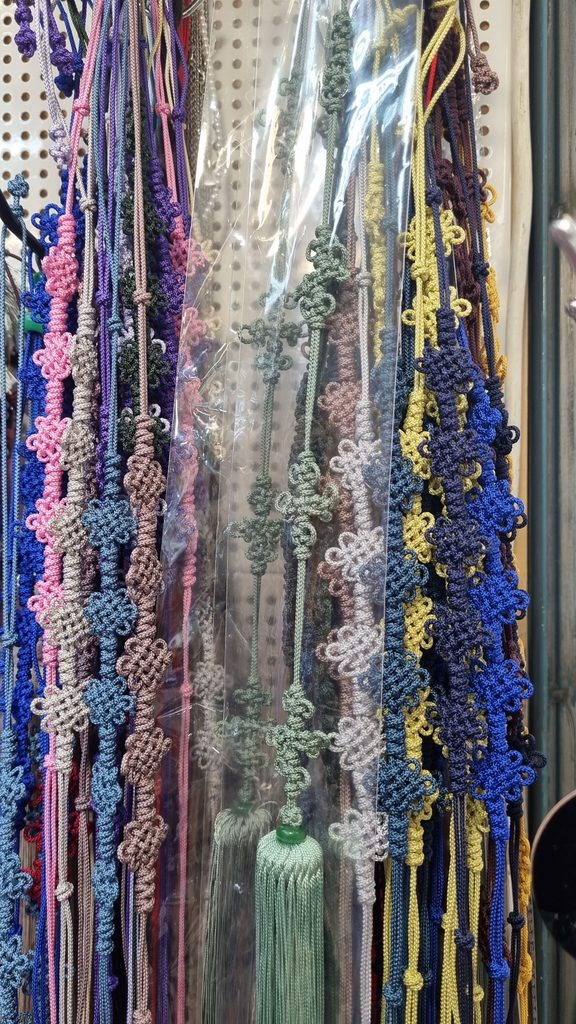
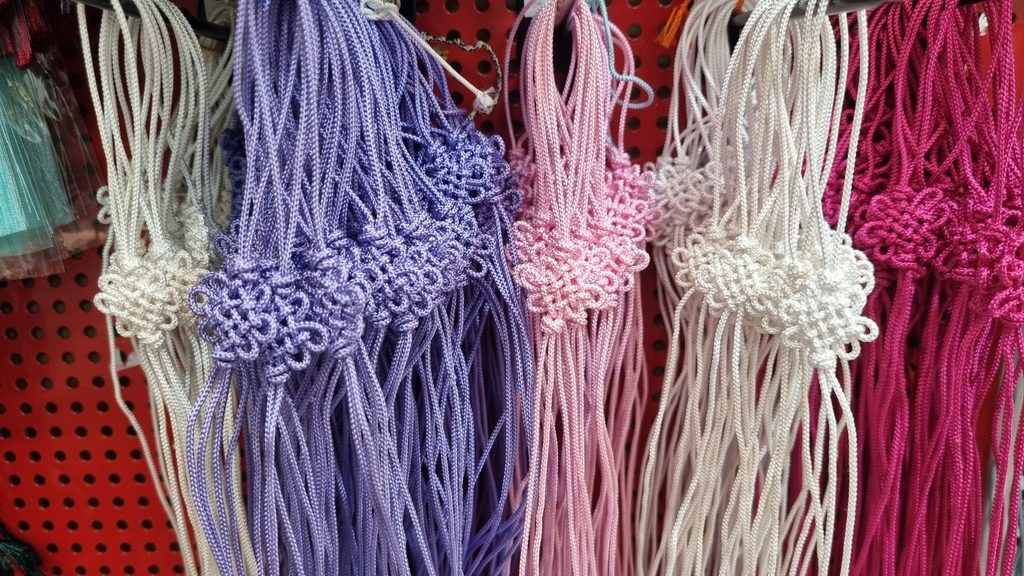
Or you’ve seen it off-screen. Walk into any traditional craft market in Seoul and you’ll find whole walls of them: silk cords in every color, each ending in a knot so tight and symmetrical it looks machine-made. It isn’t. Nobody explains what they are, because in Korea they’ve simply always been there.
If you follow K-pop, you’ve probably seen one recently without registering it. In March 2026, several BTS members wore norigae-style accessories over leather jackets and streetwear on a New York stage. The pendant that once hung from a Joseon queen’s hanbok is now part of a global conversation about Korean style.
The Cultural Context
Why Korean Women Wore Norigae Instead of Necklaces
This is the question that unlocks everything, and almost nobody asks it.
Necklaces and earrings were common in earlier Korean periods. Then during the Joseon Dynasty they largely disappeared. Confucian values discouraged ostentation, and there was a deeper belief at work: the body — hair, skin, everything — was a gift from your parents, and altering it was a failure of filial duty. Piercing your ears counted as altering it.
So Korean women did something clever. They moved their ornaments off the body and onto the clothing. Instead of a necklace at the throat, a pendant at the jacket tie. The norigae was the result, and over five centuries it became the most elaborate accessory Korean women had.
Its position moved too. The norigae traces back to the yopae (요패) — ornaments Koreans hung from a waist belt as far back as the Silla period. As the jeogori jacket grew shorter through the late Goryeo and early Joseon periods, that belt disappeared underneath it, so the ornaments migrated upward to the jacket tie. That’s where you see them in dramas today.
How to Read a Norigae
Every part of a norigae means something. Once you know the vocabulary, you can read one the way Koreans once did.
The shape is the wish. A pomegranate means children. A peach or turtle means long life. A butterfly means marital happiness. Some norigae take the form of a dokkaebi — the Korean goblin — to scare off bad spirits. Nothing was chosen at random.
The material was the status. Royal and noble women wore gold, jade, coral, and amber. Commoners wore embroidered silk or cloth. The design might be identical; the material told you everything about who was wearing it.
The number was the occasion. One pendant (danjak) was everyday wear. Three worn together (samjak) meant ceremony — a wedding, a formal court event.
The season mattered. Cool materials in summer, heavier ones in winter. A woman didn’t own one norigae. She owned a rotation.
It Was Also a Handbag
Here’s the detail that surprises everyone: the norigae wasn’t only decorative.
Hanbok has no pockets. So whatever a woman needed to carry, she carried on her jacket tie. Some norigae held a small ornamental knife called a jangdo. Others held a needle case, or a scent pouch filled with musk. Perfume bottles, tiny silver implements — all of it hung as norigae.
The beauty was real. So was the practicality underneath it.
Why the Prices Vary So Much
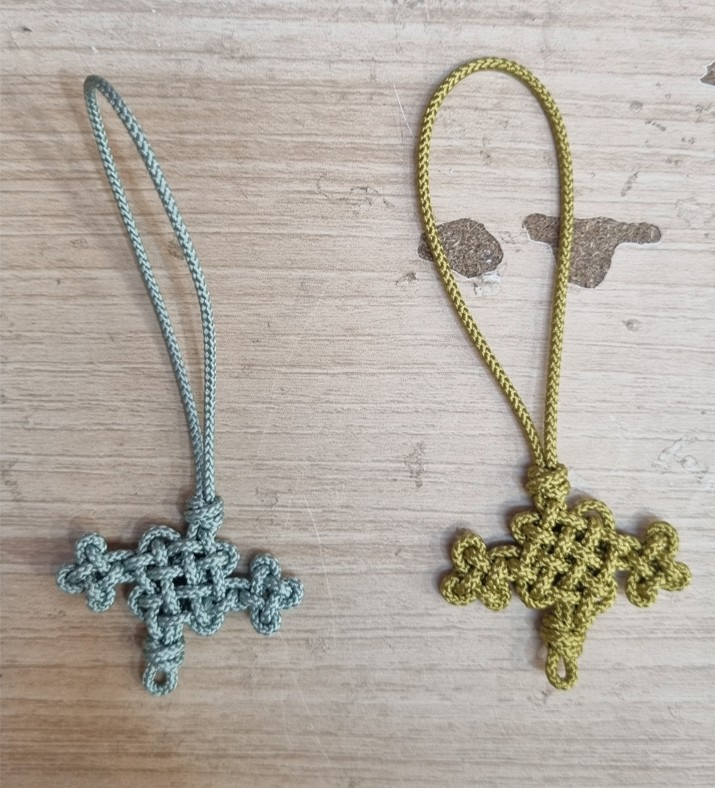
Every knot in a norigae is tied by hand. There is no machine version and no shortcut.
The work is genuinely hard on the body — artisans describe joint pain after finishing a single elaborate piece — because a proper maedeup knot has to be pulled tight enough to hold its own three-dimensional shape with no internal support. Add traditional stones like jade or amber and a serious norigae runs into the millions of won.
This is worth knowing before you wonder why one costs ₩15,000 and another ₩3,000,000. You’re not comparing two versions of the same object. You’re comparing a keepsake to dozens of hours of hand labor.
My Personal Experience
The first time I really understood what a norigae was, I wasn’t in a museum. I was watching a period drama — palace intrigue, court politics, a queen who always seemed to be holding something back.
She was sitting perfectly still. And the norigae at her chest was swaying very slightly, the tassel catching the light.
And I thought: that small moving thing is the only part of her that’s allowed to say anything.
That’s when it clicked. In a society that had narrowed how women could present themselves, the norigae became the one object where everything was permitted — color, material, symbol, wish. Every woman wearing one was communicating something about her status, her hopes, her family, where she was in life. The queen’s jade norigae and a commoner’s embroidered silk one were speaking the same language in very different dialects.
When I hold one now, I don’t think of it as a craft object. I think of it as a sentence someone chose very carefully, in a world that didn’t offer many other ways to speak.
Practical Tips
How to Read One in a Museum or a Market
- Count the pendants. One means everyday wear. Three means ceremony or high status.
- Look at the ornament shape first, not the color. Pomegranate = children. Peach or turtle = long life. Butterfly = marital happiness.
- Check the knot. The tighter and more symmetrical, the higher the craftsmanship. A well-tied maedeup looks identical from the front and back, and from left and right.
- Check the tassel. By traditional standards, a norigae without one is incomplete.
Choosing One as a Gift
- Think about the wish, not the look. The shape carries the message. Pick the ornament that says what you mean.
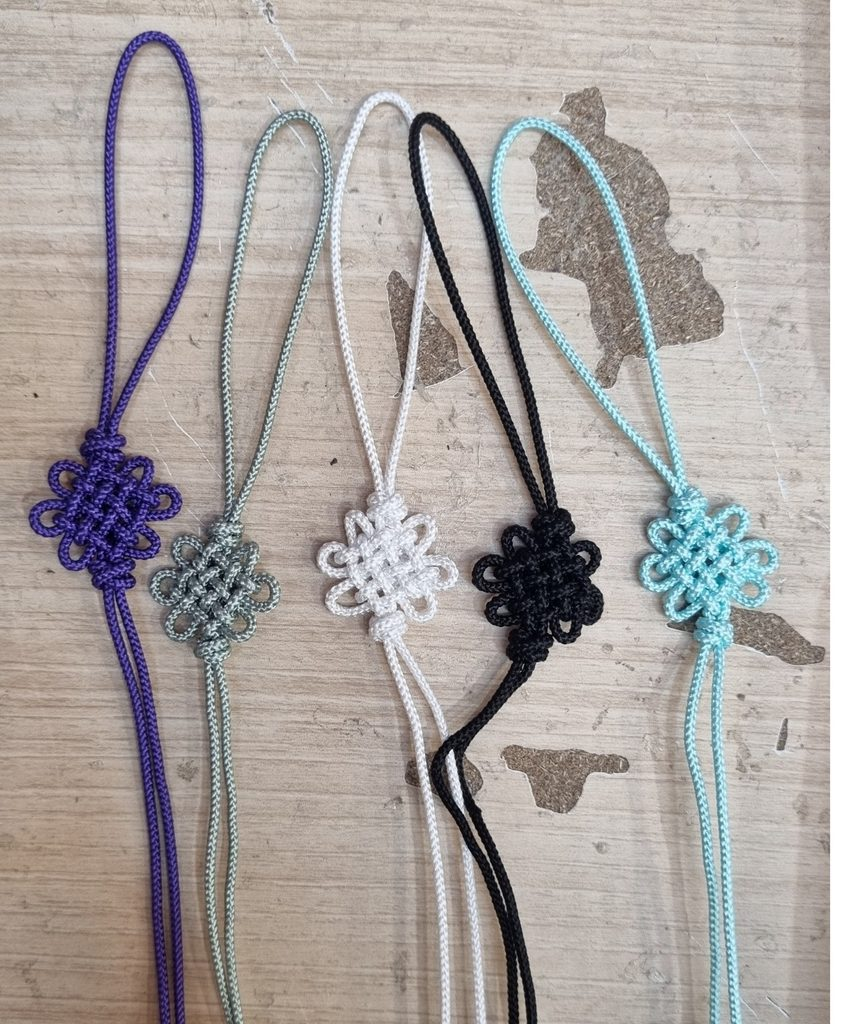
- Color has meaning too. Red suggests luck and energy; blue, harmony; purple, wisdom; white, purity.
- It doesn’t need a hanbok. A norigae-style charm works on a bag, a keychain, a car mirror, or hanging at home. The tradition travels.
- It was always a gift object. Korean women traditionally received norigae from their own family and their in-laws, then passed them down to their children. Giving one at a milestone — a wedding, a move, a farewell — follows the tradition exactly.
Related Questions You Might Have
- 👉 What Is a Korean Knot Bracelet? History and Meaning of Maedeup
- 👉 What Did Korean Women Put in Their Hair? From Daenggi to the Modern Maedeup Hair Tie
Want to Carry One?
The norigae-style tassel charms from JOY-HAN are handcrafted in Korea using traditional maedeup techniques — the same craft Joseon women wore as a quiet language of luck, protection, and identity for five hundred years.
👉 Shop JOY-HAN Korean Tassel Charm on Amazon →
Shared by Oldtree of Mindgrove
Stories of Korea © 2026