Quick Answer (TL;DR)
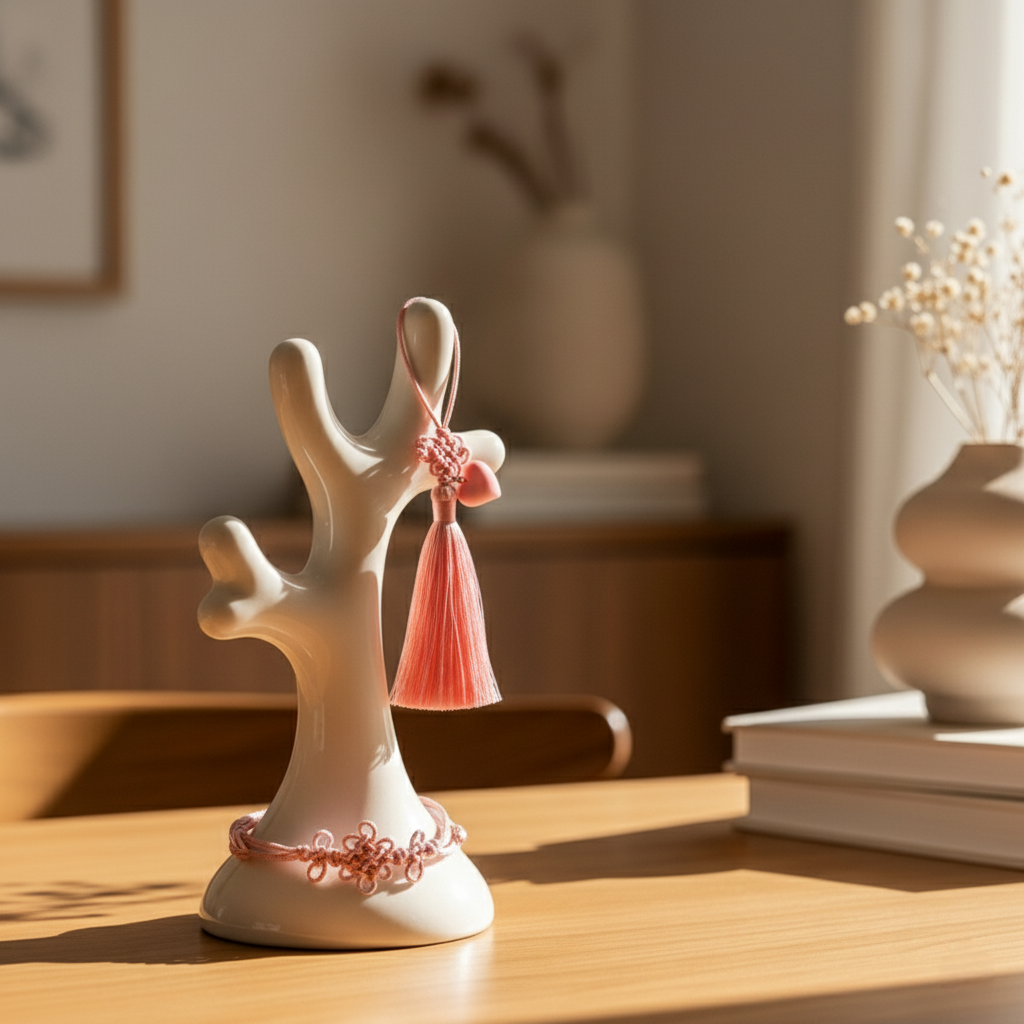
A Korean knot bracelet is a modern form of maedeup (매듭) — the traditional Korean art of decorative knotting that dates back over 1,500 years. Each knot is tied from a single cord into a precisely symmetrical shape, and every design carries a specific meaning: luck, protection, love, or longevity. The Korean government designates this craft as National Intangible Cultural Heritage No. 22. In fact, it’s not a trend. It’s one of Korea’s oldest living art forms, and it’s having a very visible moment right now.
Why This Question Comes Up
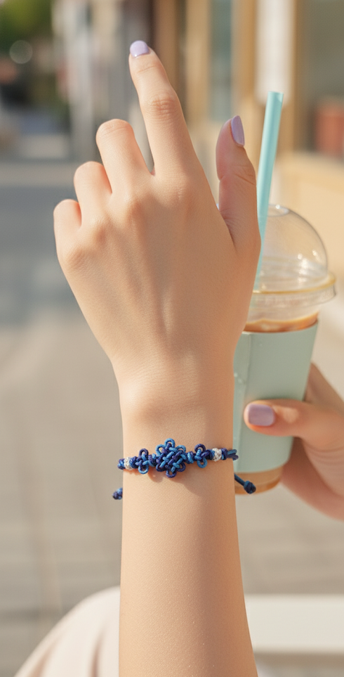
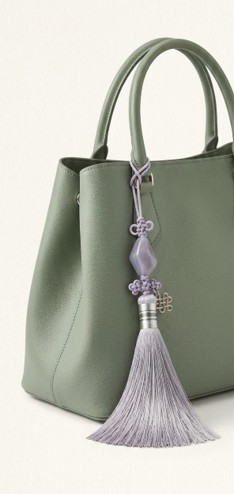
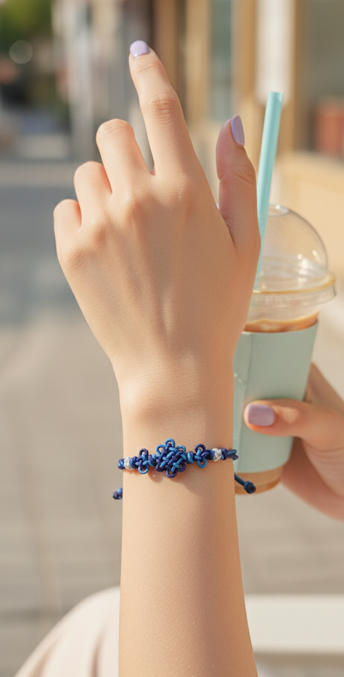
You’ve probably seen it without knowing what it was. For instance, a tightly looped knot at the center of a bracelet, symmetrical and almost impossibly neat. Or a silky tassel hanging from a bag, with a small decorative knot nestled just above the fringe. If you follow K-pop, you may have noticed it on stage — in March 2026, several BTS members wore traditional Korean knot accessories over Western-style outfits during their New York concert, pairing tassel belts, norigae pendants, and maedeup ornaments with leather jackets and streetwear. (중앙일보, 2026)
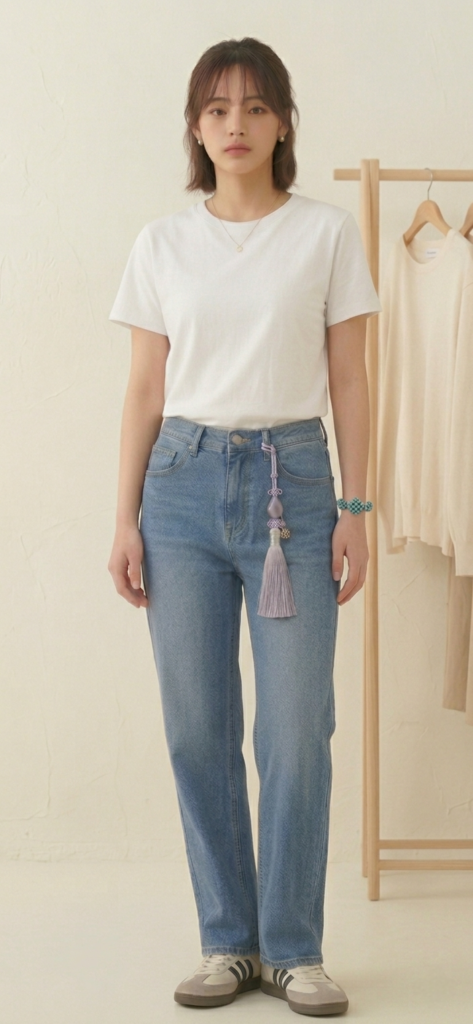
In short, that image — ancient Korean knotwork on a global pop stage — captures exactly why people are searching for this. The craft looks modern, but it isn’t. And once you know what those knots mean, you can’t unsee it.
The Cultural Context
Maedeup refers to the traditional Korean craft of making knots and tassels. It is a dexterous process requiring multiple steps, including dyeing silk thread, twisting strands of thread together, and plaiting them into a cord. The ends of the plaited cord are intertwined and tightened to create a knot with a desired shape.
People first used this craft during the Three Kingdoms period (37 BC – AD 668), when they tied knots around the waist to hold hunting and fishing tools. Over time, the craft evolved into a form of decorative art that people considered a talisman of peace and happiness. By the Joseon Dynasty (1392–1910), maedeup had emerged as a symbol of high social status, and the royal court employed artisans dedicated entirely to the craft. In 1968, the Korean government officially recognized the tradition by designating maedupjang as National Intangible Cultural Heritage No. 22.
Moreover, what makes Korean maedeup structurally unique among Asian knotting traditions is its geometry. Korean artisans tie knots extremely tight and three-dimensional — unlike Chinese knots, which are letter-shaped, or Japanese knots, which are looser. The maedeup is symmetrical in form, identical on the left and right as well as the front and back. That perfect bilateral symmetry is not just aesthetic — it reflects a philosophy of balance that runs through Korean craft traditions.
What the Knots Actually Mean
Furthermore, each knot design has a name and a meaning. The most common ones you’ll encounter in bracelets and charms:
The butterfly knot (나비매듭) is one of the most commonly seen knots in norigae. For example, it symbolizes love, harmony, and joy in marriage — its paired, symmetrical form reflecting the balance and togetherness of a couple.
The chrysanthemum knot (국화매듭) symbolizes noble spirit, dignity, and feminine beauty. The chrysanthemum has long been associated with the Korean royal court, and this knot reflects that connection. Additionally, it is one of the most technically demanding knots in the maedeup tradition.
The dongsimgyeol knot (동심결) — literally “two hearts bound as one” — people use as a symbol of love, loyalty, and luck, and they commonly include it in celebratory occasions.
The Norigae: Where the Tassel Charm Comes From
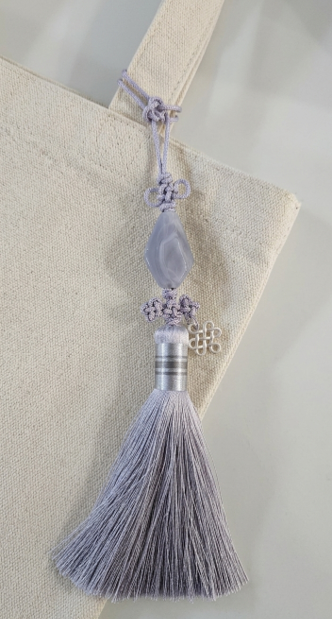
Meanwhile, the tassel charm you’ve seen worn as a bag charm or pendant has a name: norigae (노리개). Parents and in-laws usually passed it down to descendants as a family heirloom, and families hoped it would bring things like eternal youth, wealth, or protection depending on its shape.
The norigae is composed of three basic parts: the main ornament, elaborate maedeup knots, and the tassel (sul) at the lowest part. Traditionally, it hung from the strings of a woman’s hanbok. Today, however, it hangs from bags, jacket lapels, and keychains — the structure unchanged, only the context updated.
The Traditional Knot Bracelet: Jangmyeongru
Interestingly, the original Korean knot bracelet even has a traditional name: jangmyeongru (장명루), which translates roughly as “thread of long life.” People wove it from five colors of thread — red, blue, yellow, white, and black — and made it during the Dano festival (단오, the fifth day of the fifth lunar month) as a wish for health and longevity. Each color corresponds to one of the five cardinal directions and carries protective meaning. As a result, what began as a bracelet for children has evolved into a wearable expression of the same values: protection, wellbeing, and connection.
My Personal Experience
The first time I really examined a maedeup knot — held one in my hand and turned it over — I was looking at a small tassel charm a friend had given me. The knot at the top was dense and precise, a flower-like form made from a single continuous cord. I flipped it: front and back, identical. Left and right, identical. I kept asking myself how a single thread could do that.
In fact, that question is, I think, the right entry point into maedeup. It isn’t just a decorative object. It’s a structural argument — that one thread, handled with enough patience and precision, can hold itself together without a beginning or end you can find from the outside. Therefore, the knot is a symbol of continuity: between people, between generations, between a wish and the person it was made for.
When a BTS member wears a maedeup tassel belt over a leather jacket on a stage in New York, what travels across that image isn’t nostalgia. It’s the same logic the craft has always carried — I tied this. I meant something by it.
Practical Tips
Choosing a Korean knot bracelet:
- The knot shape matters. A chrysanthemum knot (국화매듭) is a classic choice for protection and luck. Similarly, a butterfly knot suits gifts for couples or weddings. A dongsimgyeol knot is ideal for close friendships or family.
- Look for bilateral symmetry — identical on the front and back, and on the left and right.
- Additionally, the tassel (sul) is not a decorative afterthought — it’s a structural part of the tradition. A piece without one is incomplete by traditional standards.
Giving it as a gift:
- Families often included norigae in a bride’s trousseau and passed it down as a family heirloom. That tradition of giving maedeup as a meaningful gift for milestone moments is very much alive.
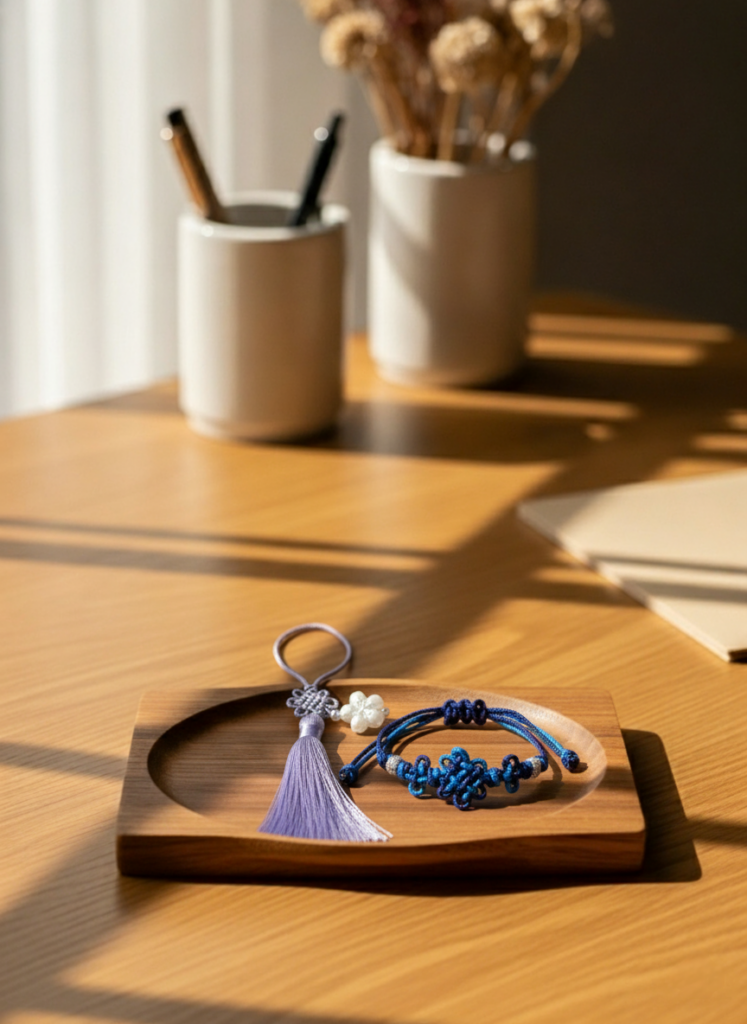
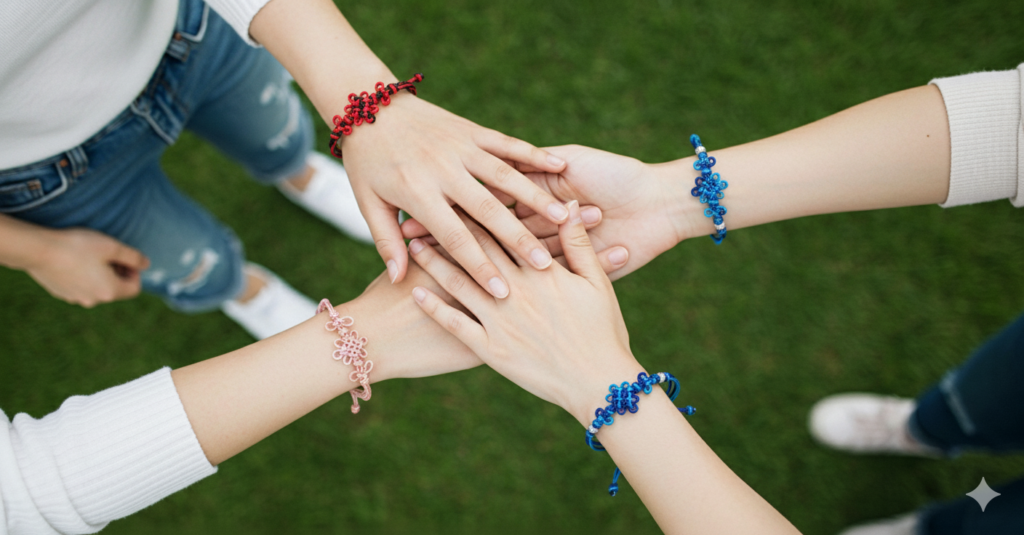
- Furthermore, color carries meaning: purple and blue suggest wisdom; red and pink suggest luck and love; white suggests purity. Choose deliberately.
- A tassel charm works as a bag charm, car ornament, or wall decoration — no hanbok required.
Related Questions You Might Have
- What Is a Norigae? The Korean Lucky Charm You’ve Seen in K-Dramas
- What Did Korean Women Put in Their Hair? From Daenggi to the Modern Maedeup Hair Tie
Want to Wear One?
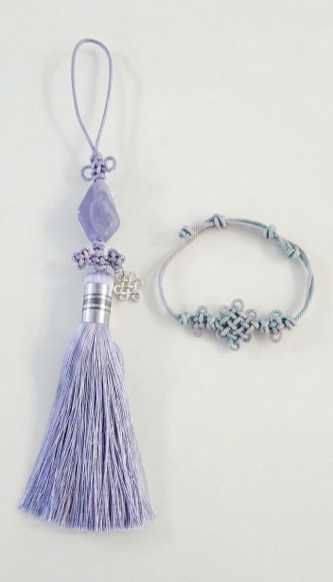
The maedeup bracelets and tassel charms from JOYHAN are handcrafted in Korea using traditional knotting techniques — the same craft that has carried wishes of luck, love, and protection for over a thousand years.
👉 Shop JOYHAN Korean Knot Jewelry on Amazon →
Shared by Oldtree of Mindgrove
Stories of Korea © 2026