Quick Answer (TL;DR)
Soju is cheap in Korea because of a combination of history and deliberate policy. After a rice shortage in 1965, the government banned using rice to make alcohol, and manufacturers switched to cheap industrial ethanol — drastically cutting production costs. Korea also taxes alcohol by product value, not volume, which keeps the base price low. And socially, soju is considered a working-class staple that no government has ever dared to price out of reach.
Why This Question Comes Up
The first time most visitors notice soju’s price, it stops them mid-aisle.
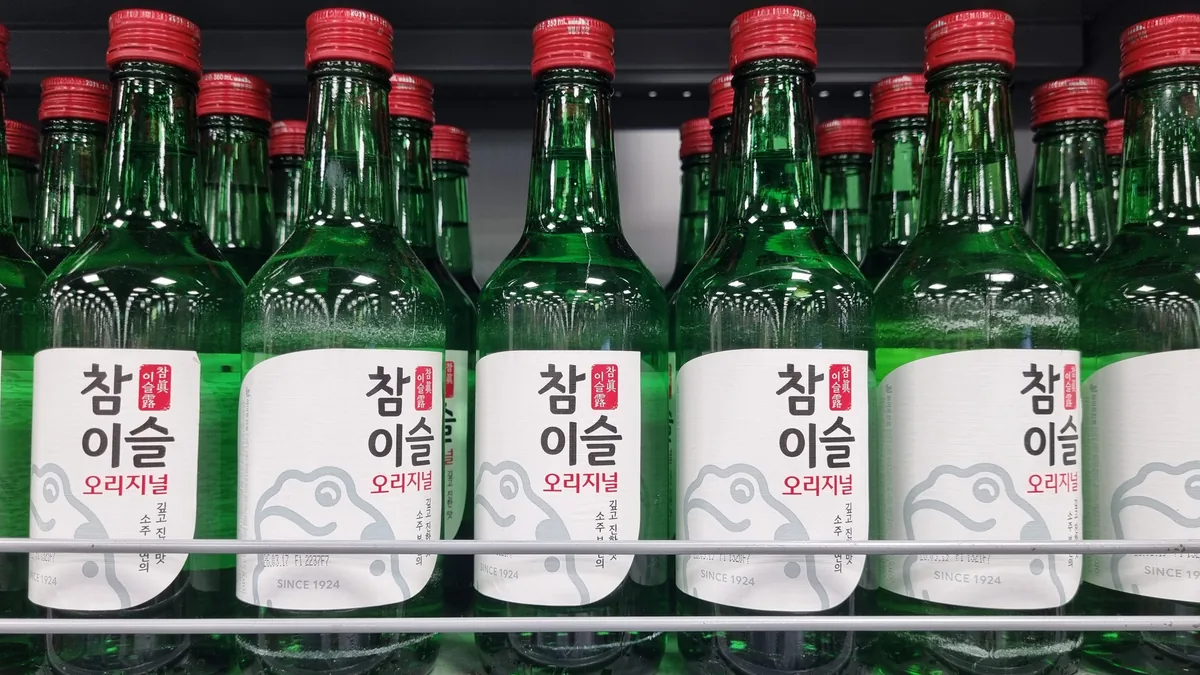
At a convenience store in Seoul, a standard 360ml bottle of Chamisul costs around 1,800 won — roughly $1.30 USD. A 500ml bottle of water at the same counter often costs more. At a restaurant, even with the markup, a single bottle typically runs around 5,000 won — under four dollars. For most Western visitors, this makes no sense. A spirit at 16–20% ABV for $1.30?
The confusion deepens when you realize soju is not some obscure local drink. Jinro, the brand behind that iconic green bottle, has been named the world’s best-selling spirit for 25 consecutive years by Drinks International — outselling every vodka, whisky, and gin brand on the planet. (Koreans really don’t do things by halves!) And yet a bottle still costs $1.30 in Seoul.
There is a reason for that stubbornness. And it goes much deeper than manufacturing efficiency.
This article is part of my series on Korean drinking culture.
The Cultural Context
The 1965 Rice Shortage Changed Everything
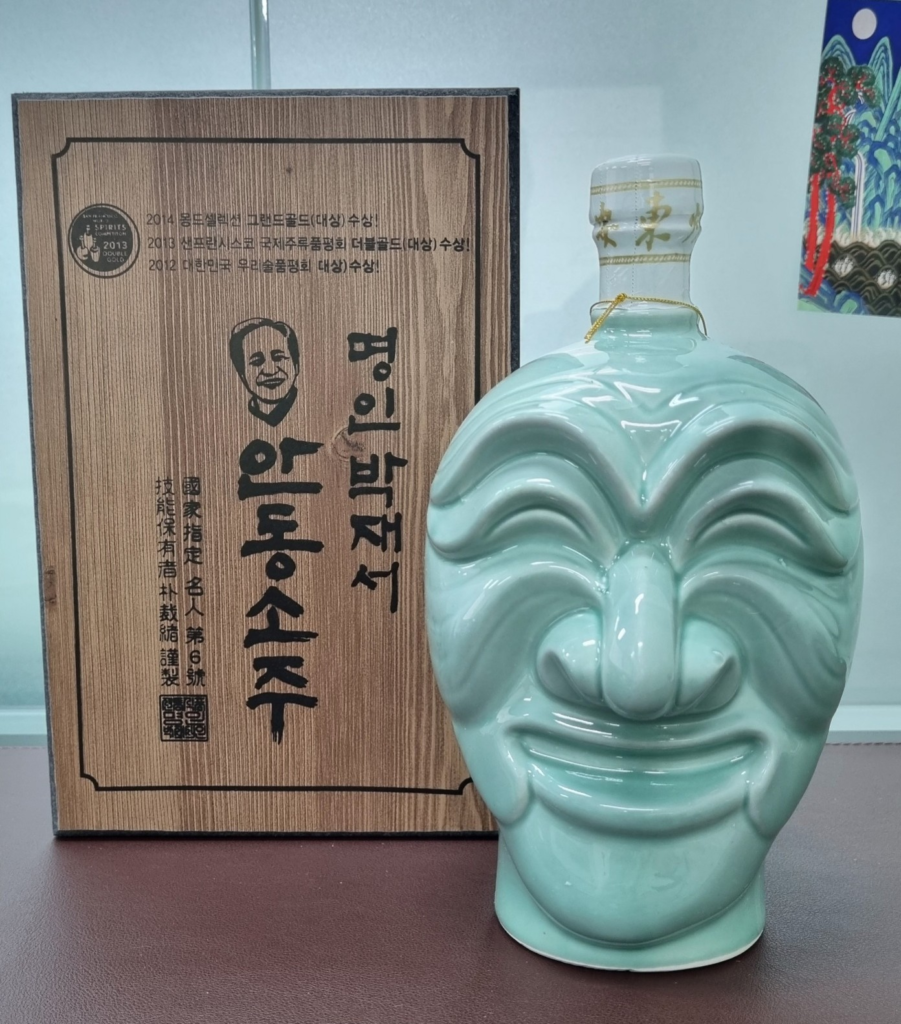
Traditional Korean soju (jeungryuje soju, 증류식 소주) was distilled from fermented grain — clean, high-proof, with real character. It was closer to what you find today under the “Andong Soju” label than to the green-bottled drink most people know.
That changed in 1965. South Korea was still recovering from the Korean War, food supplies were tight, and the government passed the Grain Management Act (양곡관리법). Using rice to make alcohol became illegal. Producers were forced to find a substitute almost overnight.
They found it in cheap industrial ethanol — jujeong (주정) — distilled from sweet potatoes, tapioca, or barley. This concentrated alcohol was diluted with water and lightly flavored. The result was less complex, but it was available and, most importantly, affordable. Production costs fell dramatically. The drink we now call soju — the green bottle, the mild sweetness — was born out of a food crisis, not a brewing tradition.
The Tax Structure That Keeps the Price Down
Korea taxes alcohol based on the value of the product, not on its volume or alcohol content. Because industrial ethanol is cheap to produce, the taxable base price is already very low. Even after a 72% liquor tax, the final retail price stays well under two dollars per bottle.
A spirit like whisky starts with a much higher production cost, so the same tax rate produces a far higher shelf price. Soju essentially benefits from a system designed around an inexpensive ingredient.
A Working-Class Drink Nobody Dares to Touch
Beyond economics, soju carries a political weight in Korea that is genuinely unusual.
Since the Korean War era, soju has been understood as the drink of ordinary people — factory workers, coal miners, and anyone eating a cheap meal after a long shift. In 2008, President Lee Myung-bak froze the prices of 52 household essentials during an inflation crisis. Soju was on that list, alongside rice and instant noodles.
That framing has never fully faded. When Hite Jinro recently hinted at price increases, the public reaction was sharp enough that the government stepped in to stabilize the market. Korean parliamentarians have repeatedly blocked proposals to raise soju taxes as a public health measure — a policy that has worked in countries like Scotland — because the political cost is simply too high.
Raising the price of soju in Korea is, in practice, close to raising the price of bread. It signals that the government has forgotten who ordinary people are.
Why It Costs So Much Outside Korea
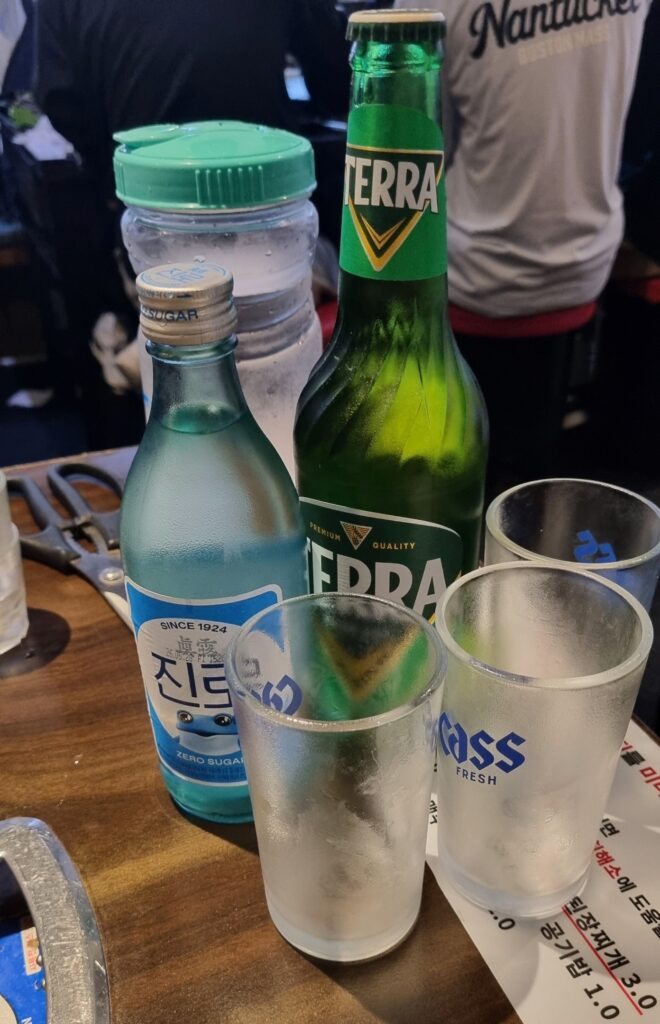
This is also why the same bottle costs $12 or more at a Korean restaurant in Los Angeles. The low price in Korea is not a natural result of what soju is made from — soju remains inexpensive to produce regardless of where it’s made. What keeps it cheap in Korea is the combination of government price protection and deeply rooted social expectation. Once you remove those two things, there is nothing left holding the price down. Import duties, distributor margins, and restaurant markups all stack up on a product that nobody abroad is politically obligated to keep affordable.
My Personal Experience
I drank soju once at a pojangmacha (포장마차) — one of those small tent stalls that appear on street corners after dark. I was sitting on a plastic stool with a bowl of sundubu jjigae going cold beside me.
The bottle cost 4,000 won at that stall. The jjigae was 7,000 won. It was the cheapest hot meal I had eaten all week, and the whole thing came to roughly eight dollars.
What struck me was not the price but the attitude around it. Nobody was treating soju as a bargain-basement drink. People were sharing bottles, pouring carefully for each other, laughing with the kind of ease that usually takes hours of warming up. The low price did not cheapen the experience — if anything, it removed all the self-consciousness that comes with ordering something expensive. Everyone could participate without thinking about it. That, I think, is the point. Soju’s cheapness is not incidental. It is part of what it is for.
Practical Tips
If you’re in Korea and drinking soju for the first time, a few things are worth knowing:
- Convenience stores vs. restaurants: A bottle runs 1,800–2,000 won (≈$1.30) at GS25 or CU. The same bottle at a restaurant is 5,000–7,000 won. Both are still remarkably cheap by any international standard.
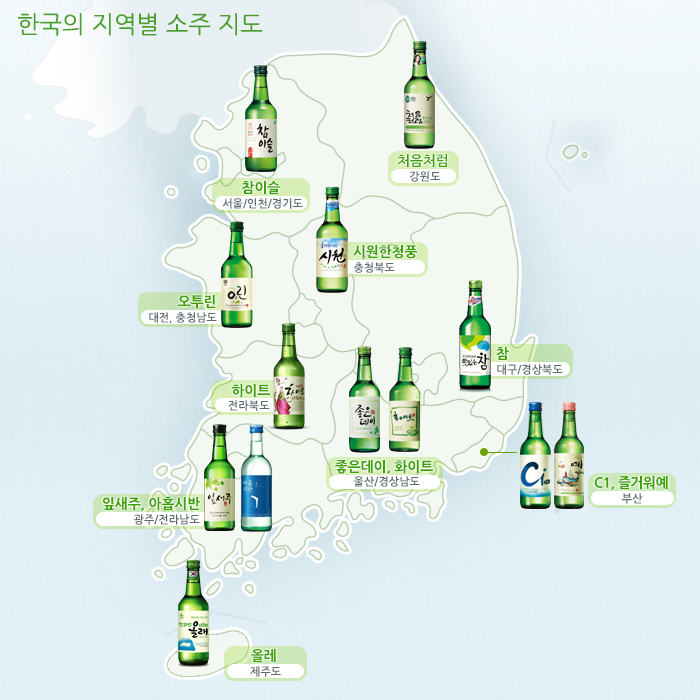
- Regional brands vary: Korea has regional soju loyalty that most visitors never notice. Chamisul dominates Seoul; C1 and Daeseon are Busan brands; Cham is Daegu’s. Trying the local brand is a good reason to get off the tourist circuit.
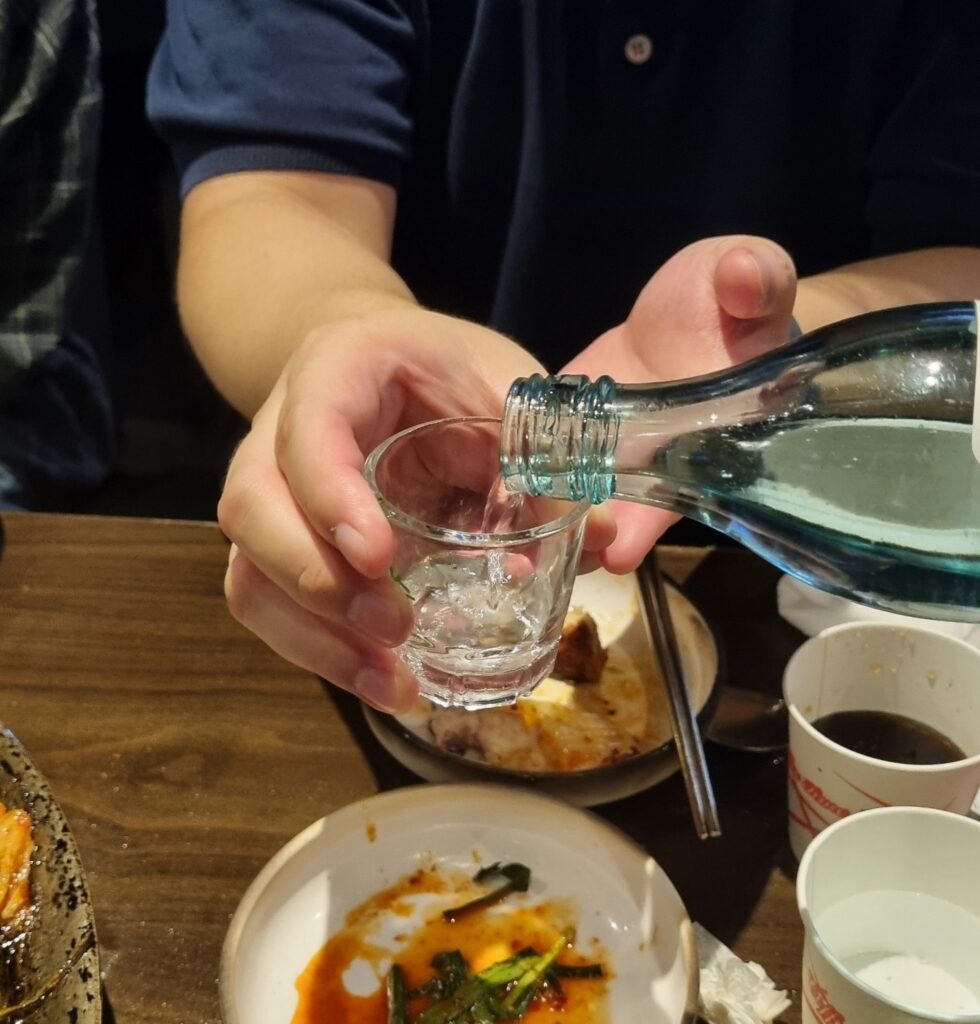
- You don’t pour your own glass: In Korean drinking culture, you pour for others and they pour for you. Filling your own glass reads as slightly antisocial. When an older person pours for you, hold your glass with two hands.
- The green bottle is diluted soju: Traditional distilled soju (jeungryuje) still exists, especially in Andong. It tastes completely different — richer, more complex, and much stronger at 40%+ ABV. Worth trying if you want to taste what soju was before 1965.
Related Questions You Might Have
Curious about more of Korean drinking culture and food history? Here are a few threads worth following:
- Why do Koreans eat samgyeopsal with soju? — The history behind Korea’s most iconic food-and-drink pairing. (Korean Drinking Culture series — coming soon)
- Why was home brewing banned in Korea? — From Joseon-era prohibition to the 1965 Grain Act, the long history of Korea trying to control what people drink at home. (Coming soon)
- What makes Korean fermented sauces so different? — If fermentation fascinates you, the story of doenjang, ganjang, and gochujang runs surprisingly deep.
Shared by Oldtree of Mindgrove
Stories of Korea © 2026