
Quick Answer (TL;DR)
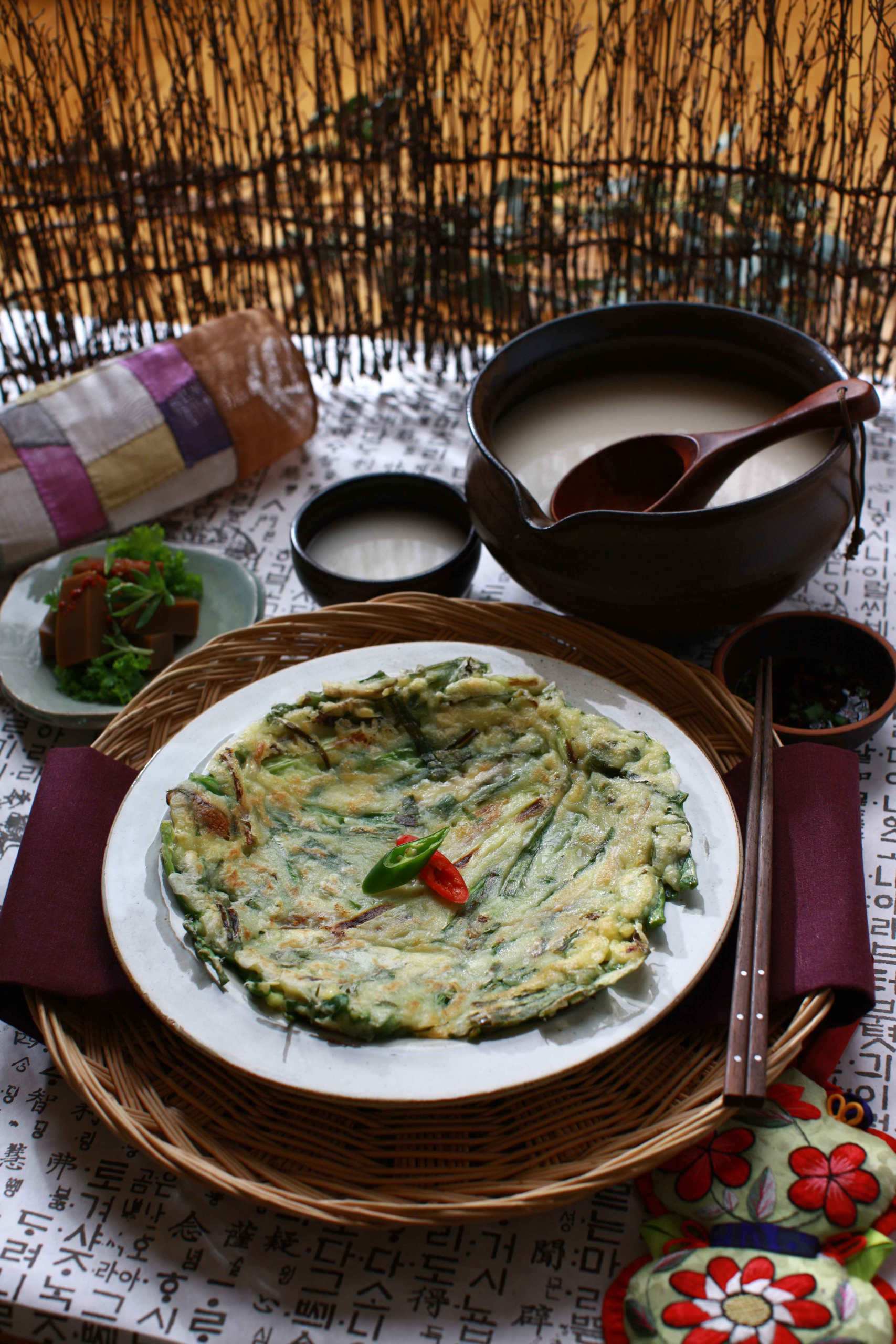
Dotorimuk is a nearly flavorless jelly made from acorn starch—soft, cool, and slightly slippery in texture. The jelly itself tastes like almost nothing, with just a faint nuttiness and a subtle astringency. All the flavor comes from the dressing: sesame oil, soy sauce, garlic, and fresh vegetables. In Korea, it’s most famously eaten after hiking—served cold as dotorimuk muchim (acorn jelly salad), paired with makgeolli (rice wine) and pajeon (savory pancakes). What began as a survival food during times of famine has become one of Korea’s most beloved post-hike traditions.
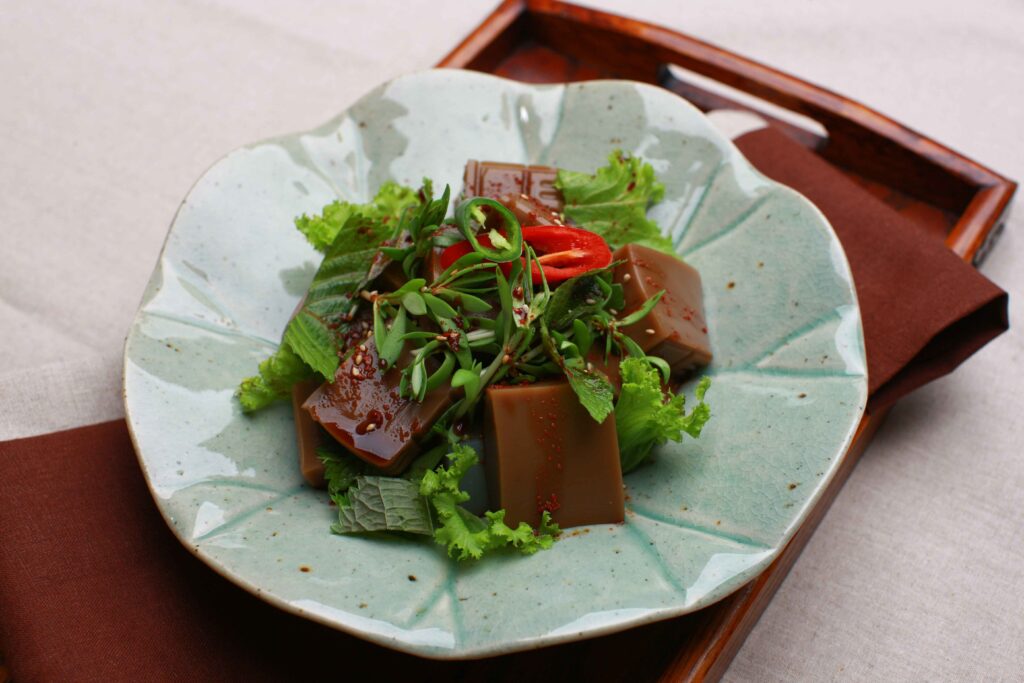
Photo: Korea Tourism Organization / Photographer: Kim Ji-hoWhy This Question Comes Up
For most Westerners, acorns are what squirrels eat. The idea of turning them into a gelatinous side dish—and eating it after spending hours climbing a mountain—seems completely foreign.
I’ve watched foreign friends encounter dotorimuk for the first time at mountain restaurants in Korea. The reaction is almost always the same: confusion, then curiosity, then surprise at how little it tastes like anything at all. “Wait—is it supposed to be this bland?” one friend asked, poking at the jelly with chopsticks.
Yes. Entirely on purpose. That’s the whole point.
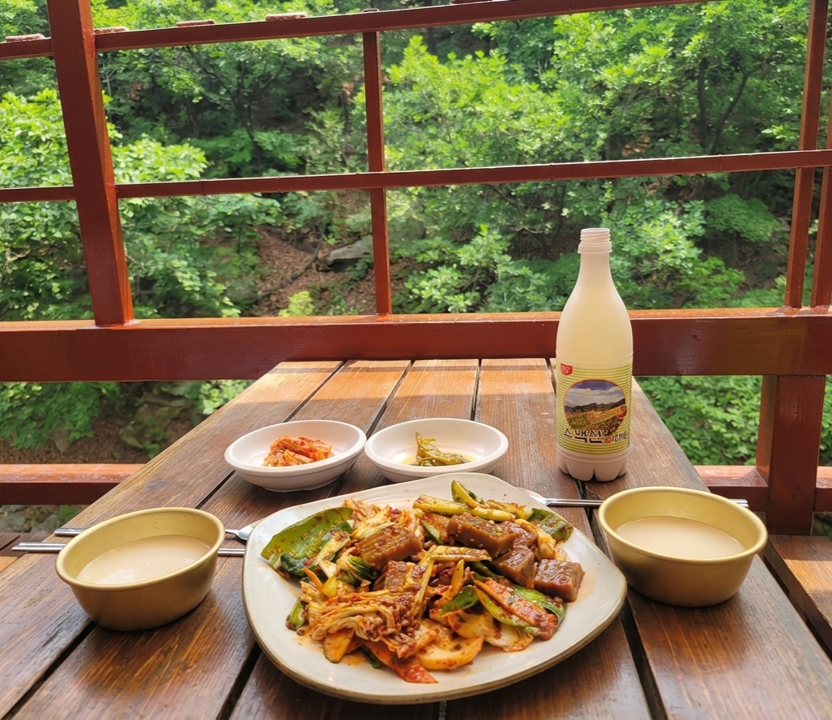
In Korea, this is one of the most iconic post-hike rituals. Nearly every mountain in the country has restaurants at the base serving this exact combination: dotorimuk, pajeon, and makgeolli. So what exactly is this mysterious acorn jelly, and why do Koreans love it so much?
The Cultural Context
This article is part of my series on Korean Food Culture and Dining Etiquette.
What Dotorimuk Actually Is
Dotorimuk (도토리묵) is a type of muk (묵)—a category of Korean jelly dishes made from starch. While other varieties exist, like cheongpomuk (mung bean jelly) and memilmuk (buckwheat jelly), dotorimuk is by far the most popular. It’s made by processing acorn starch to remove bitter tannins, then boiling it with water until it sets into a soft, wobbly jelly.
What Does Dotorimuk Taste Like?
This is the question most foreigners ask first—and the honest answer is: almost nothing.
Dotorimuk on its own is extremely mild. There’s a very faint nuttiness, and if you pay close attention, a slight astringency at the back of the tongue—a trace of the tannins that weren’t fully removed during processing. But calling it “flavorful” would be a stretch. It’s closer to the experience of eating plain tofu or plain rice: a neutral base that exists to carry other flavors.
And that’s exactly the design. Dotorimuk is a vehicle, not a destination. The flavor comes entirely from what surrounds it:
- Sesame oil — adds richness and nutty depth
- Soy sauce or vinegar dressing — provides saltiness and tang
- Garlic and gochugaru — adds heat and complexity
- Fresh herbs — scallions, perilla leaves, crown daisy
The texture, however, is distinctive and worth experiencing for its own sake: soft yet slippery, smooth and slightly bouncy. It’s served cold, which makes it particularly refreshing after physical activity. If Western jelly is your reference point, forget it entirely. Dotorimuk is nothing like that. It has no sweetness, no strong flavor of its own—it simply yields to whatever you pair it with.
From Survival Food to Mountain Tradition
Acorns were free food. Unlike rice or wheat, which required land and labor, acorns fell from oak trees every autumn and could be gathered by anyone. During the Joseon Dynasty (1392–1910), the Korean War (1950–1953), and other periods of famine, acorns kept people alive.
The process was labor-intensive: gather the acorns, shell them, grind them into paste, then soak and rinse repeatedly to remove the toxic tannins. What remained was a starch that could be turned into jelly. Not gourmet—survival.
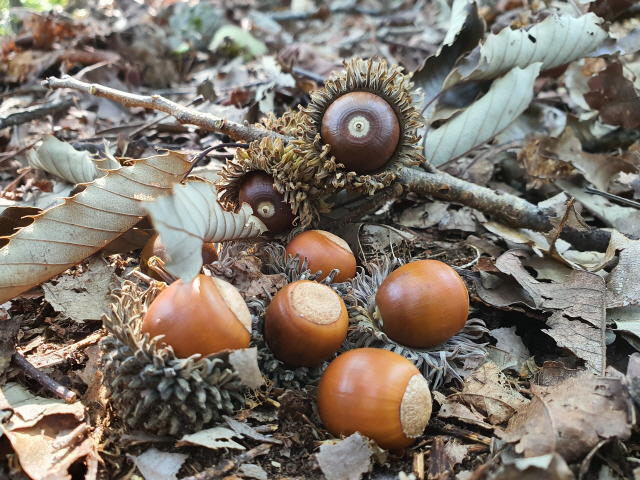
Photo: Kang Byeong-ro's Mountain & Wild PlantsBut here’s where the hiking connection comes in. Acorns grow in the mountains. The people who knew how to forage and process them lived in mountainous regions. Over time, small restaurants near hiking trails began serving dotorimuk as a local specialty—cheap to make, refreshing in warm weather, and perfectly paired with makgeolli.
As hiking became a popular recreational activity in Korea from the 1980s onward, the tradition solidified. Dotorimuk became the post-hike food—light, cool, and unpretentious after hours of exertion.
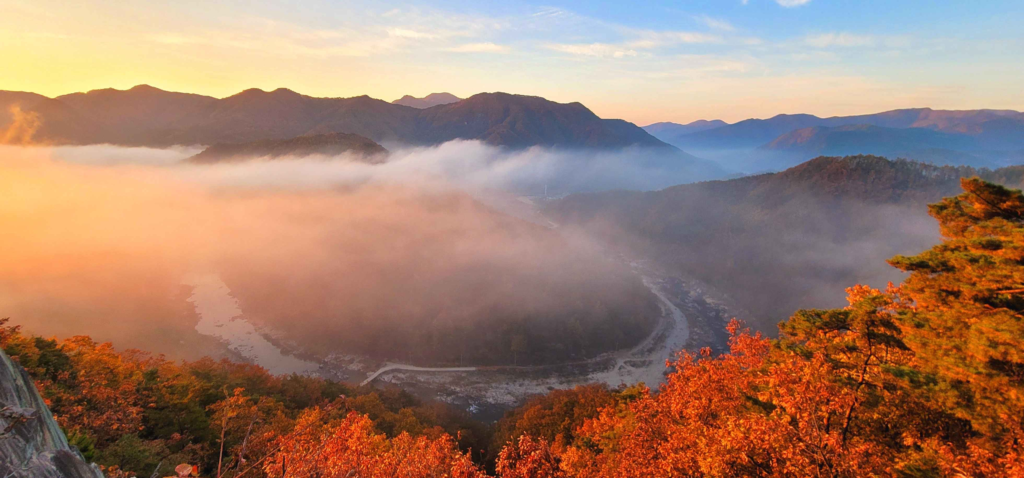
Photo: Kim Sang-seok / Beombawigol ValleyThe Modern Health Food Revival
After Korea’s economic boom in the 1970s–80s, “peasant foods” like dotorimuk briefly fell out of favor. But in the 1990s–2000s, as Koreans became more health-conscious, traditional foods were reevaluated. Dotorimuk turned out to be:
- Low in calories (mostly water and starch)
- High in fiber (aids digestion)
- Rich in tannins with potential antioxidant properties
- Gluten-free and fully plant-based
Today, dotorimuk appears at temple food restaurants, modern health cafes, and trendy Seoul restaurants marketing “clean eating”—while still maintaining its strongest identity as hiking food.
My Personal Experience
Unlike many foreigners who discover dotorimuk as adults, I grew up eating it. My mother would occasionally make dotorimuk muchim at home as a banchan. As a child, I wasn’t impressed. The texture seemed odd, the flavor too subtle—or rather, absent. I’d pick at it politely but never asked for more.
It wasn’t until I was older that I understood what I’d been missing.
Now, dotorimuk is one of my favorite things to eat—especially after hiking. There’s a uniquely Korean ritual that happens at the base of nearly every mountain: after spending hours climbing for exercise and health, hikers immediately sit down at a nearby restaurant and order plates of jeon, dotorimuk muchim, and bottles of makgeolli. The irony isn’t lost on anyone. We joke about it constantly—”We climbed for our health… now let’s eat and drink!”
But there’s something perfect about that combination. After a long hike, tired and sweaty, cold dotorimuk with sesame oil, soy sauce, and fresh vegetables is incredibly refreshing. The jelly asks nothing of you—no bold flavors to process, no richness to cut through. It’s cool, neutral, and clean. And a glass of slightly sweet, fizzy makgeolli alongside it? That’s when you finally understand why Koreans have been eating this for centuries.
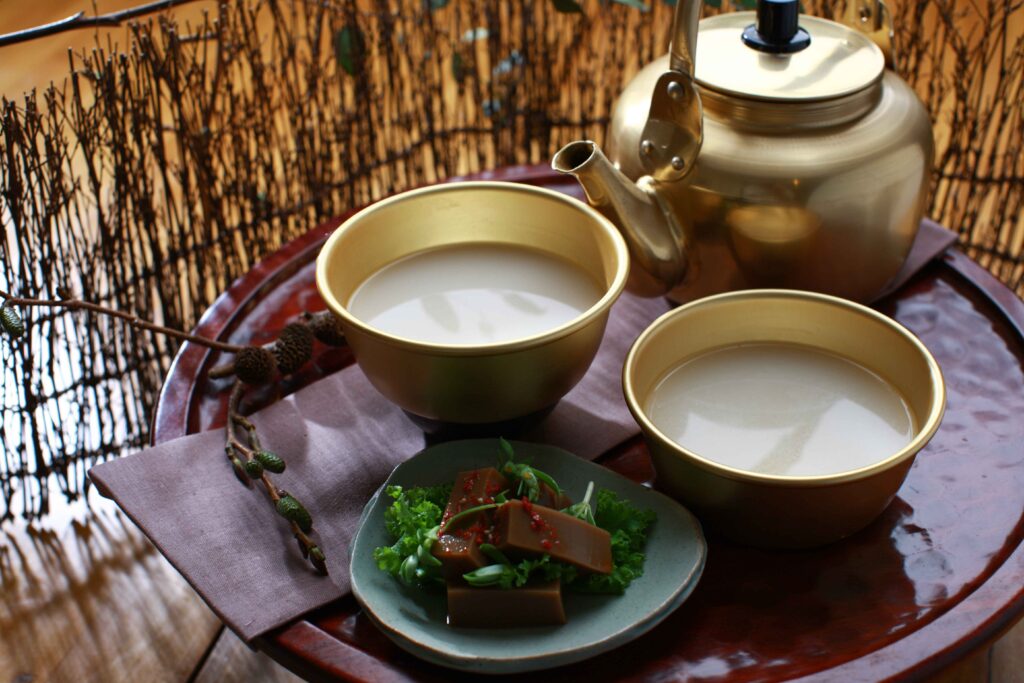
Photo: Korea Tourism Organization / Photographer: Kim Ji-hoPractical Tips
Go hiking first (seriously): Choose any Korean mountain—Bukhansan, Gwanaksan, Dobongsan—and when you descend, look for the restaurants clustered at the trailhead. Order dotorimuk muchim, pajeon, and makgeolli. Sit outside if you can. That’s the real experience.
Know what you’re ordering:
- Dotorimuk muchim (도토리묵무침) = Acorn jelly salad with vegetables and spicy-sweet dressing
- Plain dotorimuk = Just the jelly with soy sauce or sesame oil drizzled on top
Don’t expect flavor from the jelly itself: Dotorimuk is almost tasteless—just a faint nuttiness and a slight astringency. All the flavor comes from the dressing. If you’re expecting something bold or sweet like Western jelly, you’ll be disappointed. Think plain tofu, not dessert.
Pair it with makgeolli: The slightly sweet, milky rice wine complements the cool, neutral jelly perfectly. Mountain restaurants know this—they’ll often suggest it automatically.
Try it at a temple food restaurant: For a more refined experience, temple restaurants serve dotorimuk with minimal seasoning to highlight its natural qualities. A different setting from mountain trailheads, but equally authentic.
Buy it pre-made: Korean grocery stores sell dotorimuk in the refrigerated section—rectangular blocks packed in water. Drain, slice, dress with soy sauce and sesame oil, add cucumber and scallions. Quick, easy, genuinely good.
Watch the texture: Good dotorimuk should hold its shape while still having a gentle wobble. It should yield softly when you pick it up with chopsticks without falling apart. Too loose = pudding. Too dense = rubber.
Related Questions You Might Have
This article is part of the series on Korean Foods Foreigners Find Strange.
- What Is Sannakji? Korean Live Octopus Explained — The Oldboy scene: tradition, texture, and danger
- What Is Golbaengi? Korean Sea Snails Explained — British Fishermen Won’t Eat
- What Is Chamoe? The Korean Melon — That Tastes Like Honeydew and Cucumber
- What Is Gosari? Korean Bracken Fern Explained — The toxic fern Koreans have been eating for centuries
Shared by Oldtree of Mindgrove
Stories of Korea © 2026