
This article is part of my series on Korean Food & Daily Life.
Quick Answer (TL;DR)
If you’ve ever wondered what doenjang, ganjang, and gochujang are, you’re not alone…
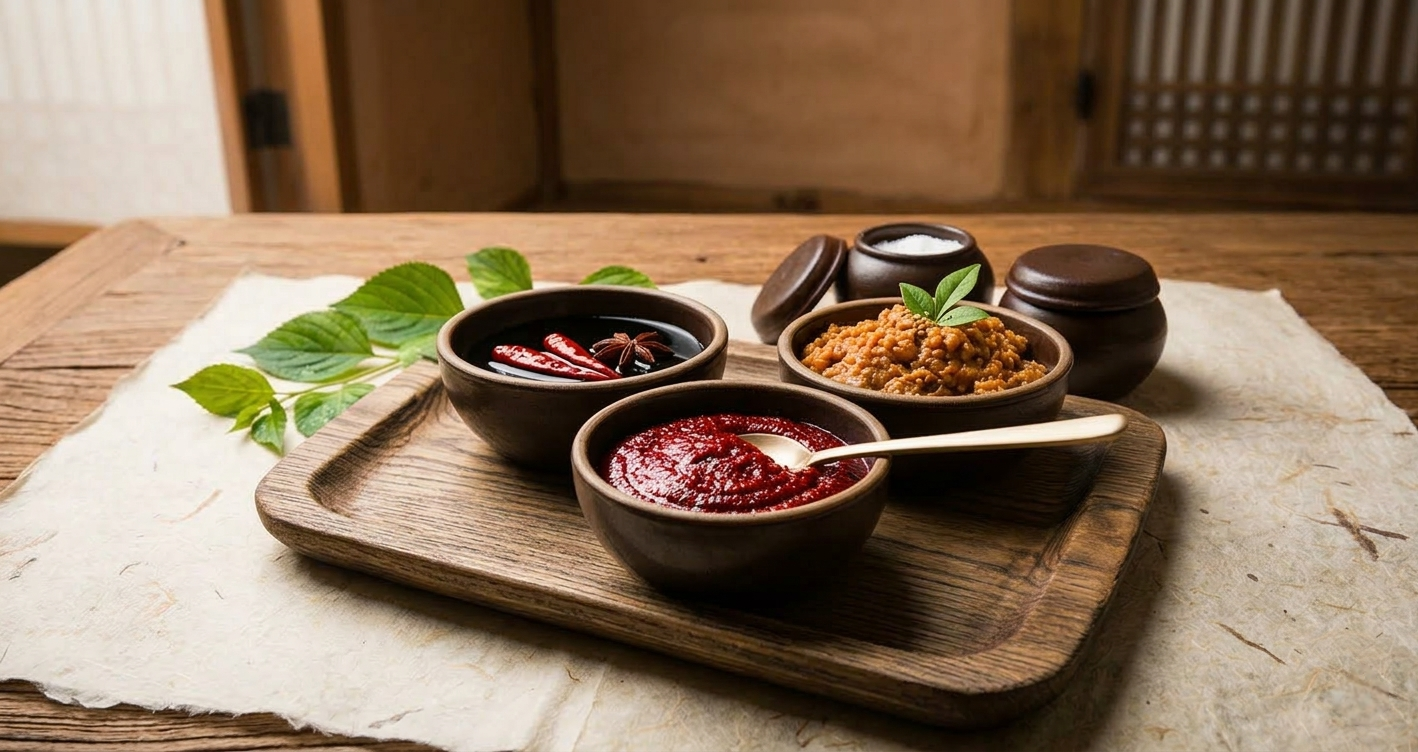
Korean cooking runs on three fermented sauces — and understanding them is the single most important step to understanding how Korean food actually tastes:
- Doenjang (된장) — Fermented soybean paste; earthy, pungent, and deeply savory. The backbone of Korea’s most beloved everyday stew.
- Ganjang (간장) — Korean soy sauce; saltier and more complex than Japanese varieties, traditionally made as a byproduct of doenjang.
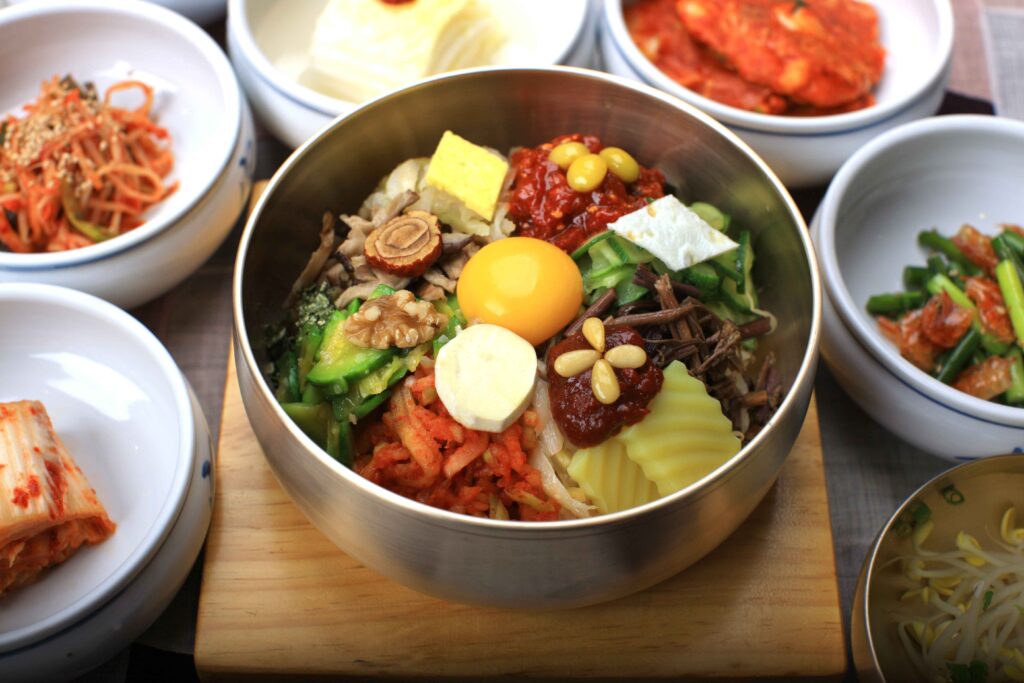
- Gochujang (고추장) — Fermented chili paste; spicy, sweet, and umami-rich. The key ingredient in bibimbap, tteokbokki, and dozens of marinades.
These aren’t just condiments. They are the flavor foundation of Korean cuisine.
Why These Sauces Matter
Most Western introductions to Korean food focus on techniques: how to grill the meat, how to fold the ssam. But Korean cooks will tell you the real secret is in the jang (장) — the fermented pastes and sauces that have been made in Korean households for over a thousand years.
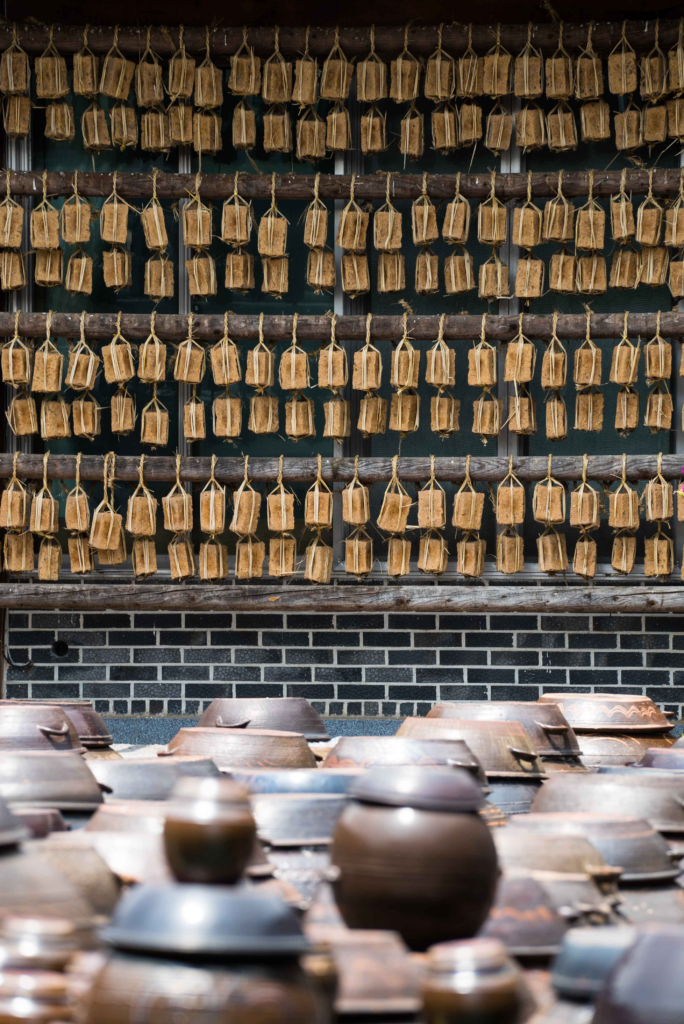
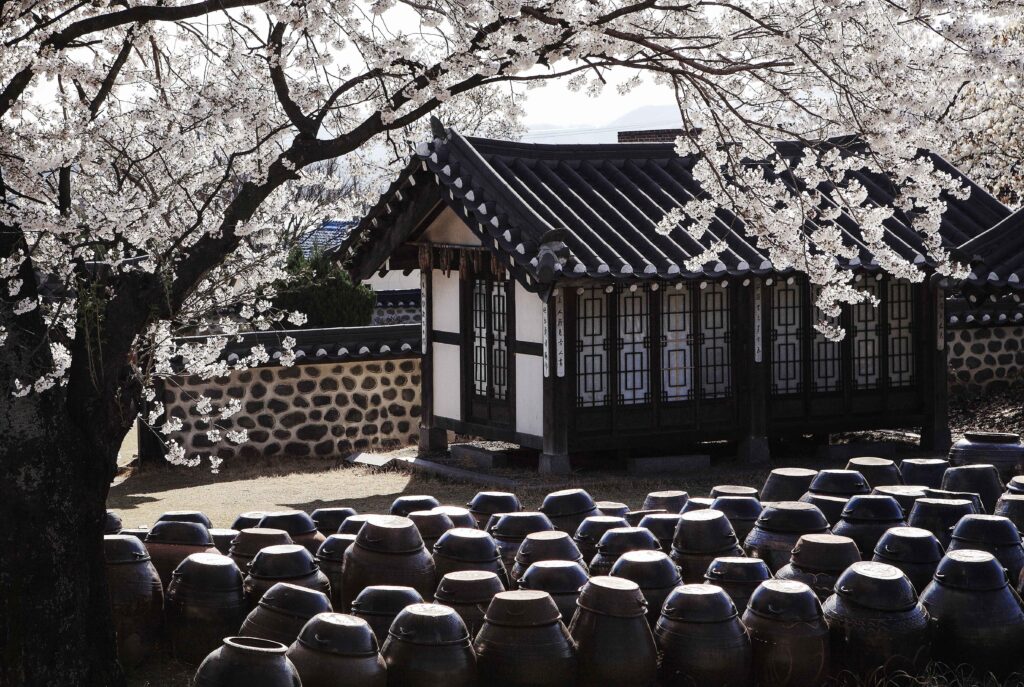
Every Korean grandmother had her own onggi jars (옹기, traditional earthenware) sitting on the back porch, fermenting through the seasons. The specific blend of microorganisms in those jars, shaped by local climate and family tradition, created flavors that couldn’t be replicated anywhere else. That’s the world these three sauces come from.
What Are the Three Jang Sauces?
Doenjang (된장) — The Depth
Doenjang is Korea’s fermented soybean paste — earthy, pungent, deeply savory. It’s made from meju (메주, dried soybean blocks) that have been fermented and then aged in salt brine. The process produces a paste with a complexity that surprises many first-time tasters: nutty, funky, almost cheese-like. wikipedia Doenjang
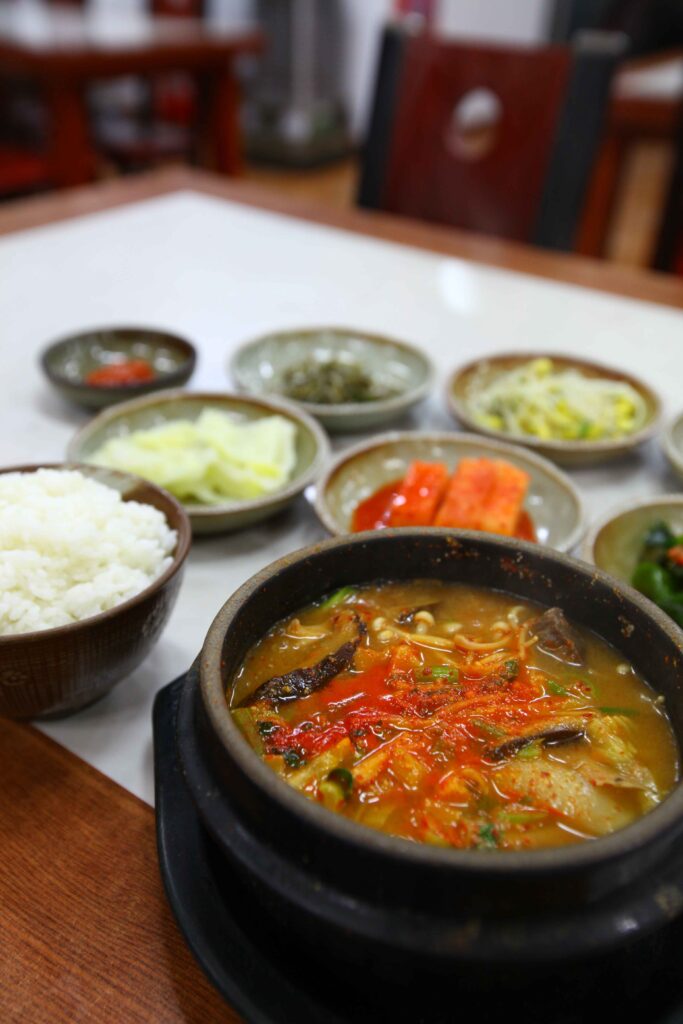
It’s the backbone of doenjang jjigae (된장찌개), Korea’s most beloved everyday stew, and the base for countless dipping sauces and marinades.
Ganjang (간장) — The Salt
Ganjang is Korean soy sauce, but calling it “soy sauce” undersells it. Traditional Korean ganjang (joseon ganjang, 조선간장) is thinner, saltier, and more complex than Japanese-style soy sauce. It’s actually produced as a byproduct of doenjang-making — the liquid that separates out during the fermentation process.
Today most Korean kitchens use both traditional and commercial ganjang for different purposes.
Gochujang (고추장) — The Fire
Gochujang is a slow-fermented paste made from red chili powder, glutinous rice, fermented soybeans, and salt. It’s spicy, but also sweet and deeply umami — a combination that makes it one of the most versatile ingredients in Korean cooking.
It’s the key ingredient in bibimbap sauce, tteokbokki, and dozens of marinades and dipping sauces.
→ Ganjang, Doenjang, Gochujang: Complete Guide to Korean Sauces
From My Grandmother’s Kitchen
Korea’s fermented sauce tradition isn’t just culinary history — it’s living memory for most Koreans. The annual jang preparation was a household event, carefully timed around the lunar calendar. The right month, the right temperature, the right clay jars.
My grandmother’s doenjang tasted different from any store-bought version — deeper, more complex, with a slight bitterness that I now understand came from years of aging in her specific jars in her specific courtyard. That flavor is irreplaceable, and it’s what drove me to understand why these sauces are made the way they are.
The industrialization of Korean food in the late 20th century brought standardized, affordable versions of all three sauces to every household. But the best Korean cooks still seek out artisan or traditionally-made versions when possible — and many still make their own.
→ 할머니의 주방 이야기: 3 Korean Fermented Sauces Every Cook Should Know (From My Grandmother’s Kitchen)
Doenjang vs. Miso: Are They the Same?
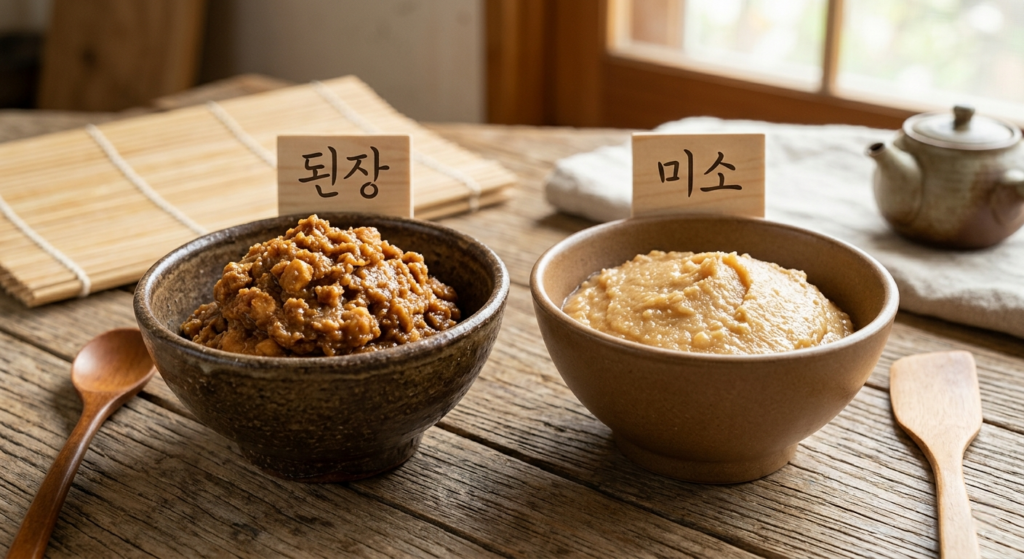
This is the question every international reader asks — and the answer is more interesting than a simple yes or no.
Both doenjang and Japanese miso start from fermented soybeans. But the fermentation process, the microorganisms involved, and the resulting flavors are distinctly different. Doenjang is generally more pungent and complex than most Japanese miso varieties. It also contains chunks of meju rather than being fully smooth.
Can you substitute one for the other? Sometimes — but the flavor profile will shift noticeably. Korean doenjang jjigae made with miso tastes like a Japanese-Korean fusion dish, not the real thing.
There’s also a deeper cultural story here: both countries developed soybean fermentation traditions independently, and each reflects the specific ingredients, climate, and culinary values of its origin culture.
→ 자세한 비교: Doenjang vs Miso: Can You Substitute? Complete Guide to Korean & Japanese Fermented Sauces
How to Cook With Doenjang, Ganjang, and Gochujang
The good news: all three sauces are now widely available outside Korea — in Korean grocery stores, Asian supermarkets, and increasingly in mainstream stores. You don’t need to make your own to start cooking.
A few practical starting points:
- For doenjang: Start with doenjang jjigae. It requires only doenjang, tofu, zucchini, and anchovy stock — and teaches you more about the sauce than any description can.
- For ganjang: Use it anywhere you’d use soy sauce, but expect a saltier, sharper flavor. Try it as a dipping sauce for Korean pancakes (jeon).
- For gochujang: The easiest entry point is bibimbap sauce — just mix gochujang with sesame oil, sugar, and vinegar. From there, the possibilities are endless.
→ 고추장으로 시작하는 5가지 레시피: 5 Easy Gochujang Recipes Even Beginners Can Master
The Bigger Picture: Why Fermentation Defines Korean Food
Korea’s reliance on fermented foods goes far beyond these three sauces. Kimchi, makgeolli, jeotgal — fermentation is built into the Korean food system at every level. For much of Korean history, fermentation was survival: a way to preserve nutrition through harsh winters, to add flavor to simple diets, and to make use of every ingredient available.
The three jang sauces are the most visible expression of this tradition — the ones that show up in virtually every Korean meal, every day. Learning to recognize and appreciate them is, in a real sense, learning to taste Korean culture itself.
Related Questions in This Series
- 3 Korean Fermented Sauces Every Cook Should Know (From My Grandmother’s Kitchen)
- Ganjang, Doenjang, Gochujang: Complete Guide to Korean Sauces
- Doenjang vs Miso: Can You Substitute? Complete Guide to Korean & Japanese Fermented Sauces
- 5 Easy Gochujang Recipes Even Beginners Can Master
Shared by Oldtree of Mindgrove
Stories of Korea © 2026