The First Bite of Something Special
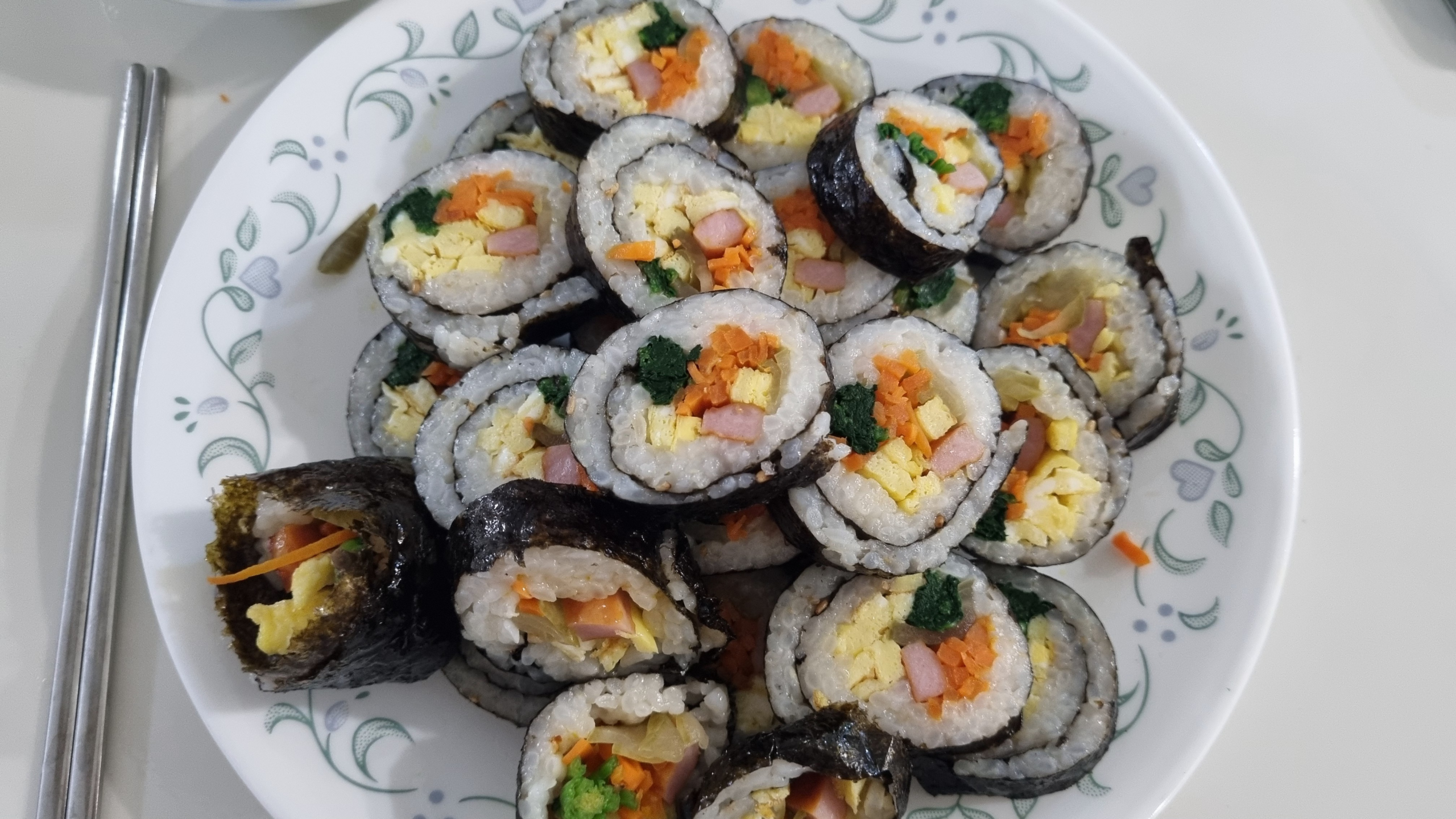
I still remember the anticipation. Not for Christmas morning or birthday cake, but for those two magical days each year when my mother would wake up early, spread sheets of dark green seaweed across our kitchen table, and begin the ritual of making Korean gimbap. Today, from homemade rolls to triangle gimbap at convenience stores, this beloved Korean food has transformed into something you can enjoy anytime, anywhere.
Gimbap is a Korean dish made from seasoned rice and various ingredients rolled in dried seaweed sheets and served in bite-sized slices. But to call it just “food” feels incomplete. To me, gimbap was the taste of spring picnics, the smell of sesame oil on my mother’s hands, and the sound of my classmates begging for “just one more piece” from my lunchbox.
When Korean Gimbap Was a Twice-a-Year Treasure
Back when I was growing up, gimbap wasn’t something you casually grabbed on your way to work. It was special. Sacred, almost.
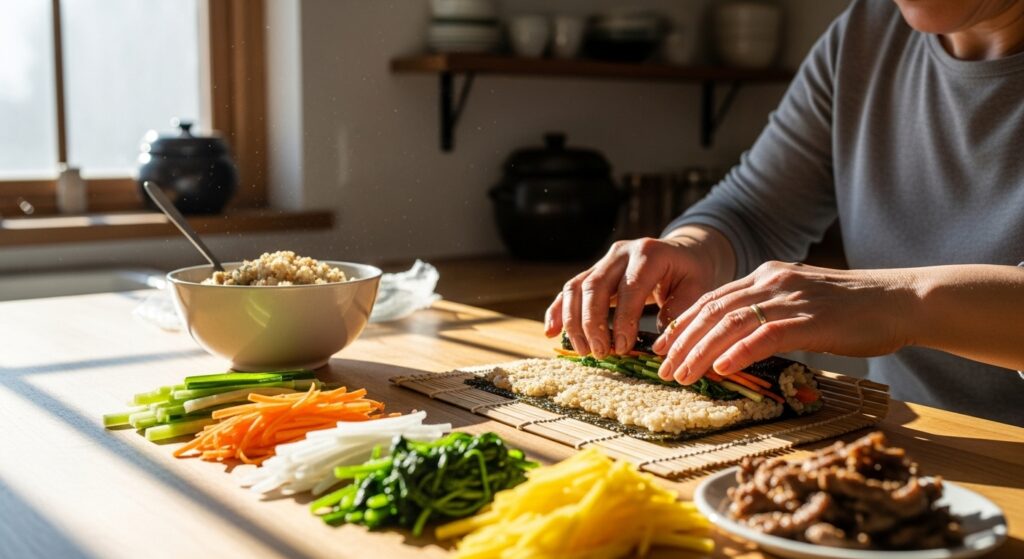
We had two field trip days per school year. Just two. And both times, without fail, my mother would spend hours the night before preparing: pan-frying thin egg sheets until they turned golden, julienning carrots into perfect matchsticks, blanching spinach and seasoning it with garlic and sesame, slicing yellow pickled radish (danmuji) into neat strips. The rice would be seasoned with salt and sesame oil, giving it that distinctive nutty aroma that would fill our entire home.
The process was labor-intensive. First, she’d cook the rice perfectly — slightly stickier than usual. Then came the seasoning, the preparation of each ingredient, the careful assembly on the seaweed sheet, the rolling with our bamboo mat (what we call a “gimbal”), and finally, the precise cutting into bite-sized rounds.
I learned this the hard way. On field trip days, my gimbap became neighborhood currency. Friends would hover around during lunch, and by the time the meal was over, half the rolls had disappeared into other kids’ mouths. Gimbap days ended up being the days when I was even hungrier.
That’s how precious gimbap was. It was worth stealing.
The Gimbap Revolution: When It Became for Everyone
Then something changed. Something wonderful.
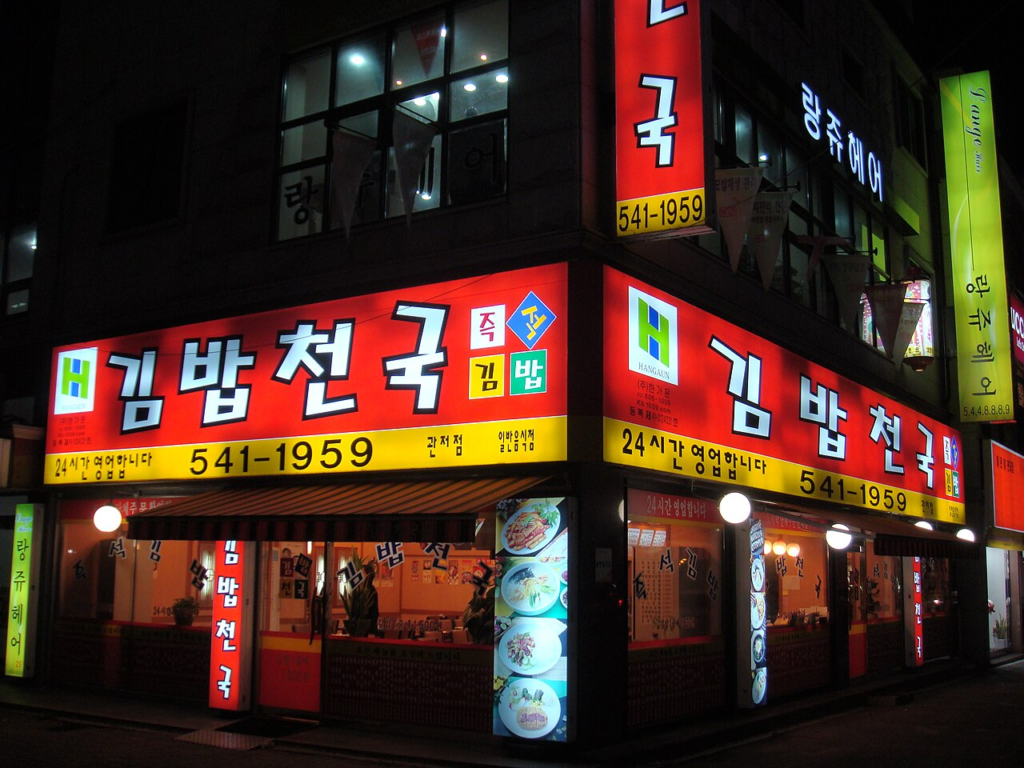
A restaurant called Gimbap Cheonguk — which translates to “Gimbap Heaven” — revolutionized Korean food culture by selling gimbap for just 1,000 won per roll. The founder, Yu In-cheol, figured out how to make the labor-intensive process efficient by processing ingredients directly at the store rather than relying on factory-made components.
I remember walking past my first Gimbap Cheonguk. There was always an ajumma (a middle-aged Korean woman, said with affection) behind the counter, her hands moving in a blur. She’d done this thousands of times. The ingredients were prepped in neat containers, lined up like soldiers ready for duty. Rice, seaweed, ingredients, roll, slice — all in under a minute. It was mesmerizing.
Suddenly, gimbap wasn’t just for special occasions. These affordable restaurants operated for long hours, some even 24 hours a day, serving everyone from students to working professionals. People started eating gimbap for breakfast on their way to the office. For lunch when they were too busy for a sit-down meal. Even for late-night snacks.
By 2010, Gimbap Cheonguk had grown to 600 affiliated stores across Korea. But here’s what’s fascinating: because the founder couldn’t trademark the name (the Korean Intellectual Property Office rejected it for lacking distinctiveness), dozens of restaurants started using similar names. Walk through any Korean neighborhood today, and you’ll spot multiple “Gimbap Heaven” signs, each independently operated.
Gimbap Varieties: More Than You Can Imagine
What started as a simple combination of rice, egg, carrot, spinach, and pickled radish has exploded into countless “gimbap varieties”. Today’s gimbap menus read like novels.
Classic Gimbap Varieties:
The standard gimbap typically includes pickled radish (danmuji), ham, egg, carrot, crab stick, and spinach, with optional additions like fish cake, burdock root, and cucumber.
But then the creativity began:
– Chamchi (Tuna) Gimbap: Canned tuna mixed with mayonnaise, mustard, and spices, creating a creamy, savory filling that became wildly popular
– Kimchi Gimbap: Spicy, fermented vegetables adding that characteristic Korean kick
– Bulgogi Gimbap: Marinated beef bringing rich, sweet flavors
– Cheese Gimbap: A modern twist that somehow works perfectly
– Vegetable (Yachae) Gimbap: Featuring yellow pickled radish, julienned burdock root, bell peppers, and other colorful vegetables
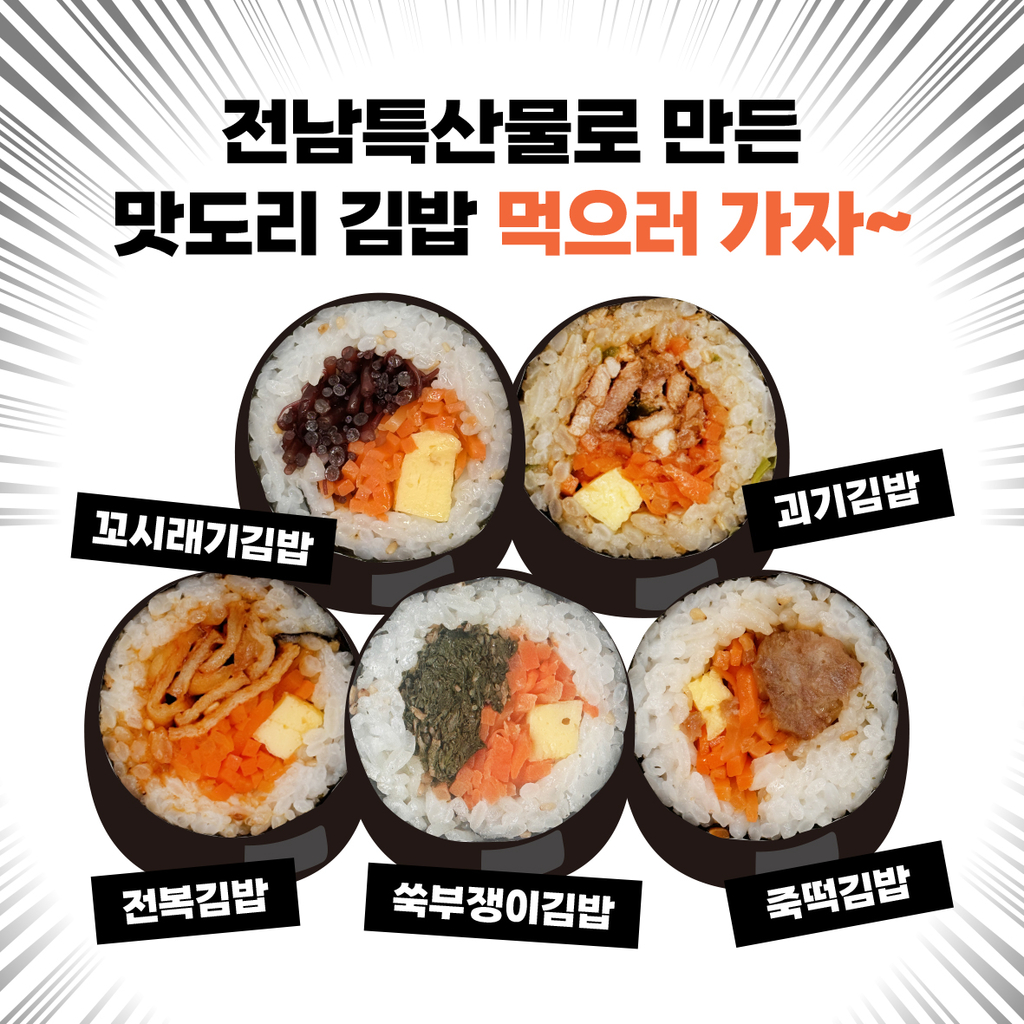
Regional Gimbap Specialties:
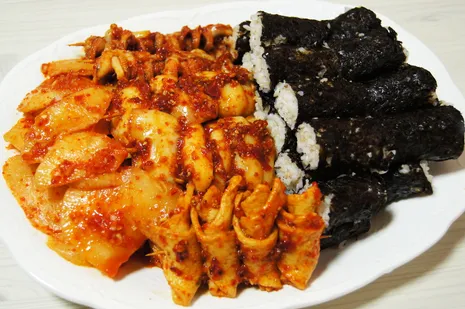
Chungmu Gimbap originated in the seaside city of Tongyeong and features thin rolls with only rice as the filling, served alongside spicy squid salad and radish kimchi. It was created by fishermen’s wives who needed a lunch that wouldn’t spoil during long days at sea.
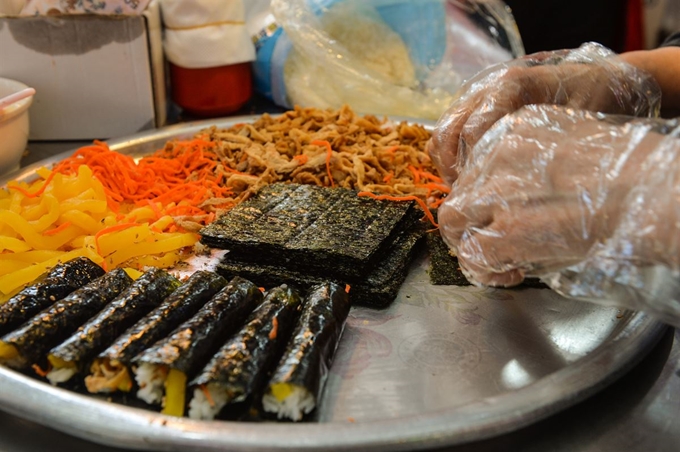
Mayak Gimbap, a specialty of Gwangjang Market in Seoul, consists of small rolls filled with spinach, carrots, and pickled radish, served with a mustard-soy dipping sauce. The name “mayak” literally means “drug” in Korean — because people say it’s that addictive.
The Inside-Out Innovation:
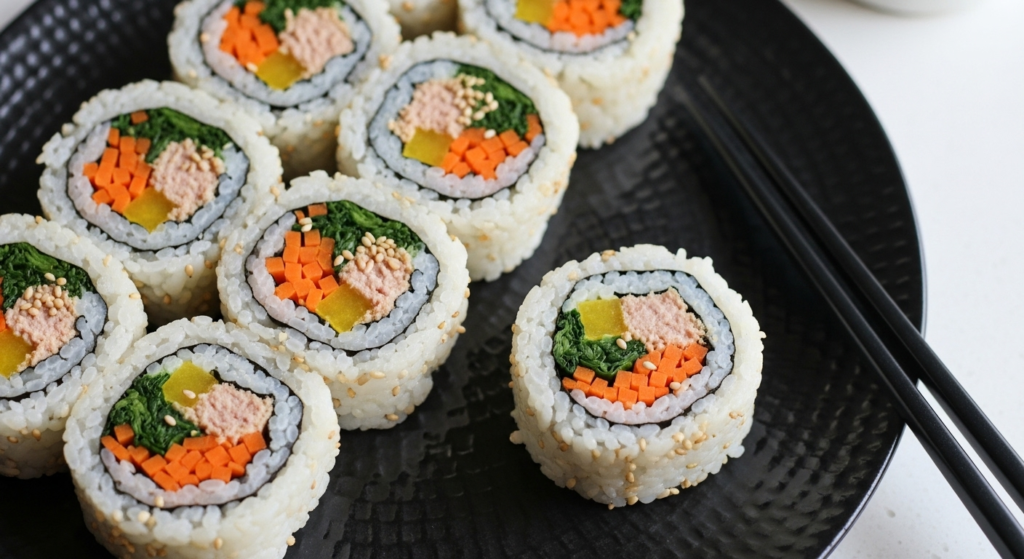
Nude gimbap (sometimes called “inside-out gimbap”) reverses the traditional structure, with rice on the outside and seaweed inside. It looks different, tastes different, and represents how Korean cooks continue to reimagine traditional dishes.
Triangle Gimbap: The Convenience Store Revolution
But perhaps the most significant evolution came in the 1990s.
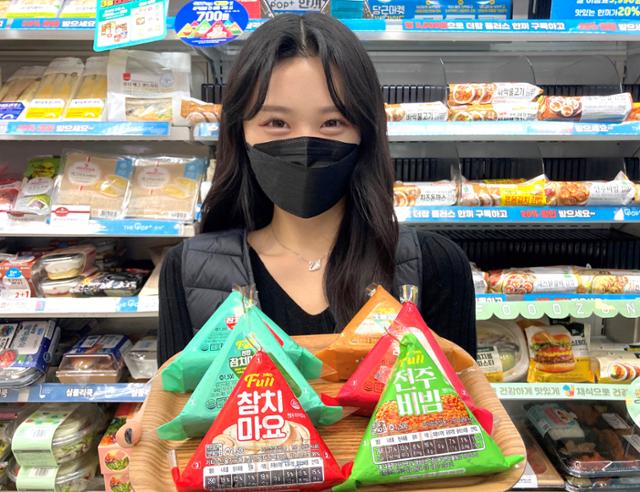
Triangle gimbap, introduced to Korea around 1991 when 7-Eleven began selling them, transformed the gimbap landscape once again. Inspired by Japanese onigiri, these triangular rice balls wrapped in seaweed became the ultimate grab-and-go meal.
What makes samgak gimbap (triangle gimbap) brilliant is the packaging. The seaweed is wrapped in a special film to prevent it from getting soggy, staying crispy until the moment you open it. There’s a specific technique to unwrapping it — pull strip 1, then corner 2, then corner 3 — and when you do it right, you get that satisfying crunch of fresh seaweed with each bite.
Today, triangle gimbap typically costs between 1,000 to 1,500 won, with fillings ranging from traditional kimchi and tuna to modern choices like chicken and pork.
I see office workers grabbing two or three for breakfast, students heating them in the convenience store microwave before class, late-night workers finding comfort in them after midnight shifts. The most popular flavors? Tuna mayo and Jeonju bibimbap triangle gimbap fly off the shelves faster than any others. And here’s a Korean secret: pair your samgak gimbap with cup ramyeon (instant noodles), and you’ve got yourself an affordable yet satisfying complete meal. These convenience stores are open 24 hours a day and have become essential parts of everyday life in Korea, offering not just food but a warm space to pause, sit, and breathe.
Gimbap in Pop Culture: Even Demon Hunters Need to Eat
Even in the K-pop world, gimbap makes appearances. In K-pop Demon Hunters, one of the characters is seen eating gimbap — a small detail that Korean viewers immediately recognize and love. It’s this kind of cultural touchstone that makes gimbap more than food. It’s identity. It’s home.

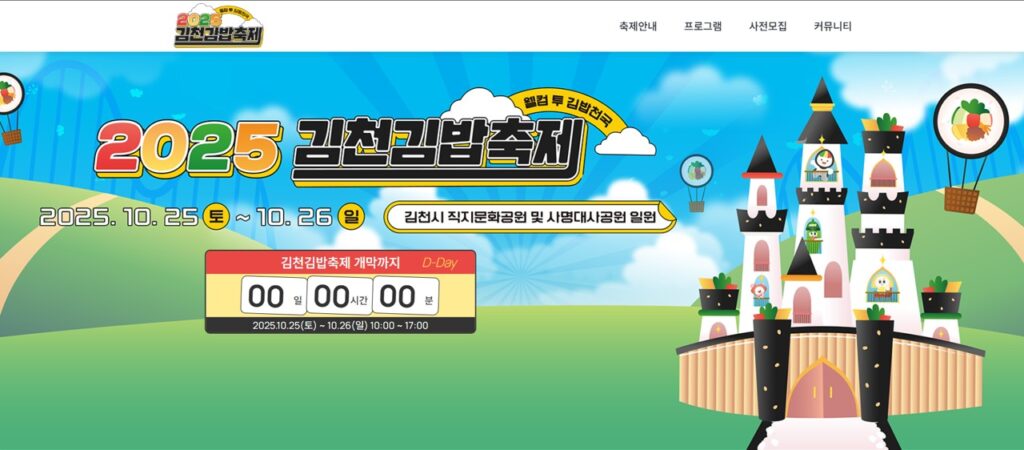
In 2024, the city of Gimcheon held its first gimbap festival, drawing 100,000 visitors who came specifically to celebrate this humble dish. The event became so popular that in 2025, despite preparing ten times more gimbap and expanding logistics, the organizers were still overwhelmed when 150,000 people showed up. Attendees reported spending nearly 100,000 won just on gimbap and calling it “worth every bite.”
Think about that. A festival dedicated entirely to “gimbap”. Crowds that could fill a stadium. A city branding itself as Korea’s “unofficial gimbap capital.” And here’s a delightful coincidence: in Korean, if you take the first syllables of “gimbap” (김밥) and “cheonguk/heaven” (천국), you get “Gimcheon” (김천) — the city’s name itself!
For more information about the Gimcheon Gimbap Festival, visit (https://gimbapcity.kr/main/main.html)
Why Korean Gimbap Matters: More Than Rice and Seaweed
Like sandwiches in Western culture, gimbap is quintessential Korean picnic food — portable, no utensils needed, and perfect for sharing.
But it’s more than practicality. Gimbap represents Korean ingenuity and adaptability. While some historians suggest gimbap evolved from Japanese makizushi during the colonial period, Koreans transformed it into something distinctly their own, using sesame oil instead of rice vinegar, favoring cooked ingredients over raw fish, and developing countless regional variations.
It represents Korean mothers’ love — those hands that would wake up early to prepare something special. It represents economic innovation — how entrepreneurs like Yu In-cheol democratized a labor-intensive food. It represents modern convenience culture — how Korea adapted traditional foods for fast-paced urban life.
And perhaps most importantly, it represents community. The gimbap I lost to hungry classmates. The rolls shared at riverside picnics. The late-night triangle gimbap eaten alone in a convenience store that somehow makes you feel less lonely.

How to Experience Korean Gimbap Like a Local
If you visit Korea, here’s what I recommend:
1. Start with a franchise:
Try a specialty “gimbap” restaurant that offers higher quality and excellent tuna gimbap! These days, many premium gimbap shops have opened up as well.
2. Visit Gwangjang Market:
Try the famous mayak gimbap and understand why people call it “addictive.”
3. Convenience store crawl:
Visit different chains like GS25, CU, 7-Eleven, and Emart24, each with exclusive “triangle gimbap” flavors. Learn the unwrapping technique. Heat one in the microwave for 20-30 seconds and taste the difference.
4. Make it yourself:
Buy a gimbap kit at a Korean grocery store. Prepare your fillings with love. Roll slowly. Don’t worry if the first one looks messy — even the ajummas at Gimbap Heaven had to start somewhere.

The Taste of Coming Home
These days, “gimbap” is no longer that twice-a-year treasure from my childhood. You can find it everywhere, anytime, for just a few thousand won. Some might say it’s lost its specialness.
But I don’t think so.
Every time I bite into “gimbap” — whether it’s homemade, from a restaurant, or a triangle from a convenience store at 2 AM — I taste something more than rice and vegetables. I taste my mother’s hands moving expertly across our kitchen table. I taste the joy of field trip mornings. I taste that friend who shared their last piece with me when I’d forgotten my lunch.
“Gimbap” taught me that food doesn’t need to be rare to be special. Sometimes the most meaningful things are the ones we can access every day. The ones that are always there when we need them.
Just like Korea itself.
Have you tried Korean gimbap? What’s your favorite variety? Or do you have a special memory connected to Korean food? I’d love to hear your stories in the comments below!
Quick Korean Gimbap Facts:
– What it means: Gim (김) = seaweed, Bap (밥) = rice
– Average price: 2,500-5,000 won for regular roll, 1,200-2,000 won for triangle
– Shelf life: Best eaten fresh; convenience store versions last 1 day
– Not sushi: Uses sesame oil (not vinegar), mostly cooked ingredients
– Major chains: Gimbap Cheonguk, Kim-ga-ne, Gimbap Nara, Gobongmin Kimbap, Mr. Barda Kim
– Popular varieties: Tuna, kimchi, bulgogi, cheese, vegetable, triangle (samgak)
Frequently Asked Questions About Korean Gimbap
Q: What’s the difference between gimbap and sushi?
A: Korean gimbap uses sesame oil to season the rice (not vinegar like sushi), features mostly cooked ingredients, and has a different flavor profile focused on savory and nutty tastes.
Q: Where can I buy triangle gimbap in Korea?
A: Every convenience store (GS25, CU, 7-Eleven, Emart24) sells triangle gimbap 24/7. Popular flavors include tuna mayo and Jeonju bibimbap.
Q: How long does gimbap stay fresh?
A: Homemade gimbap is best eaten within 4-6 hours. Convenience store triangle gimbap has a 1-day expiration date.
Q: Can I make gimbap at home?
A: Yes! You can buy gimbap kits at Korean grocery stores with pre-cut seaweed, bamboo mats, and filling suggestions. It’s easier than you think!
Shared by Oldtree of Mindgrove
Stories of Korea © 2025