Two Dramas, One Irresistible Recipe
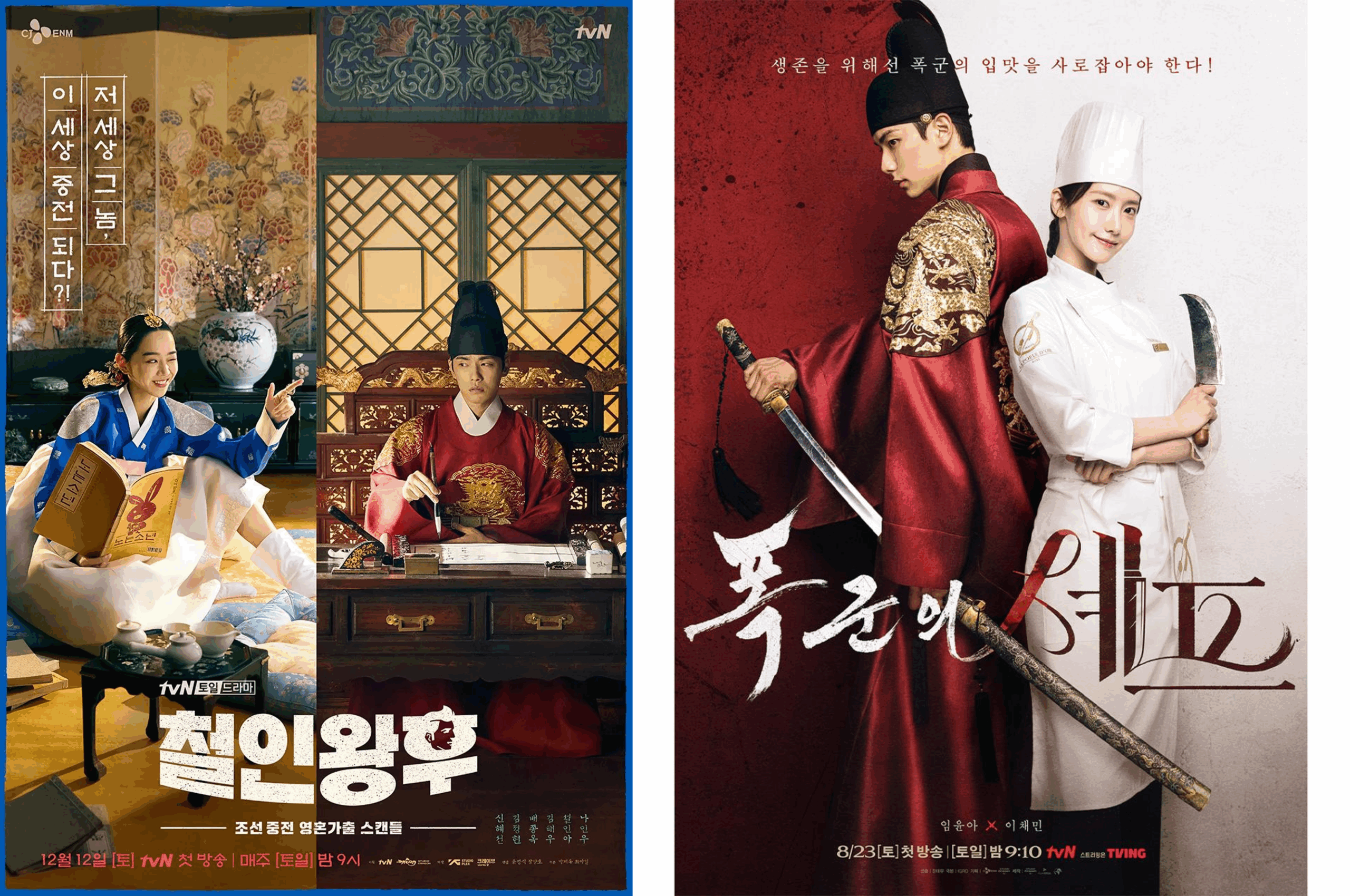
I’ll admit something: when I first heard about “Bon Appétit, Your Majesty” (폭군의 셰프), my immediate thought was, “Wait, didn’t we just do this with Mr. Queen?”(철인왕후)
A modern chef falls into the past. Check.
Ends up in a Joseon palace. Check.
Wins over a difficult king with K-drama food magic. Check, check.
And yet, both dramas became global phenomena. “Mr. Queen” (철인왕후) claimed the Netflix global Top 5 in 2023 with 20.9 million viewing hours in its first week, reaching Top 10 in 33 countries. Two years later, “Bon Appétit, Your Majesty” did even better—hitting #1 in 41 countries and becoming one of the most-watched K-dramas of 2025.
So what is it about time-traveling chefs and Joseon kings that the world can’t resist?
The answer, I think, lies not in the romance or the comedy (though both are delightful), but in something deeper: food as a bridge between worlds. And in Korean culture, that bridge carries more weight than you might imagine.
The Formula: Why Time-Slip + Chef = Global Hit
Both dramas follow similar beats:
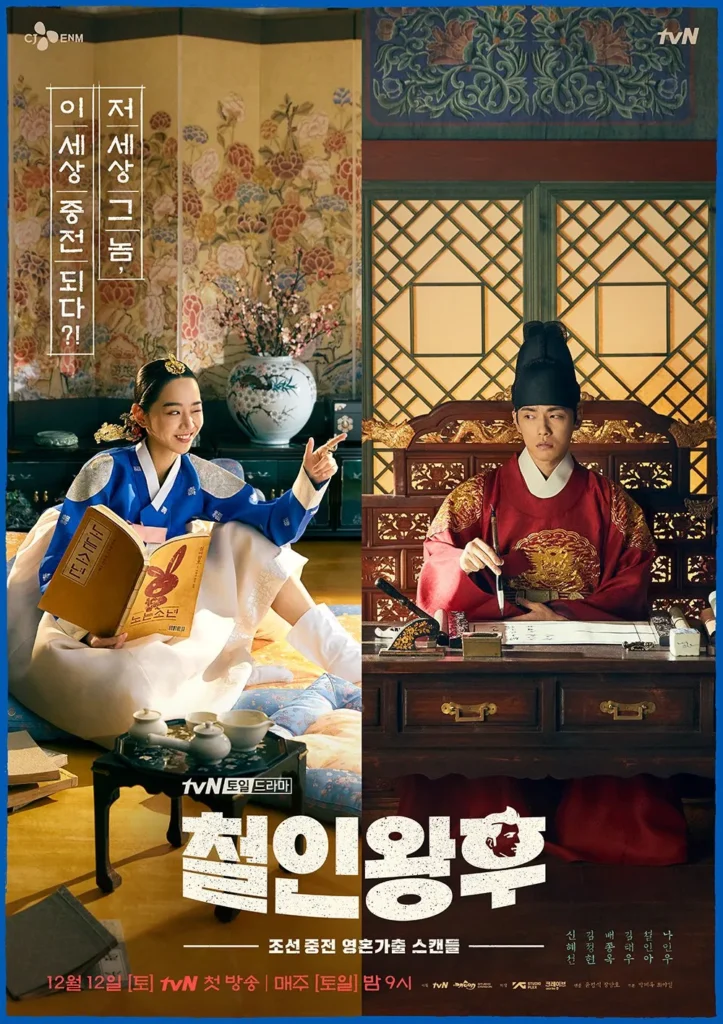
Mr. Queen (2020-2021):
- Jang Bong-hwan, a Blue House chef (male), wakes up in the body of Queen Cheorin (female) in 1851
- Introduces “modern” dishes like tteokbokki and ramyeon to the palace
- King Cheoljong is initially suspicious but gradually falls for her boldness
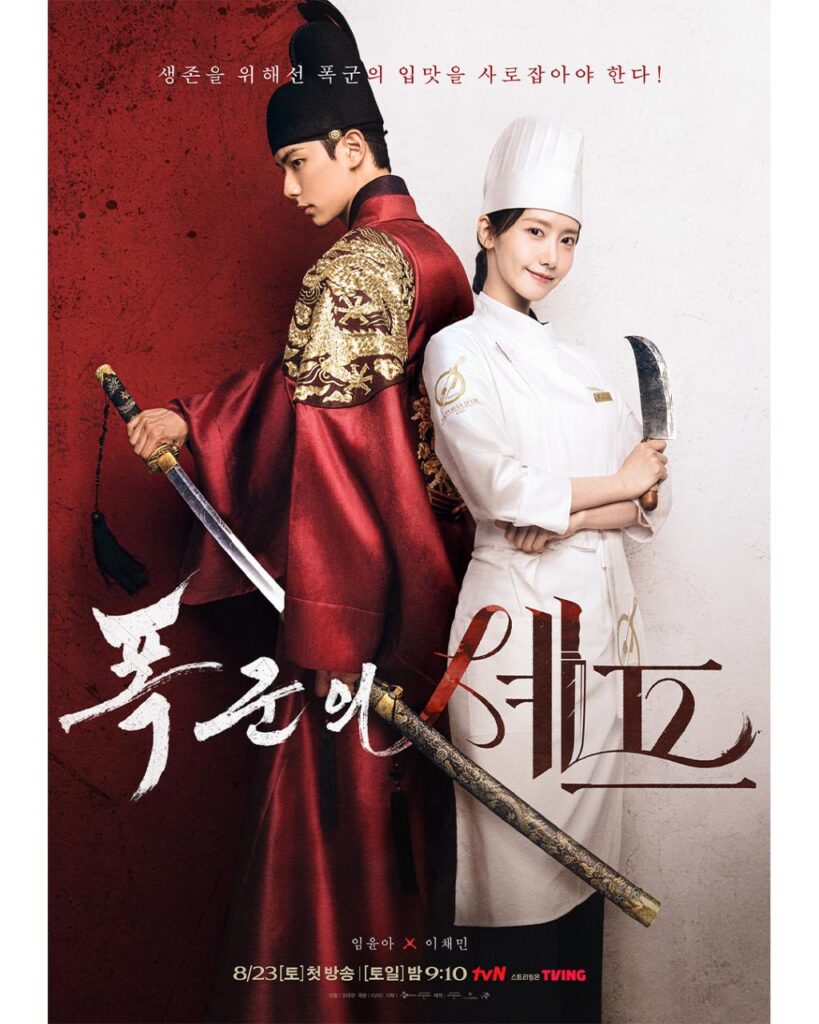
Bon Appétit, Your Majesty (2025):
- Yeon Ji-young, a French chef from Paris, time-travels to Joseon
- Becomes head royal chef serving the tyrant King Yi Heon (based loosely on Prince Yeonsan)
- Her creative cooking soothes his volatile temperament
The pattern? Food becomes the language when words fail. In both stories, the chef-protagonists can’t rely on historical knowledge or palace etiquette—they only have their hands, their instincts, and their understanding that food is love made visible.
This K-drama food storytelling resonates universally, but it resonates especially in Korean culture—where every meal carries the weight of history, survival, and love.
Why Food Means Everything in Korea
I grew up watching my grandmother prepare meals with a kind of quiet reverence. She never said “I love you” out loud—that wasn’t her generation’s way. But she would wake up at 5 AM to pack my school lunchbox, carefully arranging rice, marinated beef, and five kinds of banchan in separate compartments.
“먹었어?” (Did you eat?) was her version of “I love you.”
In Korea, food is never just sustenance. It’s care, attention, sacrifice, memory. When my grandmother made miyeok-guk (seaweed soup) on my birthday, she was connecting me to the day I was born, to my mother’s recovery, to generations of women who nurtured with broth and patience.
So when these dramas show a chef pouring their soul into a dish—whether it’s Queen Cheorin’s makeshift tteokbokki or Ji-young’s fusion creations—Korean audiences recognize it immediately. This isn’t just cooking. It’s the highest form of communication.
And now, through K-drama food scenes that have become iconic worldwide, global audiences are learning that too. What started as entertainment has become a gateway to understanding Korean culture at its most intimate level.
But What Was Royal Food Really Like?
Here’s where the dramas diverge from history—and where the real story gets fascinating.
The Reality: Palace Kitchens Were Hierarchies of Precision
The royal kitchen, called 수라간 (Suragan) or 소주방 (Sojubang), wasn’t a place for improvisation. It was a military operation.
Structure:
- Inner Kitchen (안소주방): Daily meals for the king and queen
- Outer Kitchen (밖소주방): Banquet foods, ceremonial dishes
- Staff: Court ladies (상궁, sanggung) who trained for 15+ years, and male chefs (숙수, suksu) for large events
Every dish required at least three cooks: one to prepare, one to supervise, and one to taste-test for poison. Yes, poison—more on that later.

The Meal: Not 12 Dishes, But a Philosophy
The famous “12-dish royal table” (12첩 반상) is actually a late Joseon development, formalized during the Korean Empire period (1897-1910). For most of the Joseon Dynasty, kings received 9-dish tables.
But whether 9 or 12, the principle was the same: the table represented the entire nation.
The Basic Structure:
- Two types of rice: White rice (백반) and red bean rice (홍반)
- Two types of soup: Miyeok-guk and beef broth
- Jjigae (stew): Usually doenjang or jeotguk-based
- Jjim (steamed dish): Fish or meat
- Jeongol (hot pot): Sometimes sinseollo (royal hot pot)
- Kimchi and jangajji (pickles)
- 12 side dishes (banchan): Each using different ingredients and cooking methods—grilled, boiled, fried, raw, fermented
The Philosophy:
The five elements (오행), five colors (오색), five flavors (오미) had to be balanced. This wasn’t superstition—it was holistic nutritionbefore the concept even existed. By ensuring variety in color, flavor, and cooking method, the royal kitchen guaranteed the king received complete nourishment.
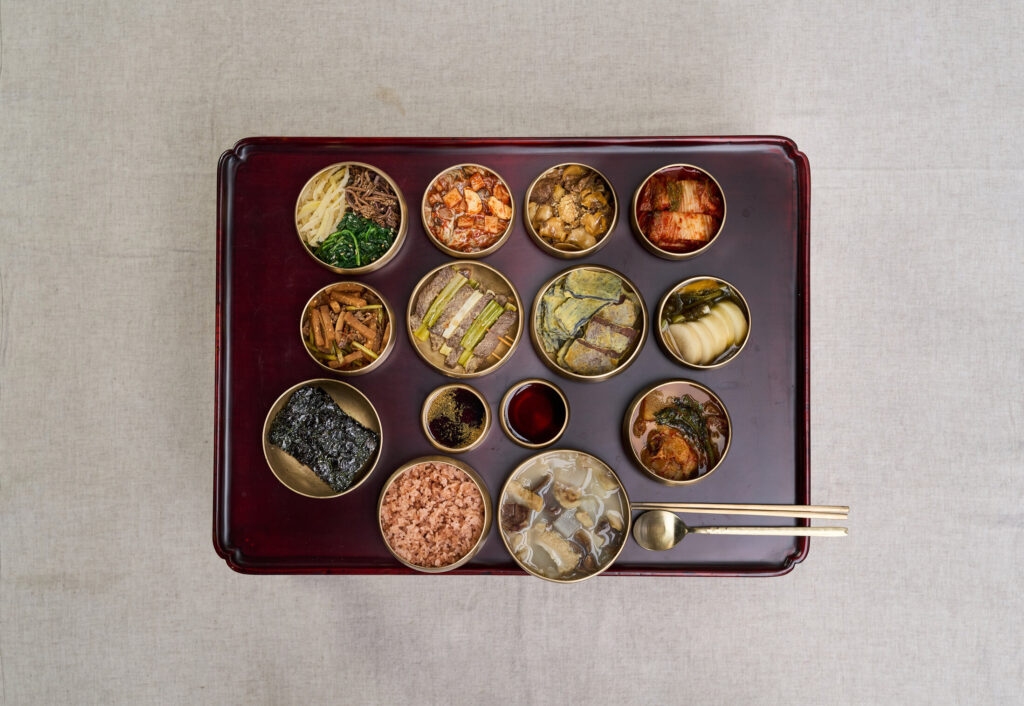
Source: Royal Cuisine Research Institute

Source: Royal Cuisine Research Institute
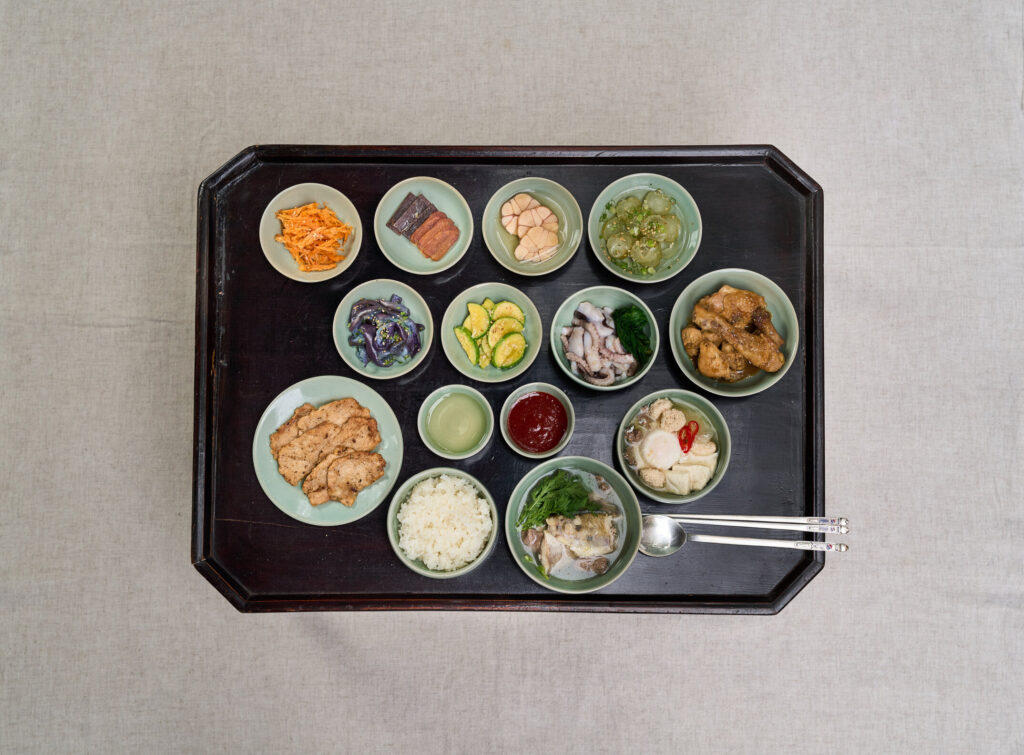
Source: Royal Cuisine Research Institute
What These K-Drama Food Stories Get Right
When it comes to K-drama food accuracy, both “Mr. Queen” and “Bon Appétit, Your Majesty” did their homework. Here’s where they nailed the historical details:
1. Food as Power
Both dramas understand that in the palace, controlling what the king eats is controlling the king. This was historically true—court factions competed to influence royal menus, and a favored dish could shift political allegiances.
2. The Tasting Ritual
In both shows, someone tastes the food before the king. This wasn’t theatrical—it was standard protocol. The sanggung (court lady) would perform gimi (기미), tasting each dish to ensure safety. Silverware was used because it was believed to change color in the presence of poison (though this only works with certain toxins, not all).
3. Seasonal Ingredients
The dramas correctly show that palace food changed with the seasons. Spring’s wild greens, summer’s chilled noodles, autumn’s persimmons, winter’s dried fish—the royal table tracked the agricultural year, reminding the king that his fate was tied to his people’s harvests.
Where K-Drama Food Takes Creative License (and Why That’s Okay)
K-drama food scenes are meant to entertain, not document. Here’s where both dramas bent history for storytelling—and honestly, we’re fine with it:
1. Creative Freedom in the Kitchen
In reality, every dish had a written recipe (조리서, joriseó) that cooks followed to the letter. Royal cuisine valued consistency over creativity. The king’s palate couldn’t be surprised—surprises meant potential danger.
The dramas’ chefs improvising? Delightful fiction. A real palace chef who deviated from the recipe would be dismissed—or worse.
2. The Romance Factor
A queen or royal chef falling in love with the king makes for great television. But the actual distance between a king and a cook was insurmountable. Even the highest-ranking sanggung (주방상궁, head kitchen court lady) would never share a personal conversation with the monarch.
3. Fusion Dishes
Queen Cheorin’s ramyeon and Ji-young’s French techniques are narrative devices, not history. Joseon palace food was conservative by design—it preserved techniques passed down for centuries. Innovation happened slowly, through careful trial across generations, not overnight experiments.
And honestly? That’s fine. These are dramas, not documentaries. They use food as a storytelling device to explore themes of connection, identity, and cultural exchange. The historical inaccuracies don’t diminish the emotional truth they’re conveying.
Why K-Drama Food Captivates Global Audiences
Before we dive deeper into the historical reality, let’s talk about why K-drama food scenes have become a cultural phenomenon.
It’s not just about the food looking delicious (though it does). K-drama food storytelling does something unique: it makes eating an emotional event. Watch Queen Cheorin’s first bite of ramyeon, or Ji-young’s nervous presentation of her fusion dish. The camera lingers. The music swells. The characters’ faces tell entire stories.
K-drama food is about connection, comfort, and survival. It’s why viewers around the world find themselves crying over a bowl of kimchi jjigae or a simple kimbap shared between friends.
The dramas taught us that food isn’t just what you eat—it’s how you love.
Now, let’s look at what real palace food was actually like…
The Deeper Truth: Why Preservation Mattered
Here’s what the dramas don’t show but I wish they did:
The knowledge these cooks carried was a national treasure.
When the last queen of Joseon, Empress Sunjeong, died in 1966, four palace court ladies remained alive. One of them, Han Hee-soon (한희순), had worked in the royal kitchens since childhood. She was the last living link to centuries of culinary tradition.
In 1971, the Korean government designated “Joseon Royal Court Cuisine” as Intangible Cultural Heritage No. 38, with Han Hee-soon as the first holder. She trained Hwang Hye-seong, who trained Han Bok-ryeo, who continues to teach today.
Why does this matter? Because palace cuisine wasn’t just about feeding a king. It was about preserving techniques that predated refrigeration, standardized measurements, and modern ingredient sourcing. These cooks knew how to ferment, preserve, balance, and heal with food—knowledge that took hundreds of years to accumulate.
When you eat at a restaurant certified in royal cuisine today (like Jihwaja or Samcheonggak in Seoul), you’re not eating “old food.” You’re eating living history, kept alive by women who refused to let it die.
What the Dramas Teach Us
So what can these two K-drama food phenomena teach us about Korean culture?
1. Food is a story worth telling.
Both dramas spent millions on food styling, historical research, and culinary consultation. The message? Korean food culture deserves the same cinematic attention as romance and action. K-drama food scenes have become as iconic as confession scenes or rain kisses—a genre signature.
2. Tradition and innovation can coexist.
The dramas’ chefs succeed not by replacing tradition, but by respecting it while adding something new. That’s actually how Korean cuisine has evolved—slowly, carefully, honoring what came before.
3. The past isn’t distant.
When Queen Cheorin makes tteokbokki or Ji-young serves her creative dishes, they’re doing what Koreans have always done: adapt, survive, and feed each other through hardship. The time-travel is fiction, but the resilience is real.
An Invitation: From K-Drama Food to Real Experience
If these K-drama food stories brought you here, I’m glad. Enjoy them for what they are—beautifully crafted entertainment that showcases Korean storytelling, culture, and yes, mouth-watering food cinematography.
But don’t stop at K-drama food fantasy. Visit a royal cuisine restaurant if you can. Try making miyeok-guk for someone you love. Ask your Korean friends about their grandmother’s kimchi. Let K-drama food be your gateway, not your destination.
Because every dish carries a story. And in Korea, those stories go back five hundred years, preserved by women who understood that feeding people well is the highest form of love.
What about you? Have you watched either drama? What surprised you most about Korean royal cuisine? Share your thoughts in the comments below!
Related Posts:
Shared by Oldtree of Mindgrove
Stories of Korea © 2025