
If you’ve tried Korean food, you’ve probably tasted doenjang or gochujang — but many foreigners confuse them with miso or hot sauce.
In Korea, these sauces are not just condiments, but a way of life.
If you’ve ever wondered what makes Korean food taste so deeply savory—that umami richness you can’t quite place—the answer is probably fermenting in an earthenware pot somewhere in Korea.
Korean jang (장) refers to three essential fermented sauces that form the backbone of Korean cooking: ganjang (soy sauce), doenjang (soybean paste), and gochujang (chili paste). These aren’t condiments you casually grab from the fridge. They’re living foods that Korean families ferment for months or years, creating complex flavors that simply can’t be rushed or replicated with shortcuts.
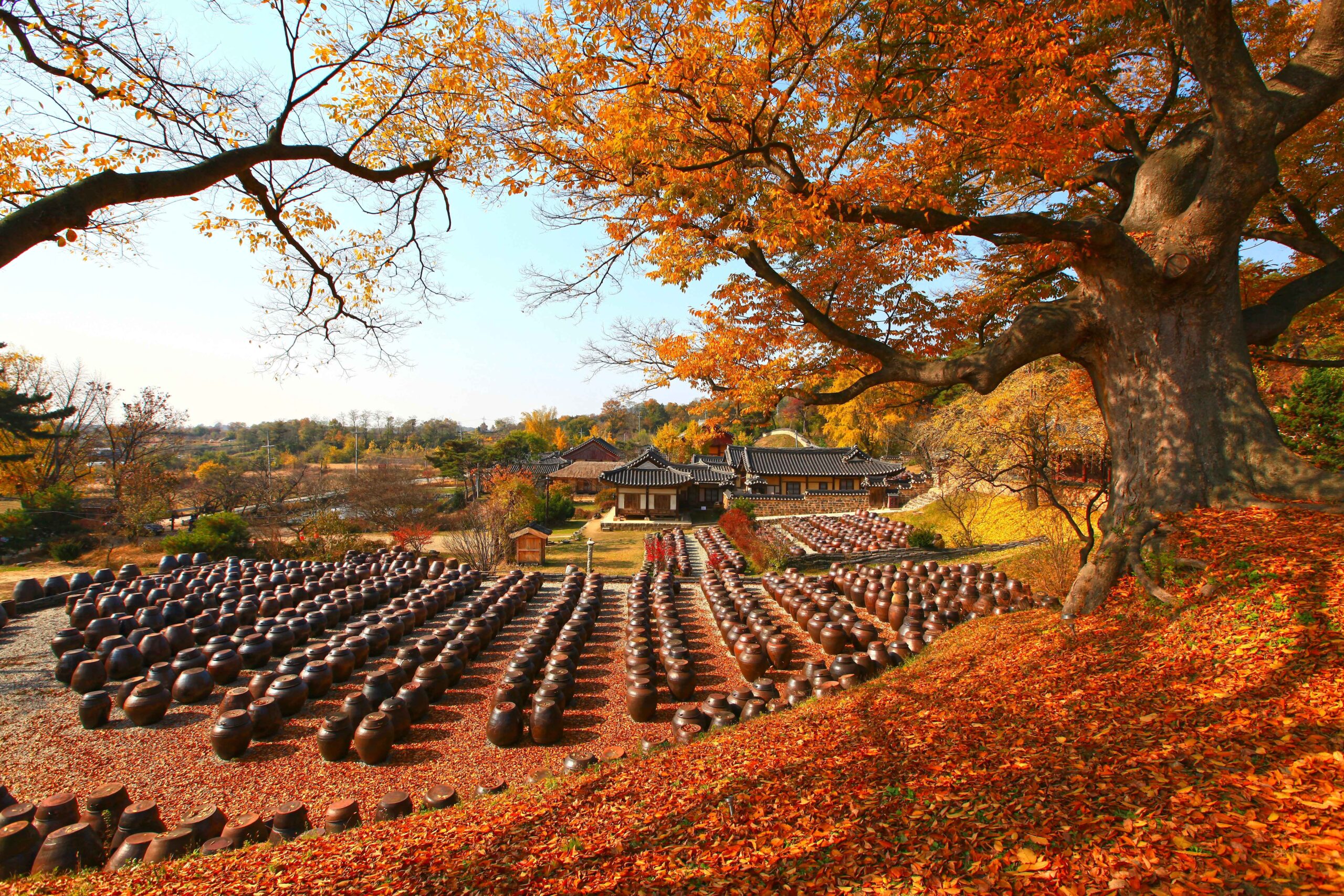
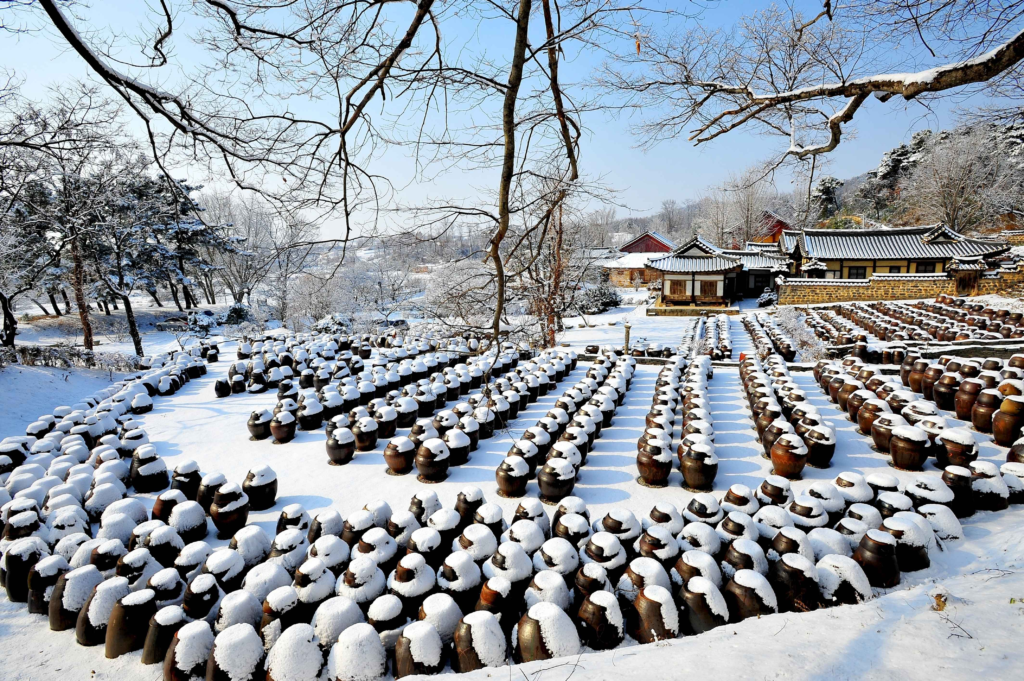
I learned this watching my grandmother’s backyard in late autumn. Rows of earthenware pots sat on a raised stone platform, like guardians watching over the house. She never measured ingredients. She tasted with her whole life—decades of knowing exactly when the fermentation had reached its peak, when the saltiness balanced the umami, when the sauce was ready to nourish another generation.
Let me show you what these three Korean fermented sauces really mean.
What is Korean Jang? (And Why Every Korean Kitchen Has Those Mysterious Pots)
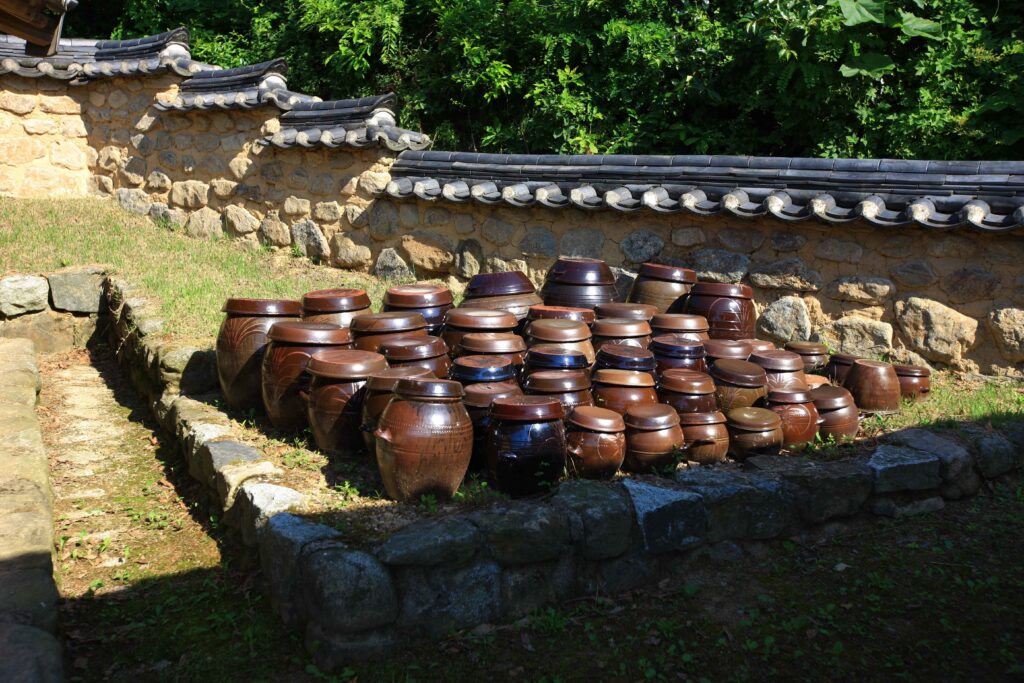
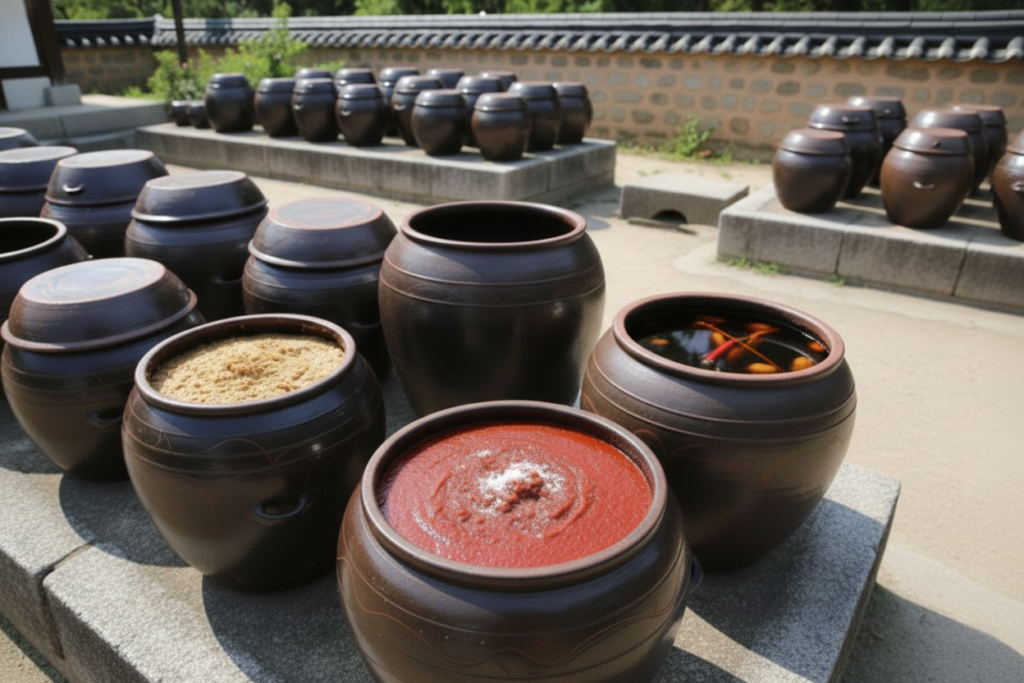
Walk into any traditional Korean home, and you’ll likely find a jangdokdae (장독대)—a raised platform holding multiple earthenware pots. To outsiders, they look decorative. To Koreans, they’re essential.
Jang (장, 醬) is the Korean term for fermented pastes and sauces made primarily from soybeans. In Korean cuisine, these fermented sauces serve roles that go far beyond adding flavor:
Foundation of Flavor: Nearly every Korean dish builds its taste from one or more types of jang. That complex umami depth you experience in Korean food? That’s jang working its magic.
Cultural Preservation: Before refrigeration existed, fermentation meant survival. Korean families spent months preparing jang to sustain them through harsh winters.
Family Legacy: The quality of a household’s jang reflected the cook’s skill and the family’s status. When Korean elders pass away, their aged jang pots are precious inheritance—sometimes more treasured than jewelry because the flavors are irreplaceable.
Living Tradition: Unlike shelf-stable condiments, jang continues fermenting even as you use it. It’s alive, evolving, breathing with the seasons.
Just as French cuisine has foundational sauces, Korean cooking builds from three essential jang:
- Ganjang (간장): Korean soy sauce—the liquid foundation
- Doenjang (된장): Fermented soybean paste—the comfort
- Gochujang (고추장): Fermented chili paste—the fire
Master these, and you unlock the entire flavor vocabulary of Korean cuisine.
Why These Sauces Are Irreplaceable
Before exploring each sauce, understand why these specific Korean fermented sauces can’t be substituted—and why grabbing any soy sauce or miso paste won’t give you authentic Korean flavors.
Time, Care, and the Taste of Hands
Korean cuisine adds another dimension to cooking beyond proper temperature, precise timing, and perfect knife work: accumulated time and human devotion.
These fermented sauces embody sigan-mat (시간맛)—”time taste.” My grandmother’s oldest doenjang was over five years aged. That single spoonful carried five years of transformation—microbial activity, seasonal changes, slow chemical reactions creating flavor compounds impossible to manufacture. You can’t rush this. You can’t fake it with additives.
Korean cooking also involves jeongseong (정성)—the care, devotion, and sincere effort you invest in feeding others. When a Korean cook makes jang, they invest months of attention: checking fermentation daily, adjusting brine, protecting pots from rain, turning them toward sun. This devotion becomes part of the flavor.
Related to this is sonmat (손맛)—”hand taste,” the unique flavor signature from a specific person’s cooking. My grandmother’s doenjang jjigae tasted different from my aunt’s, even using identical ingredients. Each person’s hands carry different bacteria, different warmth, different rhythms. This is why Korean families treasure homemade jang from specific people—it carries irreplaceable sonmat.
Factory-made jang is consistent and convenient. But it lacks jeongseong and sonmat—the human touch, the unique microbiome of a particular kitchen, the devotion that makes food more than fuel.
The 3 Essential Korean Fermented Sauces: Your Quick-Start Guide
1. Ganjang (간장): Not Your Average Soy Sauce
![Traditional Korean ganjang in ceramic bowl] Alt text: Korean ganjang traditional soy sauce in ceramic bowl showing rich dark color Caption: Ganjang—the liquid foundation that builds every Korean flavor
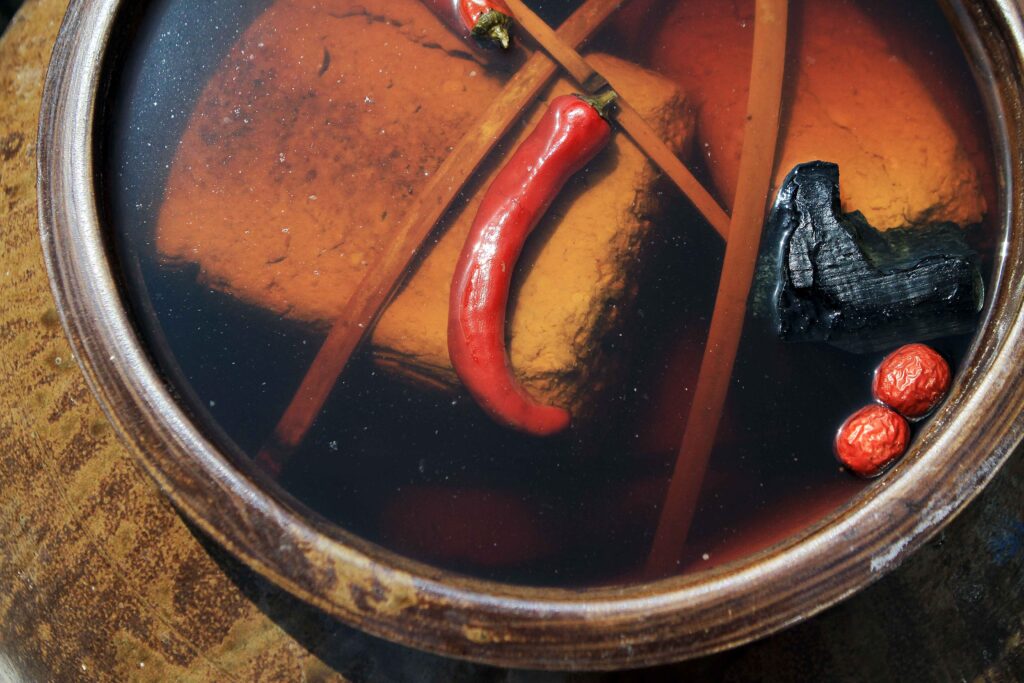
If you’re used to Japanese shoyu or Chinese soy sauce, Korean ganjang will surprise you. Traditional Korean soy sauce is made as a byproduct of doenjang fermentation—a detail that changes everything.
When fermented soybean blocks (meju, 메주) are submerged in salt brine, the liquid becomes ganjang and the solids become doenjang. This interconnected double-fermentation gives Korean soy sauce complexity that directly fermented soy sauces don’t possess.
Historical Significance: Ganjang has over 1,000 years of documented history in Korea. Records from 683 AD mention ganjang prepared for royal ceremonies—this wasn’t just seasoning, it held ceremonial importance.
Two Types You’ll Encounter:
- Guk-ganjang (국간장): Traditional “soup soy sauce”—lighter, saltier, for soups and light-colored dishes
- Yangjo-ganjang (양조간장): Modern brewed soy sauce—darker, less salty, for marinades and general cooking
In Korean cooking, ganjang builds umami layers without overpowering delicate vegetables, creates depth in clear soups, and forms the backbone of marinades. The right ganjang can make or break a dish.
2. Doenjang (된장): The Funky Paste Koreans Crave
![Doenjang in traditional earthenware bowl] Alt text: Korean doenjang fermented soybean paste showing traditional chunky texture Caption: Doenjang—funky, intense, and irreplaceable in Korean cooking
“Is This Just Korean Miso?”
Short answer: No. If you’re familiar with miso and taste doenjang expecting something similar, you’re in for a shock. It’s like expecting a gentle wave and getting hit by the ocean.
Doenjang is the solid counterpart to ganjang—they’re made together from the same fermented blocks. This shared origin creates doenjang’s bold, assertive, unapologetically funky character.
The Smell and the Soul: The smell can challenge newcomers—some compare it to aged cheese, others to earth after rain. For Koreans, that smell means home. We even have an expression: “된장 같은 사람” (doenjang gateun saram)—”a person like doenjang.” It’s high praise, meaning someone who gets better with time, someone essential, someone whose value you don’t fully appreciate until they’re gone.
How Koreans Use It:
- Doenjang jjigae (된장찌개): The quintessential comfort stew—doenjang, tofu, vegetables, simmered until flavors marry
- Ssamjang (쌈장): Dipping sauce for Korean BBQ wraps, mixing doenjang with gochujang
- Seasoning base: Added to soups and stews for instant umami depth
- Simple pleasure: Fresh raw vegetables dipped in seasoned doenjang
3. Gochujang (고추장): How Korea Turned Invasion Into Identity
![Gochujang in traditional onggi pot] Alt text: Korean gochujang fermented chili paste showing distinctive red color Caption: Gochujang—where sweet meets heat through months of fermentation
More Than Just “Spicy”:
Gochujang is Korea’s iconic fermented chili paste—that distinctive brick-red sauce in bibimbap and tteokbokki. But calling it just “spicy” completely misses what makes gochujang special.
This is complex balance: spicy, sweet, savory, and funky—all at once. The heat doesn’t slap you like hot sauce. It builds gradually, tempered by natural sweetness from fermented glutinous rice. The fermentation adds deep umami that makes gochujang completely different from fresh chili pastes.
The Ironic History:
Gochujang is the youngest of the three jang. While ganjang and doenjang have over 1,000 years of history, gochujang only emerged after chili peppers arrived in Korea in the late 16th century.
Here’s the irony every Korean knows: those chili peppers came through Japanese invasions that caused immense suffering. But Koreans took this foreign ingredient and transformed it through fermentation—through distinctly Korean methods—into something uniquely Korean. That’s the Korean spirit: taking hardship and creating something valuable from it.
Cultural Philosophy:
The word maeun-mat (매운맛, “spicy taste”) isn’t just about food—it’s a life metaphor. When someone experiences hardship, Koreans say they “tasted spicy flavor.” Gochujang embodies this philosophy: the heat is real and challenging, but it’s balanced with sweetness. It teaches you to handle intensity with grace.
How Koreans Use It:
- Bibimbap: Mixed into rice—gochujang brings all elements into harmony
- Tteokbokki (떡볶이): Spicy rice cake dish where gochujang is everything
- Marinades: For bulgogi, grilled meats, Korean fried chicken
- Sauces: Diluted with vinegar, sesame oil, sugar for countless variations
If I had to choose one jang representing modern Korean identity, it would be gochujang: born from invasion yet transformed into cultural treasure; sweet and spicy, comfort and challenge; ancient technique applied to relatively new ingredient.
What Fermentation Means to Koreans
Understanding these Korean fermented sauces means understanding the Korean relationship with time and transformation.
Korean jang is alive. Even in your refrigerator, bacteria are still working, still transforming the paste. This living quality connects to Korean philosophy about food—we don’t eat just for nutrition or pleasure, we eat to maintain harmony with natural processes. Fermentation is nature’s way of preserving and transforming. By eating fermented foods, we align ourselves with that natural rhythm.
Traditionally, making jang was never solo work. In Korean villages, families practiced pumasi (품앗이)—exchanging labor during jang-making season. When someone gave you homemade jang, they weren’t just giving seasoning—they were giving their time, their care, months of tending. Receiving homemade jang created relationship and obligation.
Even now, when my mother makes doenjang, she makes extra jars for family and close friends. It’s a gift that says: “I value you enough to give you months of my attention, fermented into flavor.”
When you understand that doenjang represents months of fermentation and generations of knowledge, you taste it differently. When you know gochujang carries the irony of transforming invasion into identity, that spicy-sweet heat means something more. You’re not just tasting ingredients—you’re tasting time, patience, and accumulated wisdom.
Continuing the Journey
My grandmother’s earthenware pots are still there, in my family’s home in Korea. When I visit, I always spend a moment by those pots. In summer, the lids are lifted slightly to let the jang breathe. In winter, they’re sealed tight. The pots sit exactly where my grandmother placed them decades ago, still transforming soybeans into liquid memory.
This is what these Korean fermented sauces represent: time made tangible, care made edible, culture preserved in earthenware and salt brine.
In Part 2 of this series, I’ll take you deeper into each sauce—evolution through Korean history, and practical guides for using them in your kitchen. You’ll learn why Korean ganjang tastes fundamentally different from Japanese shoyu, how doenjang is traditionally made through the seasons, and what makes gochujang truly unique.
Part 3 will explore how these Korean fermented sauces compare to similar condiments worldwide—including detailed differences between doenjang and Japanese miso, when you can substitute one for another (and when you absolutely shouldn’t).
For now, understand: when you open a jar of Korean jang, you’re opening a conversation with time, with transformation, with generations of Korean cooks who knew that the best flavors can’t be rushed.
They can only be waited for.
Quick Reference: The 3 Essential Korean Fermented Sauces
| Sauce | What It Is | Key Characteristic | Primary Uses | Similar To (But Not Same) |
|---|---|---|---|---|
| Ganjang (간장) | Korean soy sauce | Deep umami, less sweet than Japanese/Chinese varieties | Soups, stews, marinades, seasoning | Japanese shoyu, Chinese soy sauce |
| Doenjang (된장) | Fermented soybean paste | Bold, funky, intense—stronger than miso | Stews, dipping sauces, seasoning | Japanese miso (but much stronger) |
| Gochujang (고추장) | Fermented chili paste | Spicy-sweet-savory balance, complex heat | Bibimbap, tteokbokki, marinades | Sriracha (but fermented and complex) |
Shared by Oldtree of Mindgrove
Stories of Korea © 2025