Your First Winter in Seoul
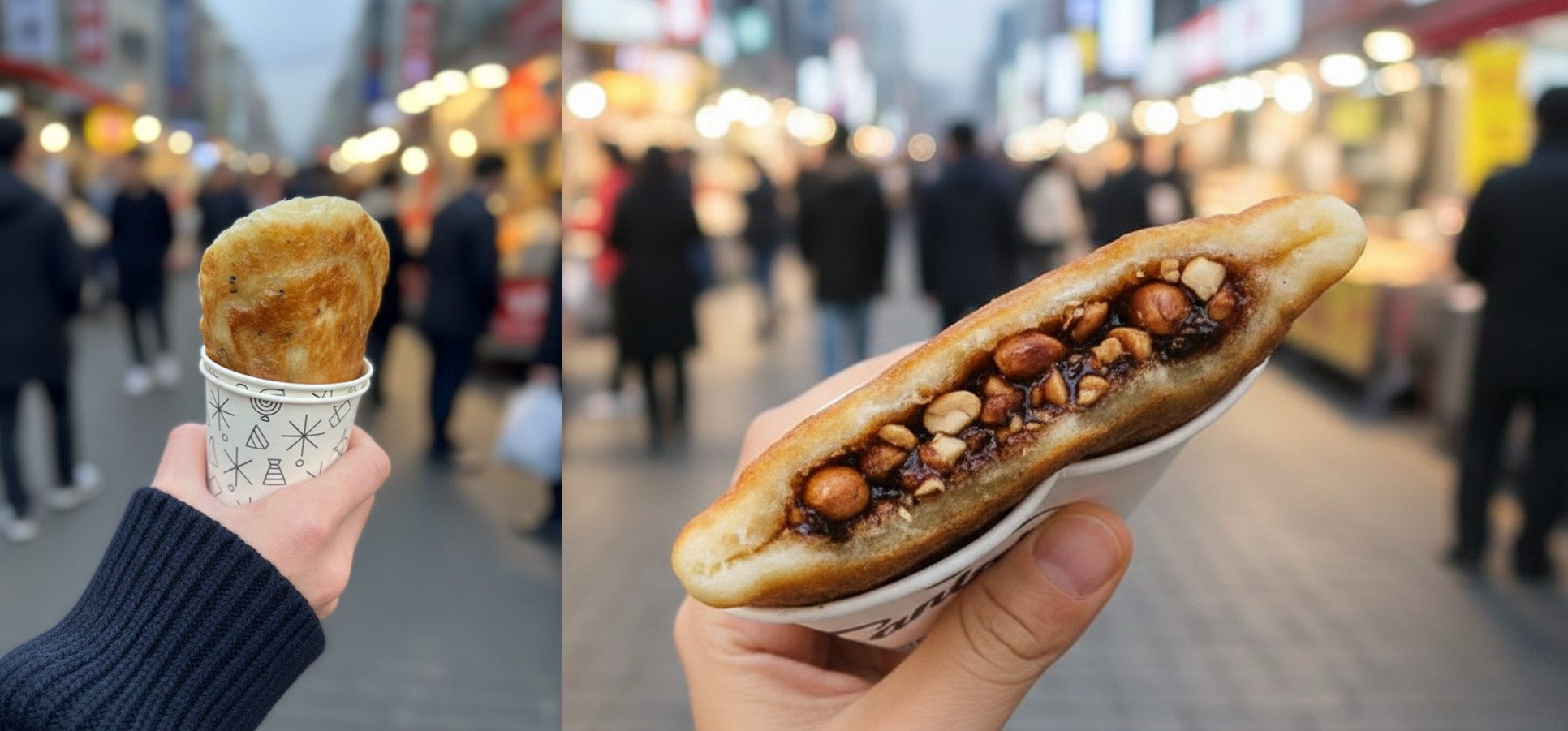
Picture this: You’re walking through Seoul on a December evening, and the temperature has dropped to freezing. Then you smell it—something sweet and warm drifting through the cold air. You follow the scent to a small cart where an elderly vendor is pressing golden pancakes on a hot griddle. Steam rises. Your hands are freezing. You buy one for 2,000 won.
Welcome to Korean street food.
Korea’s street food scene isn’t about fancy restaurants or Instagram-perfect presentations. It’s about warmth on cold nights, quick bites between subway stops, and snacks that cost less than a coffee. This guide will show you what to eat, where to find it, and how much you’ll pay. No complicated history lessons—just the foods that will make your Seoul winter unforgettable.
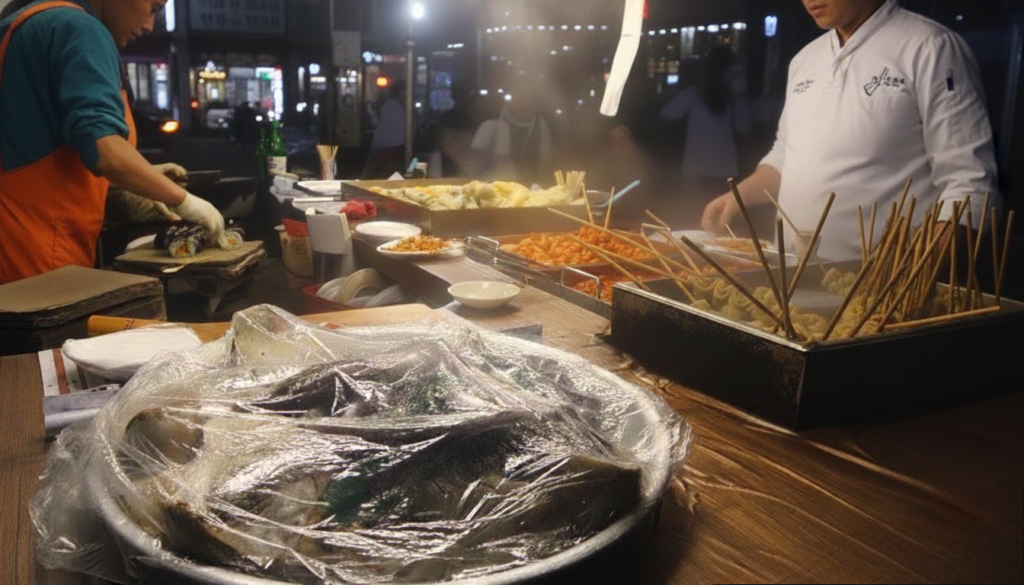
Show Image Street food vendors light up Seoul’s winter nights with warmth and delicious smells.
Winter Warmers: The Cold-Weather Favorites
🥞 Hotteok (호떡): Sweet Pancakes
What it is:
A flat, golden pancake filled with melted brown sugar, cinnamon, and chopped nuts. The dough is sticky and slightly chewy, and vendors press it flat on an oiled griddle until it’s crispy on the outside.
What it tastes like:
Imagine biting through a crunchy shell into hot, gooey sweetness. The sugar melts into syrup, the cinnamon hits your nose, and the nuts add texture. It’s dangerously hot—you’ll burn your tongue if you’re not careful—but it’s worth it. Sweet, warming, and addictive.
Cultural note:
Hotteok came to Korea in the late 1800s through Chinese merchants. Koreans loved it so much that it became our own. Now you’ll find wild variations: cheese hotteok, seed hotteok from Busan, even pizza hotteok. But the classic brown sugar version is still the best on a freezing night.
Price: 2,000 won ~ 3,000 won (about $1.50 ~$ 2.0)
Where to find it: Everywhere in winter. Try Namdaemun Market or any street corner in Myeongdong, Hongdae, or Insadong.
Pro tip: Let it cool for 30 seconds or you’ll burn your mouth. The sugar inside is lava-hot!

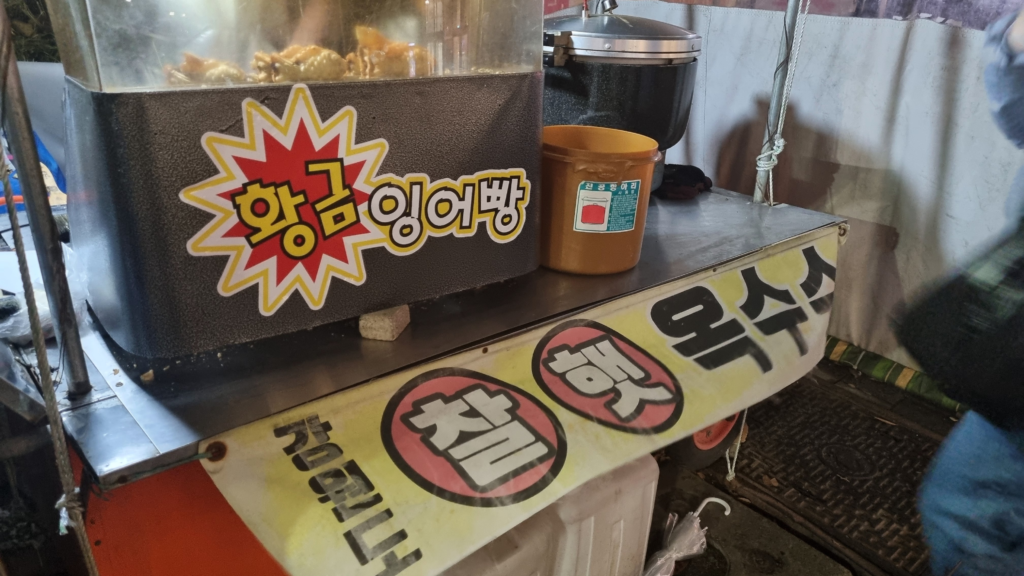
🐟 Bungeoppang (붕어빵): Fish-Shaped Pastry
What it is:
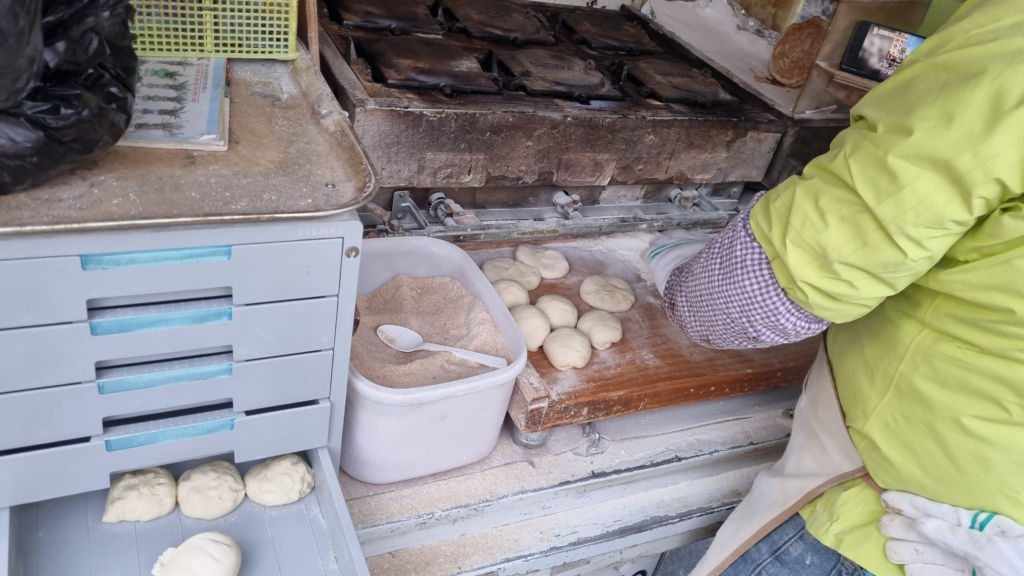
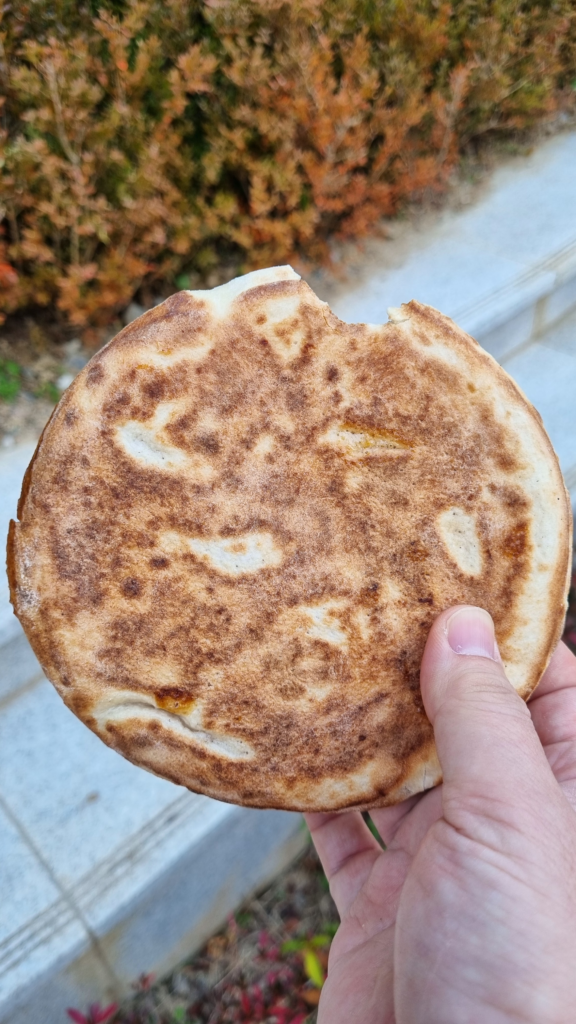
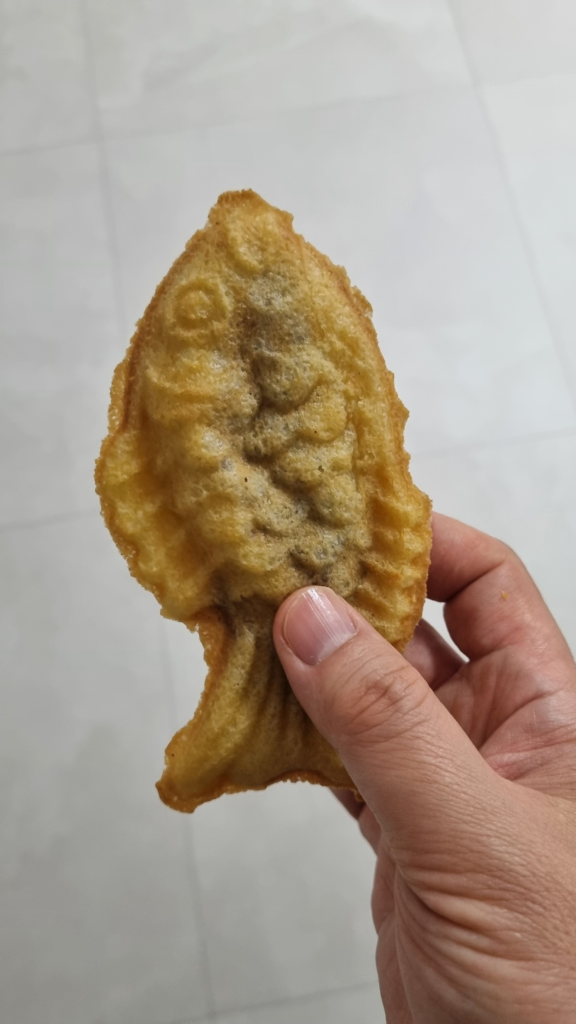
A cute, fish-shaped waffle filled with sweet red bean paste. Baked in a special fish-shaped mold, it’s crispy on the outside and soft inside. The red bean filling goes all the way to the tail.
What it tastes like:
The outside is like a thin waffle—slightly crispy and golden. The red bean paste inside is smooth, subtly sweet, and warm. It’s not as sweet as Western desserts, more earthy and comforting. Some stalls now offer custard cream, chocolate, or even pizza fillings if you’re not into red beans.
Cultural note:
The fish shape isn’t just cute—in Korean culture, fish symbolize good luck and abundance. Bungeoppang was cheap comfort food after the Korean War, and now it’s a nostalgia snack. There’s even a phone app that helps people find bungeoppang carts near them (seriously!).
Price: 5,000 won for 3 pieces
Where to find it: Most popular in residential neighborhoods and markets. Peak season is December-February.
Pro tip: They’re called “bungsegwon” neighborhoods—areas where bungeoppang stalls cluster. Ask locals where the best one is!
🍠 Gun-goguma (군고구마): Roasted Sweet Potato
What it is:
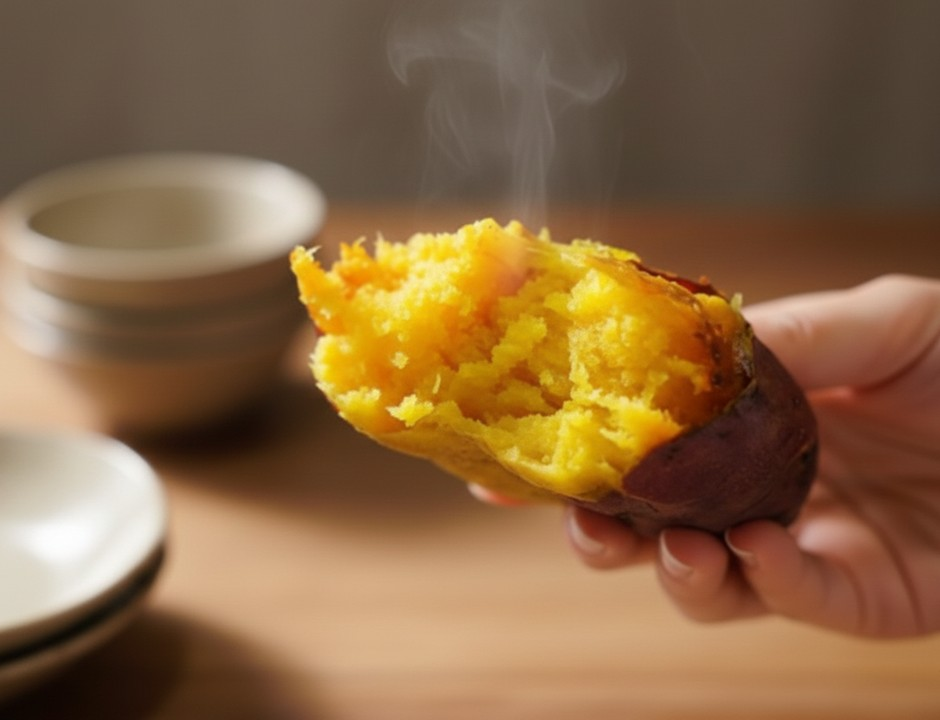
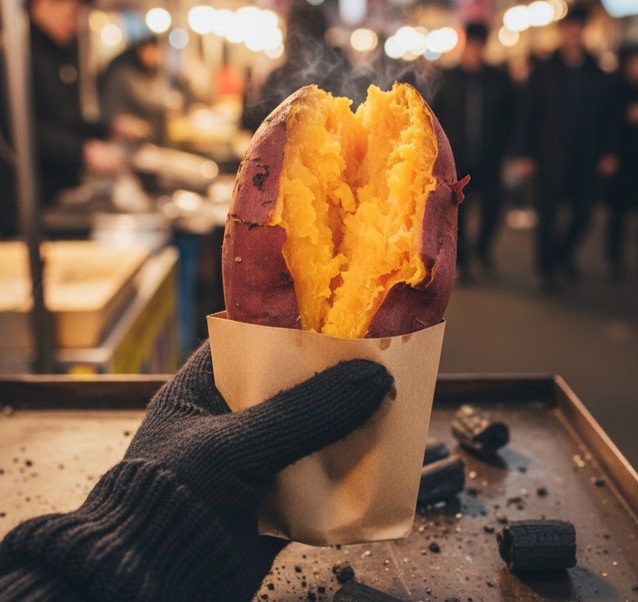
A whole sweet potato roasted in a metal drum filled with hot stones. That’s it. No seasoning, no toppings, just pure roasted sweetness wrapped in newspaper or foil.
What it tastes like:
The outside is slightly charred and chewy. The inside is soft, dense, and incredibly sweet—almost honey-like. It’s hot enough to warm your hands while you eat it. The slight smokiness from the roasting adds depth.
Cultural note:
This is simplicity at its best. Sweet potatoes grow well in Korea’s rocky soil, and they’ve been a winter staple for centuries. They’re filling, cheap, and naturally sweet—no processing needed. Korean grandmothers will tell you sweet potatoes kept them alive during hard times.
Price: 3,000-5,000 won depending on size
Where to find it: Street carts near subway stations, parks, and markets. You’ll smell them before you see them.
Pro tip: Choose the smaller ones—they’re sweeter. And don’t eat the skin unless you like the charred taste.
Year-Round Street Food: The Classics
🌶️ Tteokbokki (떡볶이): Spicy Rice Cakes
What it is:
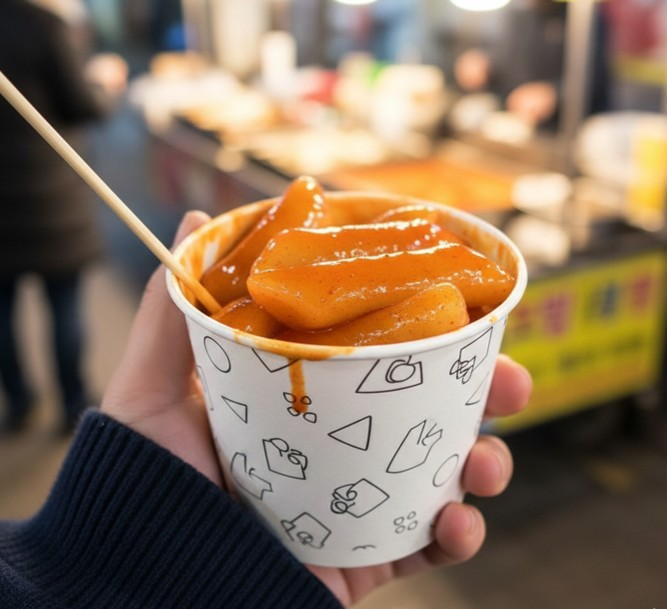
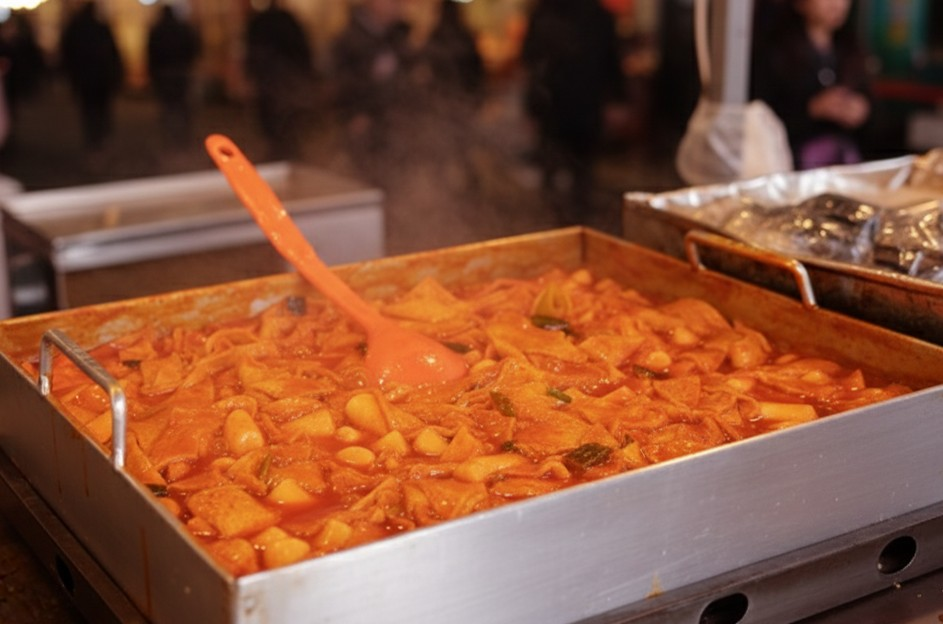
Chewy cylinder-shaped rice cakes cooked in a spicy-sweet red sauce made from gochujang (Korean chili paste). Usually comes with fish cakes and boiled eggs. Served in a paper cup or small bowl.
What it tastes like:
Chewy, spicy, slightly sweet, and very addictive. The rice cakes soak up the sauce and have a bouncy texture. The spice level varies—some stalls make it mild, others will make you cry. The fish cakes add protein and soak up even more sauce.
Cultural note:
Tteokbokki used to be a royal court dish made with soy sauce. The spicy version we eat today became popular after the Korean War when gochujang was easier to get. Now it’s the ultimate student snack—cheap, filling, and everywhere.
Price: 3,000-5,000 won for a cup
Where to find it: Literally everywhere. Gwangjang Market has famous spots, but even convenience stores sell it.
Pro tip: If you can’t handle spice, ask for “안 맵게 해주세요” (an maep-ge hae-juseyo) = “not spicy please.” They’ll go easier on the gochugaru.
🍢 Eomuk (어묵): Fish Cake Skewers
What it is:
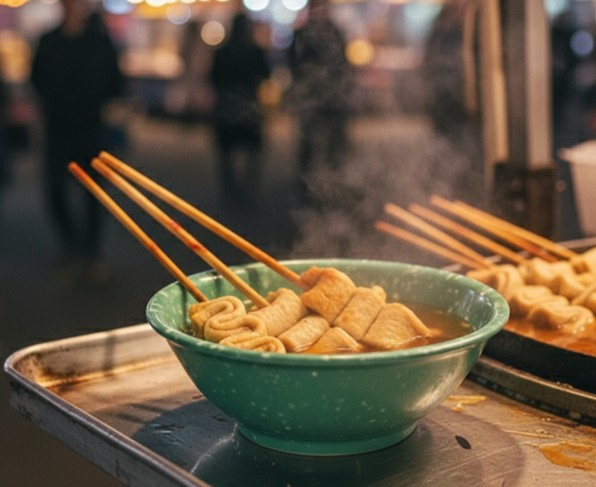
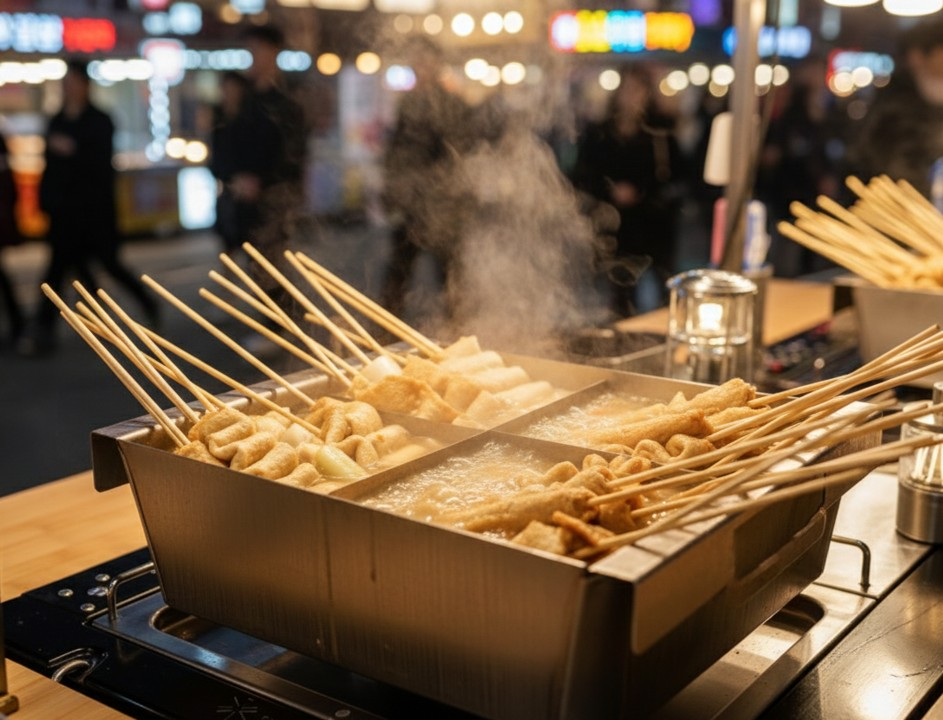
Fish cake on a wooden stick, served in a cup of hot broth. The fish cake is made from ground fish and flour pressed into various shapes—rectangles, spirals, or stuffed with vegetables.
What it tastes like:
Mild, slightly chewy, and comforting. The fish cake itself isn’t strongly flavored, but the broth is savory and warming. You drink the broth first (it’s free and warm!), then eat the fish cake. Perfect for cold days when you need liquid warmth.
Cultural note:
Fish cakes stretch expensive fish protein by mixing it with flour—a practical solution from times when meat was costly. The free broth became tradition because vendors wanted to give customers something extra in the cold weather.
Price: 1,500 won per stick; broth is free
Where to find it: Markets and street stalls, especially in winter. Myeongdong and Namdaemun are great spots.
Pro tip: Always drink the broth first—it’s the best part. And yes, it’s actually free.
🩸 Sundae (순대): Korean Blood Sausage
What it is:
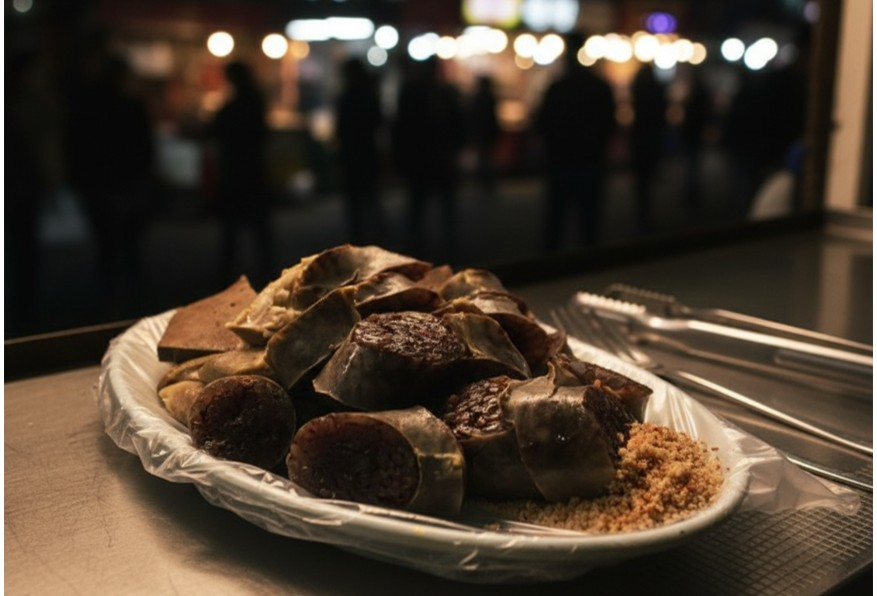
Don’t let the name scare you. Sundae is pig intestine stuffed with glass noodles, vegetables, and blood, then steamed. It’s sliced into rounds and served with salt and pepper for dipping.
What it tastes like:
Mild, soft, and earthy—not as strong as you’d expect. The glass noodles give it a slippery texture, and the vegetables add lightness. Dip it in salt and pepper, and it becomes savory comfort food. Not everyone’s cup of tea, but worth trying once.
Cultural note:
Sundae represents Korean resourcefulness—using every part of the animal. It’s cheap protein that became working-class comfort food. Today, there are even fancy sundae restaurants, but street stall sundae hits different.
Price: 3,000-4,000 won for a plate
Where to find it: Often sold alongside tteokbokki at street stalls. Gwangjang Market has excellent sundae vendors.
Pro tip: Start with just one piece to see if you like it. Mix it with tteokbokki if you want a safer introduction.
Where to Find the Best Street Food
Top Locations:
1. Gwangjang Market (광장시장)
- Why: Seoul’s oldest market, authentic atmosphere, best tteokbokki and bindaetteok
- Best for: Traditional experience, not too touristy
- Metro: Jongno 5-ga Station (Line 1)
2. Myeongdong (명동)
- Why: Tourist-friendly, creative fusion options, English menus
- Best for: First-timers, variety
- Metro: Myeongdong Station (Line 4)
3. Namdaemun Market (남대문시장)
- Why: Best hotteok in Seoul, affordable prices
- Best for: Winter snacks, late-night food
- Metro: Hoehyeon Station (Line 4)
4. Hongdae (홍대)
- Why: Student area, modern takes on classics, trendy options
- Best for: Younger vibe, instagram-worthy food
- Metro: Hongik University Station (Line 2)
5. Insadong (인사동)
- Why: Cultural area, traditional atmosphere, famous hotteok stall
- Best for: Combining with sightseeing
- Metro: Anguk Station (Line 3)
Practical Tips for Street Food Adventures
Payment:
- Most vendors accept cash only—have 1,000 and 5,000 won bills ready
- Newer carts might take cards, but don’t count on it
Timing:
- Winter snacks (hotteok, bungeoppang): November-March, peak times 3pm-10pm
- Year-round foods: Available all day, but busiest 5pm-midnight
- Markets: Check closing times—some markets close early (6-7pm)
Ordering:
- Point and hold up fingers for quantity
- Basic Korean: “이거 하나 주세요” (igeo hana juseyo) = “One of this, please”
- “얼마예요?” (eolmayeyo?) = “How much?”
Eating:
- Most street food is meant to be eaten standing up or walking
- Toothpicks and napkins are usually available at the stall
- Trash bins are nearby—please use them!
Safety:
- Everything is freshly cooked and safe to eat
- The biggest danger is burning your mouth—let hot foods cool!
- If you have food allergies, street food is risky (limited English, shared equipment)
Street Food Etiquette
Do:
- ✅ Eat near the stall and return cups/sticks to the vendor
- ✅ Say “잘 먹겠습니다” (jal meok-get-seub-ni-da) = “I’ll eat well” before eating
- ✅ Nod and smile to say thanks—vendors appreciate it
- ✅ Try everything at least once
Don’t:
- ❌ Walk far away with reusable cups or plates
- ❌ Expect seats—street food = standing/walking food
- ❌ Be shocked if there are no napkins—bring tissues
- ❌ Skip the free broth with eomuk—it’s a gift!
Seasonal Calendar
Winter (Dec-Feb): Hotteok, bungeoppang, roasted sweet potato, roasted chestnuts
Spring (Mar-May): Tteokbokki, eomuk, tornado potatoes
Summer (Jun-Aug): Patbingsu (shaved ice), cold noodles, fruit
Fall (Sep-Nov): All of the above plus hodugwaja (walnut cakes)
Final Thoughts: Just Go Eat
Korean street food isn’t complicated. You don’t need a food blogger’s guide or a fancy restaurant reservation. You just need a few coins, a sense of adventure, and an empty stomach.
The best street food moments happen by accident—when you’re freezing on a December night and smell something sweet, when you’re lost in a market and a vendor hands you a free sample, when you bite into bungeoppang and understand why Koreans love winter snacks.
So when you visit Seoul, skip the expensive restaurants for one night. Walk through Myeongdong or Gwangjang Market with 20,000 won in your pocket. Point at things that look good. Burn your tongue on hotteok. Drink the free fish cake broth. Let the steam warm your face.
That’s Korean street food. Simple, delicious, and unforgettable.
Quick Reference: Price Guide
Total budget for a street food night: 15,000-20,000 won ($11-$15)
| Food | Price(KRW) | Price(USD) |
| Hotteok | 1,000-2,000 | $0.75-$1.50 |
| Bungeoppang | 1,000(3pc) | $0.75 |
| Gun-goguma | 5,000 | $3.75 |
| Tteokbokki (cup) | 3,000-5,000 | $2.25-$3.75 |
| Eomuk (per stick) | 1,500-2,000 | $1.00-$1.50 |
| Sundae | 3,000-5,000 | $2.25-$3.75 |
Stop reading. Start eating.
Related Posts:
Shared by Oldtree of Mindgrove
Stories of Korea © 2025