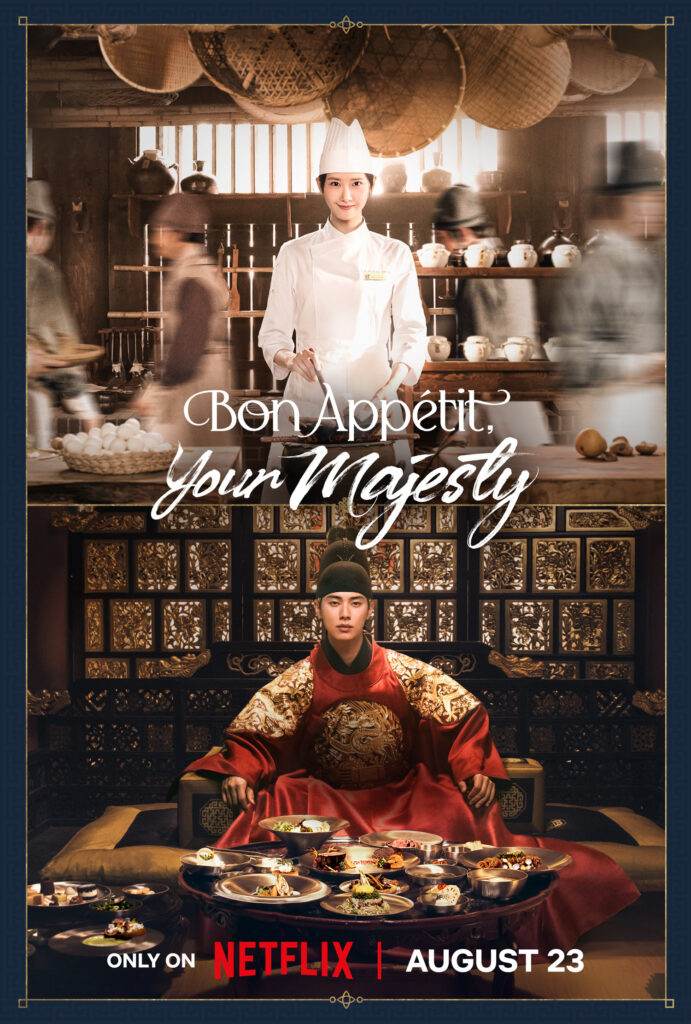
A Drama That Conquered the World : Bon Appétit, Your Majesty
When the Netflix K-Drama “Bon Appétit, Your Majesty” (Korean title: “폭군의 셰프”) hit #1 in 93 countries, one question dominated viewer discussions across Reddit, Twitter, and TikTok: Is this K-Drama based on a true story?
The short answer: Yes and no. While Prince Yeonhui, this K-Drama’s charming tyrant king with perfect taste buds, is entirely fictional, the true story behind “Bon Appétit, Your Majesty” draws from one of Korea’s darkest historical chapters. The real figure who inspired this Netflix K-Drama—Prince Yeonsan—was such a brutal tyrant that Korea erased him from its royal lineage forever.
Understanding the real history behind this K-Drama reveals why the creators wisely chose romance over reality.
My Korean friends and I had the same reaction when we saw the global success of “Bon Appétit, Your Majesty”: we laughed. Not at the K-Drama’s quality—it’s beautifully made, the food cinematography is stunning, and the chemistry between leads is genuinely entertaining. We laughed because we knew something the international audience didn’t: the real history that this Netflix K-Drama deliberately avoided.
Every Korean student learns this true story in middle school, and it never leaves you. When you grow up hearing about Prince Yeonsan in history class, the name itself carries weight. So watching a time-traveling chef romance him in a K-Drama feels surreal—like turning your country’s darkest nightmare into a fairy tale.
The true story behind “Bon Appétit, Your Majesty” is one of maternal tragedy, unchecked rage, and a historical recording system so powerful that even the most brutal tyrant couldn’t escape it. This Netflix K-Drama transformed that tragedy into hope, which is why it resonates so deeply with global audiences.
By September 2025, “Bon Appétit, Your Majesty” had reached TOP 10 rankings in 93 countries. The New York Times called it “the K-Drama that captured the world,” and TIME magazine praised how this historical K-Drama used Korean royal court settings with impressive attention to detail—even while fictionalizing the core story. Viewers worldwide fell in love with the idea that a time-traveling chef with modern culinary skills could soften a tyrant’s heart through food.
It’s a beautiful fantasy. K-Dramas excel at this kind of emotional storytelling—taking painful history and reimagining it with hope and human connection. But the true story of “Bon Appétit, Your Majesty”—the real history this K-Drama reimagined—teaches us something equally important: why some wounds run too deep for any feast to heal, and why systems of accountability matter more than individual redemption.
Let me tell you the real history behind this Netflix K-Drama and why understanding the true story makes “Bon Appétit, Your Majesty” even more meaningful to watch.
The King Who Lost His Name
In Korean, we have a saying: “이름 석 자가 역사에 남는다” — “Your three-character name remains in history.” For most Korean historical figures, this means honor. For Yeonsan, it meant eternal shame.
Yeonsan ruled as Joseon Dynasty’s 10th king from 1494 to 1506—just 12 years. But here’s what makes his story unique: he’s not called a king at all.
When you study Korean history, you learn a pattern. Joseon had 27 rulers over 500 years. Their temple names end with “jo (祖)” or “jong (宗)”—markers of royal legitimacy. Think Sejong, Taejong, Seongjong. These suffixes mean “ancestor” or “lineage,” bestowed after death to honor a ruler’s place in the royal genealogy.
Only two Joseon rulers never received these honors: Yeonsan and Gwanghaegun. Instead, they’re called “gun (君)”—the title for princes, not kings. Even in death, they were stripped of kingship.
Their records aren’t called “sillok (實錄)” or “true records” like other kings. They’re called “ilgi (日記)”—diaries. As if their reigns were merely personal journals, not legitimate chapters of national history.
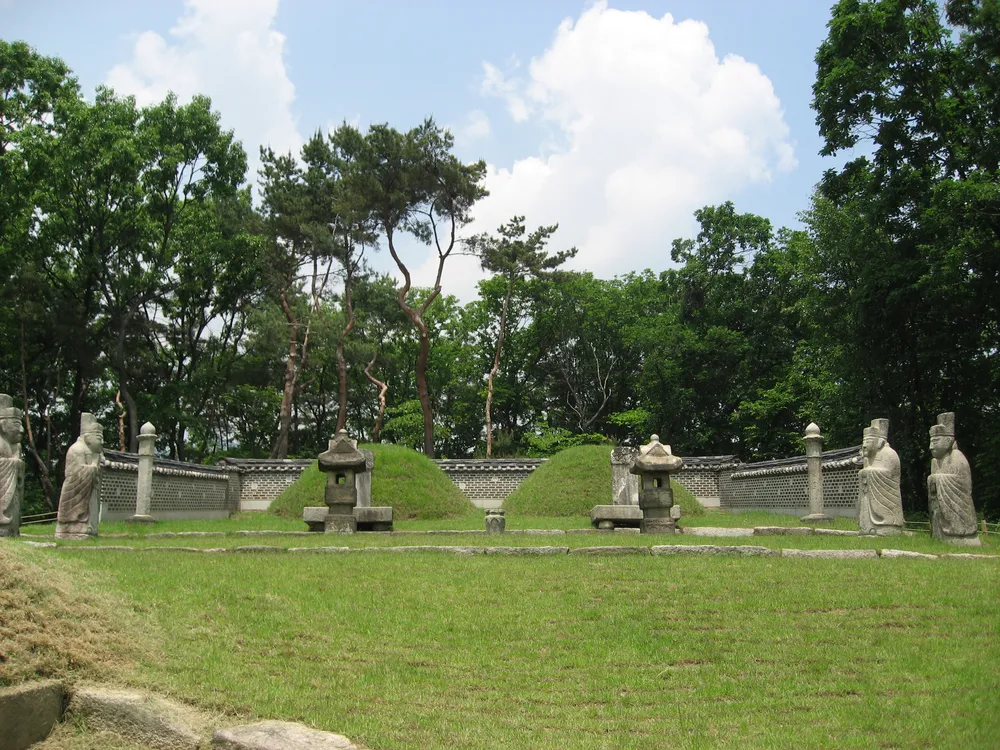
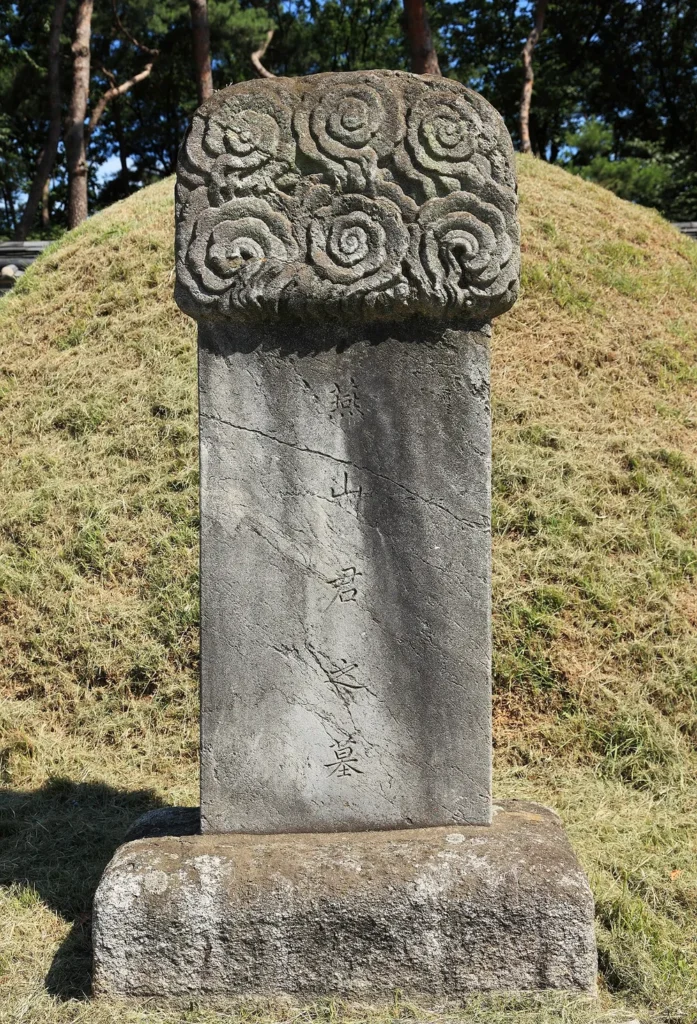
I remember visiting Yeonsan’s tomb in Seoul a few years ago. It sits quietly in a residential neighborhood, marked only by a simple stone: “Yeonsan-gun-ji-myo (연산군지묘)” — “The grave of Prince Yeonsan.” No grand structures. No honor guards. Just silence and a sense of what happens when power consumes a person whole.
The contrast struck me. Other Joseon kings rest in elaborate tombs with stone animals, guardian figures, and carefully maintained grounds. UNESCO even designated several as World Heritage sites. But Yeonsan? His grave looks like it belongs to a minor aristocrat, not someone who once ruled a kingdom.
But why did he become this way? The answer lies with a woman who never lived to see her son wear the crown.
A Mother’s Blood-Stained Secret
Queen Yun was beautiful—sources from the era describe her as exceptionally striking, which is rare for Joseon records that typically stayed neutral about appearances. King Seongjong adored her. In 1476, she gave birth to a healthy son: the future Yeonsan.
But palace life in Joseon Korea was brutal for royal women. Multiple wives, constant competition, and the ever-watchful eyes of the Queen Dowager created pressure cookers of jealousy and intrigue.
In 1479, something snapped. Historical records say Queen Yun scratched King Seongjong’s face with her nails during an argument. Some sources mention she kept poison and books on curses hidden in her chambers. Whether these accusations were true or fabricated by rival concubines, we’ll never know for certain.
What we do know: she was dethroned. Stripped of her title. Sent away from the palace.
Three years later, in 1482, when Yeonsan was only seven years old, the king sent an official to Queen Yun’s residence. The official carried a cup of poison. She drank it and died.
The folk story—never confirmed, but widely told—says she bit her finger and wrote a final message in blood on her white undergarment. She asked her mother to give this blood-stained cloth to her son when he became king, so he would know what happened to her.
Yeonsan grew up with Queen Jeonghyeon serving as his mother. Everyone at court conspired to keep the secret. The young prince attended state ceremonies, studied with Confucian scholars, and prepared to inherit the throne—all while living a carefully constructed lie.
For nearly 20 years, that lie held.
Then in 1504, a court official named Im Sa-hong told him the truth. Some sources say Im did it out of genuine concern; others suggest political calculation. Either way, the revelation destroyed Yeonsan.
Imagine learning at age 28 that your real mother was murdered, that everyone you trusted had lied to you, and that the very system you ruled had orchestrated the cover-up. Imagine discovering that while you honored your “mother’s” tomb with filial devotion, your real mother lay buried with barely a marker, her name erased from official records.
Yeonsan didn’t just grieve. He erupted.
The Records Even Kings Couldn’t Touch
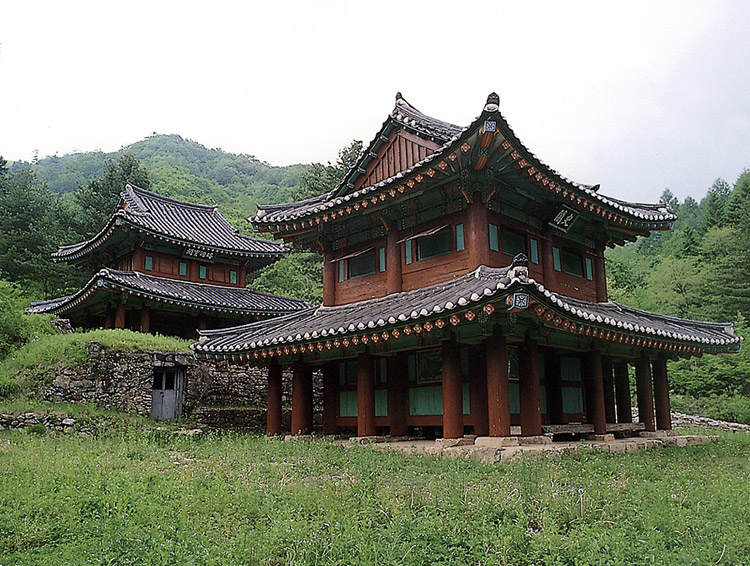
Source: National Heritage Administration, National Heritage Portal
This is where Korean history gets fascinating—and relevant to understanding why Yeonsan’s rage burned so hot.
In Joseon Korea, court historians called “sagwan (史官)” followed the king everywhere. They recorded everything: every decree, every conversation, every mistake. These draft records were called “sacho (史草).”
Here’s the remarkable part: not even the king could read the sacho.
There’s a famous story about King Taejong, Korea’s third ruler. One day in 1404, he fell off his horse during a hunt. Embarrassed, he quickly stood up and looked around, saying, “Don’t let the historian know about this.”
The historian, of course, recorded that exact sentence.
Why this extreme secrecy? Because if kings could read what historians wrote about them, those historians would fear for their lives. They’d write propaganda instead of truth. So Joseon established an iron law: sacho remained sealed until after a king’s death. Only then would scholars compile these records into the official “Joseon Wangjosillok (조선왕조실록)”—the Annals of the Joseon Dynasty.
These annals contain 472 years of daily records—from 1392 to 1863. They document 25 kings across nearly five centuries, recording everything from major political decisions to natural disasters, from palace intrigues to what the king ate for breakfast. In 1997, UNESCO recognized them as a World Heritage treasure—the most complete, continuous historical record of any kingdom in the world.
The system worked through a network of checks. Eight historians rotated duties, ensuring no single person held all the power of recording. They attended every royal meeting, every ceremony, every moment of state business. Some kept official records at the Royal History Office (Chunchugwan). Others maintained secret “family sacho (家藏史草)” at home—personal observations that included criticism of the king, assessments of officials’ character, and confidential matters they dared not report publicly.
When a king died, scholars gathered all these sources—official records, family sacho, government documents, even personal letters—to compile the definitive history of that reign. Only after completion did they burn the draft materials in a ceremonial washing at Segeomjeong stream, ensuring no one could ever alter the record.
When Yeonsan learned about his mother’s death in 1504, he demanded to see the sacho from his father’s reign. He wanted to know exactly who had supported his mother’s execution, who had remained silent, who had spoken in her defense. Court officials refused. Even the grieving king himself couldn’t break the sacred rule of historical records.
The historians stood firm. To them, preserving truth mattered more than the king’s personal anguish.
So Yeonsan found another way: he arrested everyone who had served in his father’s court and tortured them into confessing their roles in his mother’s death.
The purge that followed—called “Gapja Sahwa (甲子士禍)”—claimed over 230 lives. He even ordered the corpses of already-dead officials dug up and beheaded in a practice called “부관참시 (bugwanchamsi)”—posthumous execution. His father’s former concubines who had competed with his mother, including Lady Eom and Lady Jeong, were tortured to death.
The great scholar Han Myeong-hoe, who had died years earlier, had his grave desecrated and his corpse mutilated. Yun Phil-sang, who had spoken against Queen Yun, met the same fate. Even officials who had merely been present during the discussions faced brutal punishment.
I’ve often wondered: if Yeonsan could have simply read the historical records, would he have been satisfied? Or would seeing his mother’s humiliation written in black ink, preserved for eternity, have driven him even further into madness?
Perhaps the historians knew what they were protecting—not just historical truth, but the king himself from a pain that words on paper could only deepen.
Why the Drama Chose Fiction Over Fact : Bon Appétit, Your Majesty
The original web novel that inspired “Bon Appétit, Your Majesty” was titled “Surviving as Yeonsan’s Chef” (연산군의 셰프로 살아남기). The title alone tells you everything: this was about survival in the court of history’s most dangerous Korean ruler.
But when tvN and Netflix adapted it for their 2025 series, they made a crucial change: Prince Yeonsan became the fictional Prince Yeonhui. The Korean title remained “폭군의 셰프” (The Tyrant’s Chef), but the English title became the more palatable “Bon Appétit, Your Majesty.” The drama transformed from historical fiction into alternative history.
TIME magazine called this decision “wise,” noting that using historical backdrop as a fantasy playground allowed the show to focus on “escapist romantic storytelling” without the burden of real tragedy.
And honestly? I agree. The real Yeonsan’s final years were horrific.
He turned the Confucian academy Sungkyunkwan into a pleasure house, forcing scholars to vacate their dormitories so he could entertain there. He sent officials called “채홍사 (chaehongsa)” and “채청사 (chaecheongsa)”—literally “collectors of red” and “collectors of green”—across the country to gather beautiful women regardless of marital status. These officials became so feared that families would hide their daughters when rumors spread of their approach.
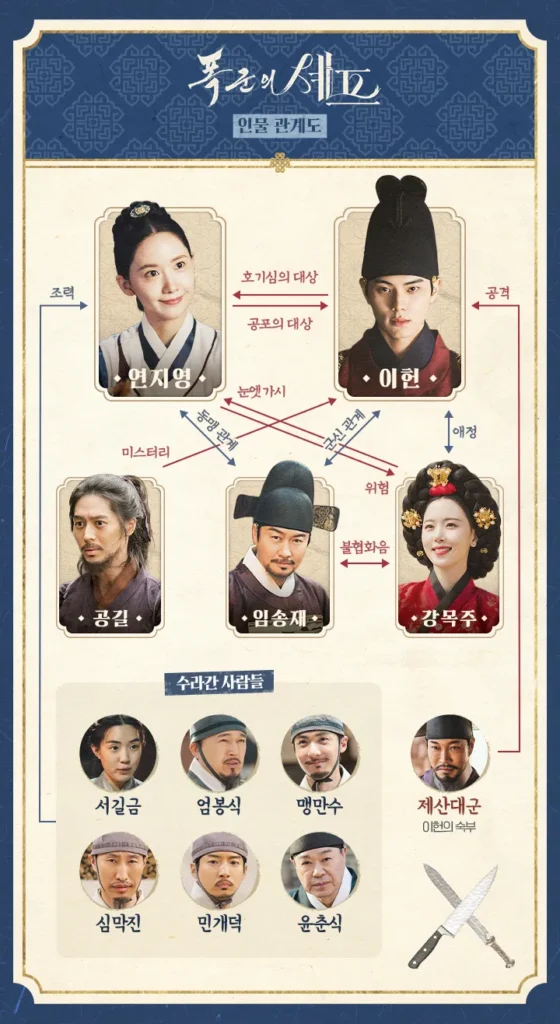
One of those women was Jang Nok-su (장녹수), a courtesan who became Yeonsan’s most favored companion. If you’ve watched the drama, you might recognize her—the character Kang Mok-ju draws inspiration from her story. The real Jang Nok-su’s influence over the king became so notorious that she was blamed for encouraging his worst excesses. When the 1506 coup succeeded, angry citizens dragged her into the streets and stoned her to death at Jongno, the heart of Seoul.
The drama’s Kang Mok-ju gets a softer treatment—and for good reason. The real story doesn’t leave room for romance when it ends with a woman being killed by a mob.
Yeonsan killed scholars for writing poems that could be interpreted as criticism. The “Muohasahwa (무오사화)” of 1498 saw dozens executed simply for praising earlier kings in ways that implicitly criticized the current reign. He built massive hunting grounds by destroying civilian homes, displacing entire neighborhoods so he could pursue his hobby without leaving the capital.
He banned all forms of criticism, ordering that anyone who spoke against him—or even looked at him wrong—face immediate execution. The palace atmosphere became so oppressive that officials would shake with fear during audiences with the king.
In 1506, court officials staged a coup called “중종반정 (Jungjong Banjeong).” Led by Park Won-jong, Seong Hui-an, and Yu Sun-jeong, they stormed the palace at night, killed Yeonsan’s closest supporters, and forced Queen Dowager Jeonghyeon to issue an edict deposing him.
They installed his younger half-brother as King Jungjong. Yeonsan was exiled to Ganghwa Island, where he died of fever just two months later at age 31. Some historians suggest he may have been poisoned, though the official records cite natural illness.
Could a time-traveling chef with modern culinary skills have changed this outcome? I doubt it. No amount of perfectly seasoned beef or fusion banchan could heal a wound that deep. Some tragedies are beyond the reach of even the most exquisite feast.
History as a Mirror
What strikes me most about this story isn’t the drama or even the real history—it’s what we choose to remember and how we choose to remember it.
“Bon Appétit, Your Majesty” gives us romance, comedy, and the fantasy that love and good food can change even the hardest heart. It’s comfort food for the soul, and there’s real value in that kind of storytelling. The drama reminds us that Korean culture isn’t just tragedy and historical trauma—it’s also joy, creativity, and the belief that human connection can transform us.
But the real story—the one about Yeonsan, his mother, and the sacred records that even kings feared—teaches us something different. It reminds us that unchecked power destroys. That systems of accountability, like the sacho tradition, matter more than any individual ruler’s desires. That the pain we carry can either break us or teach us why institutions that limit power exist in the first place.
When I learned that even the most powerful king in Korean history couldn’t erase his mistakes from the historical record, I understood something profound about why democracies need free press, why transparency matters, why no one should be above documentation and scrutiny.
The sacho system wasn’t perfect. It couldn’t stop Yeonsan from committing atrocities. But it did something equally important: it preserved the truth for future generations. Every abuse, every excess, every moment of cruelty was recorded. Future kings knew they would be judged not just by their contemporaries, but by history itself.
That knowledge created pressure. Not always enough to prevent wrongdoing, but enough to remind rulers that their legacy depended on more than their power—it depended on their choices.
The drama entertains us. The history teaches us. Both have their place, and honestly, we need both. We need stories that remind us of human possibility and goodness. We also need records that tell us what happens when power forgets its limits.
An Invitation
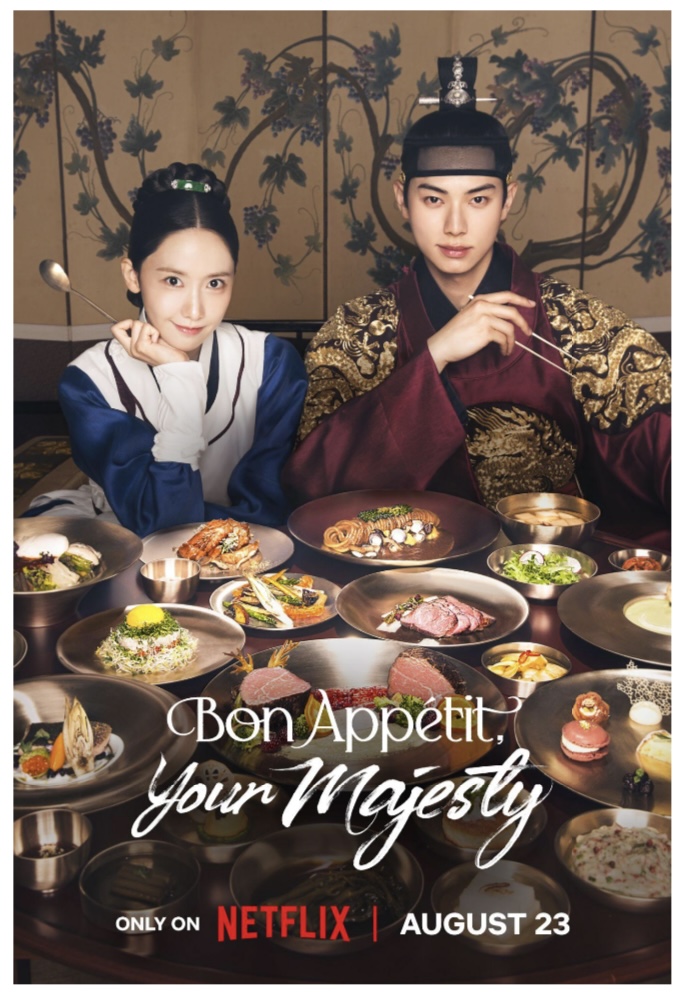
If “Bon Appétit, Your Majesty” brought you here, I’m glad. Enjoy the drama for what it is—a beautifully crafted piece of entertainment that showcases Korean storytelling, culture, and yes, mouth-watering food cinematography. The series deserves its success for making Korean historical settings accessible and appealing to global audiences.
But don’t stop there. Behind every historical K-drama is a real history far richer and more complex than any 12-episode series can capture. The drama gives you one way to engage with Korean culture. The actual history gives you another—deeper, more challenging, but ultimately more rewarding.
In my next post, I’ll explore the Joseon Wangjosillok in depth: how Korea created a 500-year time capsule, why these records survived wars and invasions when most historical documents didn’t, and what they reveal about a civilization that valued truth above royal pride. We’ll look at the historians who risked their lives to record unflattering truths, the storage systems that protected these books from fire and flood, and why this achievement matters for understanding not just Korean history, but the relationship between power and accountability anywhere.
I’d love to hear from you: Have you watched “Bon Appétit, Your Majesty”? What surprised you most about the real story behind the drama? Did learning about the sacho system change how you think about historical records? Share your thoughts in the comments below.
Related Questions You Might Have
Shared by Oldtree of Mindgrove
Stories of Korea © 2025