From Ancient Folklore to Netflix: The Magpie’s Journey
Have you watched Netflix’s viral animation “K-Pop Demon Hunters”? If you have, you’ve definitely noticed Sussie—the suspicious-looking magpie with three pairs of eyes that travels with Derpy the tiger! But did you know that this modern character is rooted in centuries of Korean tradition where magpies are one of Korea’s most beloved good luck symbols?
If you read our previous post about Korean Tiger Symbolism: Why Derpy Became the K-pop Demon Hunters’ Tiger, you learned about Derpy and the traditional Hojakdo paintings. Today, we’re exploring Derpy’s companion—the magpie that has captivated Korean hearts for thousands of years and now stars alongside him in Netflix’s animation!

Sussie from K-Pop Demon Hunters: A Modern Take on Ancient Symbolism
In Korean culture, certain animals hold special power as symbols of good luck and fortune. Remember the traditional Korean folk painting ‘Hojakdo’ (Tiger and Magpie painting) we discussed? The painting where a mighty tiger looks foolish while a small bird perches confidently on a pine tree? That fearless little bird is today’s star: the magpie—the same bird that inspired Sussie in Netflix’s K-Pop Demon Hunters!
Meet Sussie: The Six-Eyed Magpie
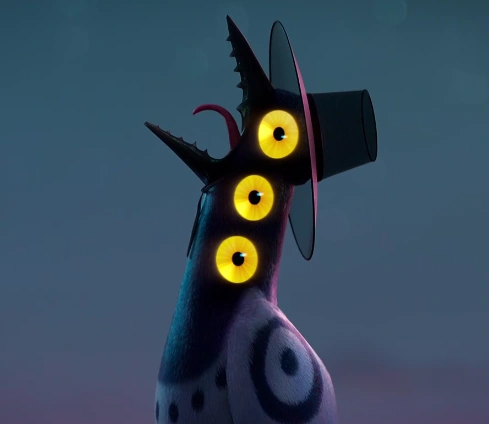
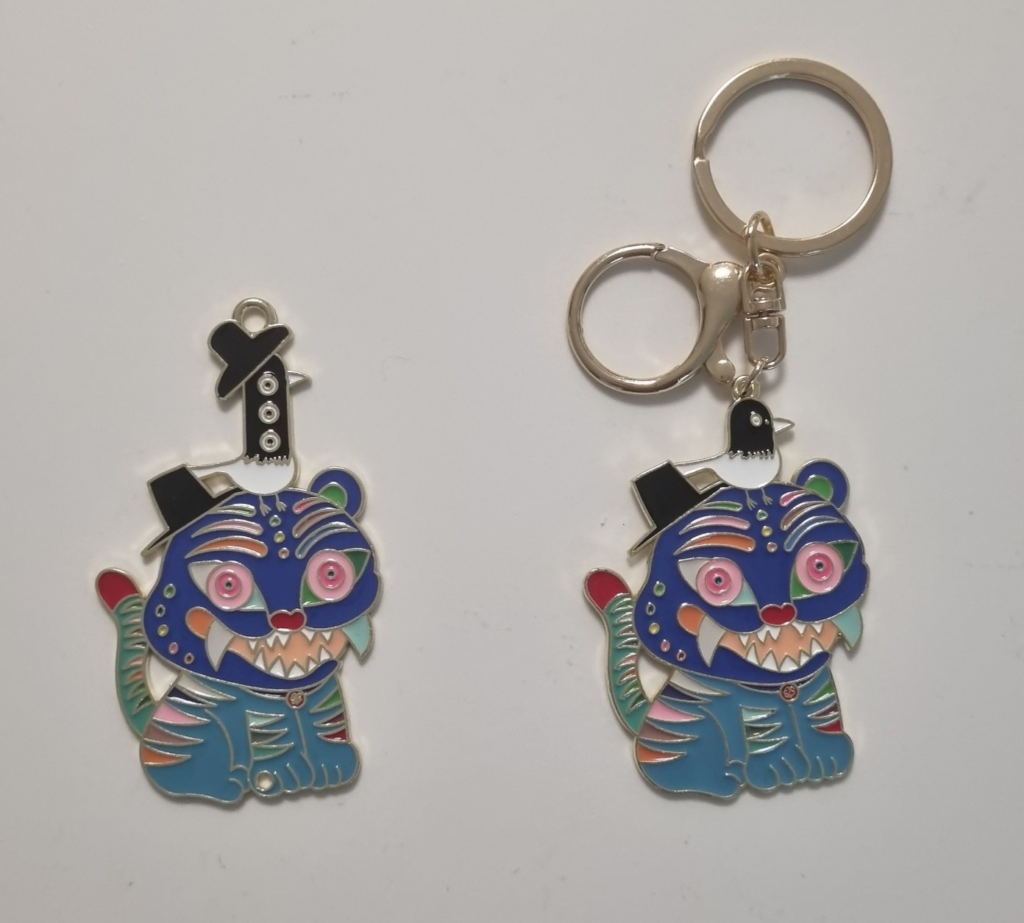
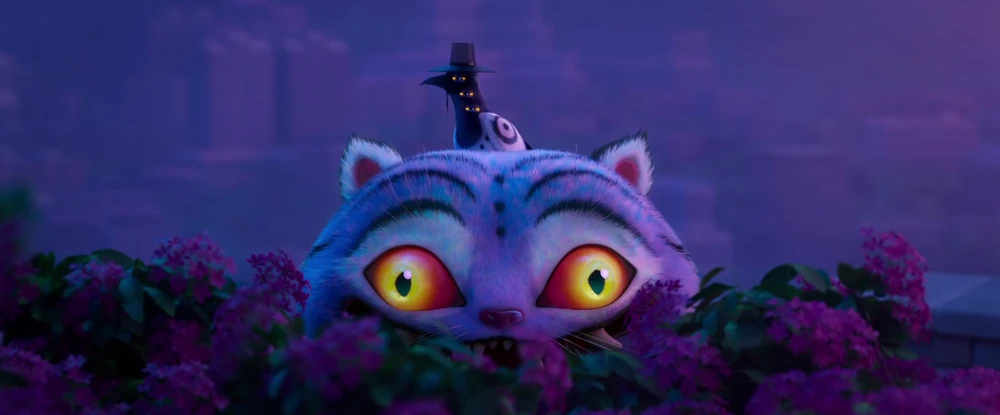
In “K-Pop Demon Hunters,” Sussie (서씨) is the sleek magpie companion who travels with Derpy the tiger. Unlike the clumsy, goofy Derpy we explored in our tiger post, Sussie has a sharp, streamlined body—but with supernatural features that make her instantly recognizable: three pairs of eyes arranged vertically like traffic lights, and a beak filled with sharp teeth reminiscent of ancient Archaeopteryx!
The name “Sussie” comes from “sus eye” (suspicious eye)—because this magpie is always giving everyone the side-eye with those six watchful eyes! Reflecting the high intelligence that real magpies possess, Sussie often looks at Derpy with a judgemental, unimpressed expression that fans absolutely love. It’s the perfect visual representation of the magpie’s role in traditional Korean culture: always watching, always alert, always aware.
Sussie’s hat, by the way, was originally created by Jinwoo for the tiger but Sussie stole it and claimed it as her own—a perfectly magpie-like behavior that reflects these clever birds’ real-life mischievous nature!
Hojakdo Connection: Why Tigers and Magpies Appear Together
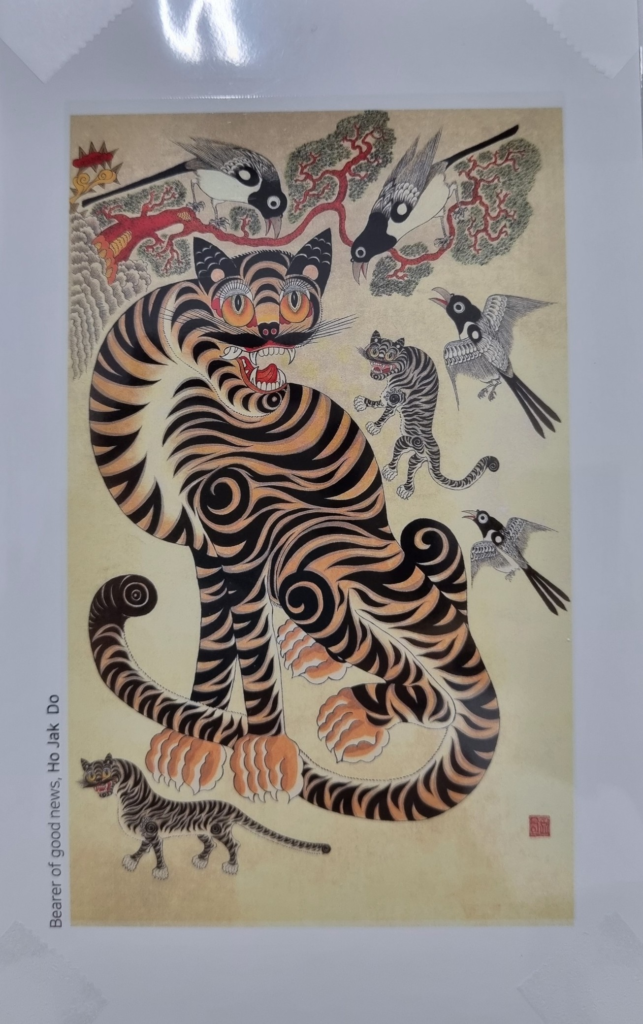
As we discussed in our tiger post, the pairing of Derpy and Sussie isn’t random—it’s based on Hojakdo (호작도), the traditional Korean painting style showing tigers and magpies together. In these paintings, the tiger often appears foolish or clumsy while the small magpie remains confident and clever.
This artistic tradition perfectly explains both character designs in K-Pop Demon Hunters. Just like in Hojakdo paintings, Derpy is initially threatening but reveals a goofy, lovable personality, while Sussie is sharp, intelligent, and always judging. The Netflix creators honored centuries of Korean art tradition while making it accessible to global audiences!
A Unique Korean Creation
Interestingly, among all characters in K-Pop Demon Hunters—main characters, supporting roles, extras, humans, animals, and yokai—Sussie is the only one whose design doesn’t come directly from traditional Korean or East Asian mythology. While Derpy comes from the comical tigers in Hojakdo paintings, the six-eyed magpie is an original creation for the animation. The closest mythological creatures are the three-eyed dog (삼목구/신구) and birds with triple features like the three-legged crow (삼족오).
But why did Netflix’s creators choose a magpie as the companion? Because in Korean folklore and traditional beliefs, magpies are incredibly special!
What Kind of Bird is the Magpie?
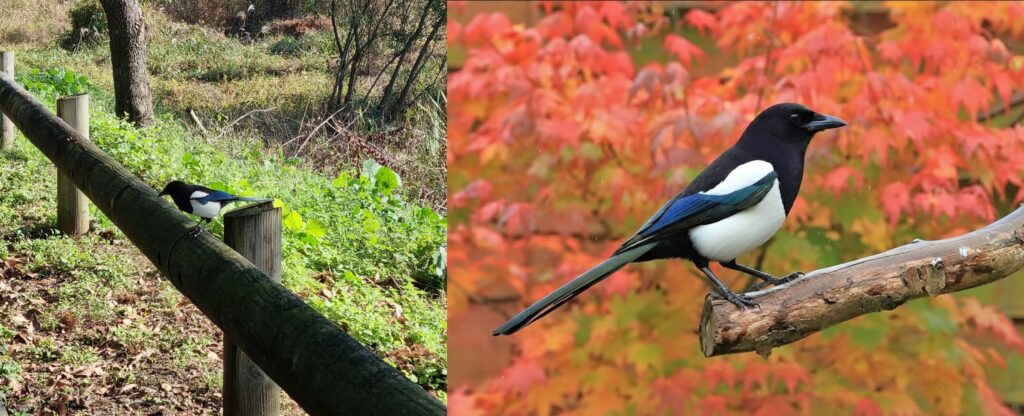
Have you ever noticed a black-and-white bird making “caw-caw” sounds while watching Korean dramas or movies? That’s the Korean magpie! With black and white plumage, this medium-sized bird is smaller than a crow but features a distinctively long tail. For Koreans, this bird holds special meaning that goes far beyond its beautiful appearance.
The magpie is a resident bird of Korea, visible year-round throughout the Korean Peninsula, including Jeju Island! “Resident bird” means it doesn’t migrate with the seasons like many other birds—it stays in one place throughout the year. Like a friendly neighbor, it’s always there!
The magpie measures about 45cm in body length, with its most distinctive feature being a 24cm-long tail. Its wings, belly, and shoulders are white, while the rest of its body is black with green or purple iridescence. It looks like it’s wearing a formal tuxedo—elegant and dignified!
Tougher Than It Looks
Despite its cute appearance, the magpie is actually a very tough bird—just like Sussie’s sharp teeth suggest! Living in Korea, I witnessed this firsthand. Magpies hunt small animals like snakes, frogs, and mice! In rural areas, you can sometimes see magpies catching snakes.
Magpies are highly territorial birds. They fearlessly attack crows or other birds that enter their territory. Despite their small size, they have the personality of brave warriors. This characteristic is why Koreans view magpies as symbols of “gentle on the outside, strong on the inside”—a trait perfectly captured in Sussie’s suspicious, judgemental gaze with those six ever-watchful eyes!
The Magpie as a Good Luck Symbol: Why Koreans Believe Magpies Bring Fortune
There’s a Korean saying: “When a magpie chirps in the morning, a welcome guest will arrive.” Is this just superstition? Or is there a scientific reason?
Because magpies are territorial animals, they chirp as a warning when a stranger enters their territory. In old Korean villages where houses were far apart, a magpie’s call genuinely meant someone was approaching the house! It was like a natural doorbell.
Since ancient times, magpies have been considered one of the most important good luck symbols in Korean culture—auspicious birds believed to bring fortune and positive news. There was even a belief across the country that killing a magpie was sinful. Even in modern times, when Korea held a poll in 1964 to choose a “national bird,” the magpie came in first place, and many Korean cities have designated the magpie as their symbolic bird.
This is why in K-Pop Demon Hunters, having a magpie companion like Sussie represents protection and good fortune! Her six eyes watching in all directions symbolize the magpie’s traditional role as an alert guardian who sees dangers and opportunities that others miss.
Korean Folklore Animals: The Grateful Magpies Legend
One of the most famous Korean folk tales is “The Grateful Magpies.” This story is a nationally transmitted folk tale that teaches moral lessons through animal gratitude and is a perfect example of Korean animal symbolism—and it helps explain why Sussie is so loyal to Derpy in the Netflix animation!
The Story
Long ago, a scholar was traveling to the capital to take the civil service examination. While crossing a mountain, he heard magpies crying desperately. When he approached, he saw a large snake attacking a magpie’s nest, trying to eat the baby magpies. The scholar shot the snake with his arrow and saved the baby birds.
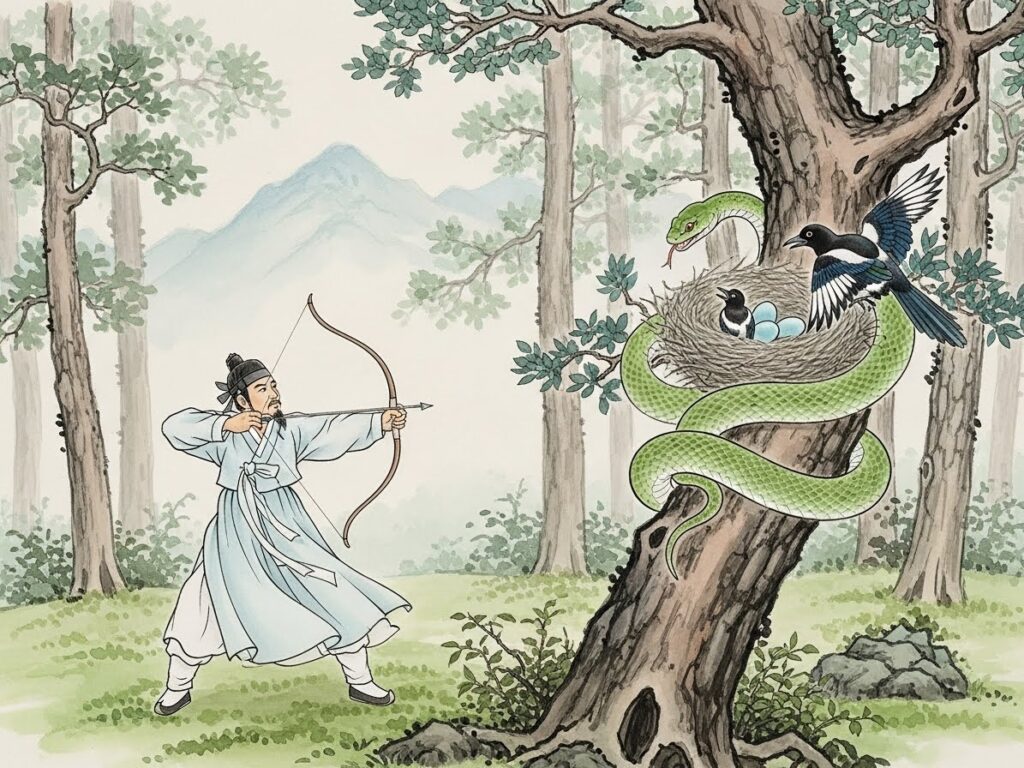
That night, the scholar found shelter at a tiled house deep in the mountains. A beautiful woman appeared and served him a lavish feast. But when he tried to sleep, the woman transformed into a giant snake! She revealed that she was the wife of the snake the scholar had killed during the day.
The snake woman said: “If the temple bell rings three times before dawn, I will spare your life. But if it doesn’t ring, you will die for killing my husband.”
The scholar was in despair—how could a temple bell ring three times in the middle of the night?
But the mother magpie—the same one whose babies the scholar had saved—had been watching. She flew alone to the distant temple and began striking the bell with her own head. Once… the sound echoed through the night. Twice… her head bled but she continued. Three times… the bell rang through the darkness!
True to her word, the snake woman disappeared, and the scholar’s life was saved.
When dawn broke, the scholar rushed to the temple. There, beneath the bell, he discovered the mother magpie lying dead. She had struck the bell with her head until it rang three times, sacrificing her life to repay the scholar’s kindness to her children.
The Story’s Lesson
This story isn’t just about animal gratitude. The mother magpie’s self-sacrifice contains profound meaning about loyalty, gratitude, and the sacred bond between those who help each other. It shows why magpies hold such a special place in Korean hearts—they’re not just clever birds, but symbols of unwavering loyalty and the willingness to sacrifice everything for those they care about.
This tale shows just how special magpies are in Korean culture and why they remain one of Korea’s most beloved folklore animals. The magpie’s intelligence, bravery, and loyalty in the story reflect the traits that real magpies possess—and the same qualities that make Sussie such a memorable character in K-Pop Demon Hunters! When you watch Sussie protecting Derpy or making clever decisions, you’re seeing centuries of Korean cultural values embodied in one six-eyed character.
Magpies Connecting Heavenly Lovers: The Magpie Bridge Story
Another famous story featuring magpies is the “Gyeonu and Jiknyeo” legend. This romantic tale is beloved throughout East Asia, including Korea, China, and Japan, and demonstrates the magpie’s role in Korean traditional beliefs as a connector of love and fortune.
The Gyeonu and Jiknyeo Story
The heavenly cowherd Gyeonu and the weaver Jiknyeo fell in love and married, but they neglected their work. The angry Jade Emperor separated them to opposite sides of the Milky Way. When the separated couple cried in sadness, their tears fell to earth and caused floods.
Moved by their plight, people and animals gathered and decided that once a year, on the seventh day of the seventh lunar month (Chilseok), crows and magpies would fly up to heaven and form a bridge with their bodies. This bridge is called ‘Ojakgyo’ (Magpie Bridge). In this word, ‘O (烏)’ means crow and ‘Jak (鵲)’ means magpie.
According to legend, after Chilseok day, crows and magpies lose the feathers on their heads because Gyeonu and Jiknyeo stepped on them while crossing the bridge. What devoted birds!

Modern Meaning in Korea
The Ojakgyo isn’t just an old story. At Gwanghallu Pavilion in Namwon, Jeollabuk-do, there’s an actual bridge called Ojakgyo, which appears in the famous story of Chunhyang as the place where Chunhyang and Lee Mongryong fell in love.
In modern Korean, the expression “to play the role of Ojakgyo” means “to act as a matchmaker” or “to connect lovers.” The magpie isn’t just a bird—it’s a messenger of love! This is another layer to Sussie’s character in K-Pop Demon Hunters—she helps connect the team and facilitates their bonds.
Magpies in Korean Folk Art: Animal Symbolism in Hojakdo Paintings
Let’s return to the Hojakdo painting that inspired both traditional art and modern characters like Derpy and Sussie! As we discussed in our tiger post, in Hojakdo paintings, the tiger symbolizes corrupt officials or powerful people, while the magpie represents the common folk. The tiger is depicted as foolish while the magpie is portrayed confidently, showing the tiger struggling against the magpie.
This isn’t just a simple painting. It’s an allegorical and satirical representation of class conflict. In Joseon Dynasty society with its strict class system, common people must have felt catharsis viewing such paintings. “We can be as strong as that confident magpie!”
The Hojakdo painting completely transformed in Joseon to become a representative theme of Korean folk art. Even Hodori, the mascot of the 1988 Seoul Olympics, was inspired by this magpie-tiger painting tradition!
In Netflix’s K-Pop Demon Hunters, this traditional dynamic is playfully honored—Derpy the tiger is clumsy and goofy (like we explored in our tiger post), while Sussie the magpie is sharp, intelligent, and always judging with those six suspicious eyes! It’s a modern take on centuries-old symbolism that Netflix has brilliantly adapted for global audiences.
Magpies in Modern Korea: Living Good Luck Symbols
Today, magpies remain beloved in Korea as living symbols of good fortune. Korean farmers deliberately leave some ripe fruit on trees when harvesting, calling it ‘magpie food’ (kkachi-bap). After all, magpies need to eat too! This practice shows the long coexistence between Koreans and magpies.
Also, when children lose baby teeth, there’s a custom of throwing them onto the roof, believing that magpies will take the old teeth and bring new ones. It’s similar to the Western “Tooth Fairy”!
Fun Korean Expressions Related to Magpies
For those learning Korean, here are some magpie-related expressions that reveal the bird’s importance in Korean culture:
- Kkachi-seollal (까치설날): The day before New Year’s Day. Originally “achi-seol” meaning “little New Year,” it transformed through association with the similar-sounding word for magpie.
- Kkachi-bap (까치밥): Grain or fruit deliberately left behind during harvest
- Kkachi sori deutda (까치 소리 듣다): To hear good news
- Ojakgyo-reul nota (오작교를 놓다): To connect lovers, to play matchmaker
These expressions appear in everyday Korean conversation, keeping the magpie’s cultural presence alive even in modern times!
Want to See Magpies Yourself?
Planning to visit Korea? Magpies are easy to spot in both cities and countryside! Magpies have strong adaptability and thrive well even in human cities—you can even find them on Jeju Island!
Especially if you visit Seoul’s parks, palaces, or traditional villages, you’ll hear the magpie’s distinctive “caw-caw” call. You might also spot their nests on utility poles or large trees.
A word of caution when observing magpies: Despite their small size, magpies are brave and strong birds! They can become aggressive near their nests to protect their young, so maintain a respectful distance. Remember Sussie’s suspicious eyes? Real magpies are always watching with the same alertness!
From Folklore to Netflix: Why Magpies Continue to Captivate
The journey from ancient Korean folklore to Netflix’s global animation K-Pop Demon Hunters shows just how deeply magpies are embedded in Korean culture. Sussie the magpie isn’t just a cute character—she represents centuries of Korean beliefs about intelligence, protection, and good fortune.
The creators of K-Pop Demon Hunters understood this cultural significance. By making Sussie intelligent, suspicious, and protective (unlike the goofy Derpy), they honored the traditional view of magpies as wise, alert creatures. The supernatural six eyes? That’s a brilliant creative twist on the magpie’s reputation for seeing everything and knowing when strangers approach—just like in the old saying about magpies announcing visitors!
This is what makes K-Pop Demon Hunters such a successful adaptation of Korean culture—it takes these deep cultural symbols and makes them accessible to global audiences through Netflix, while still respecting the original meanings that Koreans have cherished for millennia.
Conclusion: Why Magpies Are Special as Korean Good Luck Symbols
From tiger stories to magpie tales, from ancient folklore to Netflix’s viral animation, you now understand why these birds are so special, right? Magpies aren’t just familiar animals—they’re powerful symbols in Korean folklore and traditional culture that continue to inspire modern creators worldwide.
In Korean folklore and traditional beliefs, the magpie represents:
- A messenger of good news and fortune
- A brave and loyal animal (The Grateful Magpies)
- A connector of love (Ojakgyo)
- A voice for common people (Hojakdo)
- An intelligent, watchful guardian (Sussie!)
It embodies all these meanings as one of Korea’s most cherished good luck symbols.
Next time you watch K-Pop Demon Hunters on Netflix and see Sussie’s six suspicious eyes judging everyone, watch a Korean drama and spot a magpie, or hear a “caw-caw” sound in Korea, remember this post. You’ll appreciate just how many stories and meanings are contained in that small black-and-white bird—and why it remains one of Korea’s most beloved animal symbols of fortune and hope, from ancient times to modern streaming platforms worldwide!
Related Posts:
- Korean Tiger Symbolism: Why Derpy Became the K-pop Demon Hunters’ TigerKorean Tiger Symbolism: Why Derpy Became the K-pop Demon Hunters’ Tiger
- Why Koreans Laughed at Tigers: Korean Tiger Symbolism From Past to Present
- When Tigers Made Korea Laugh: The Dried Persimmon Tale and More
- Korean Tiger Wisdom: When Tigers Became Philosophers
Shared by Oldtree of Mindgrove
Stories of Korea © 2025