This article is part of my series on Korean Myths & Symbols.
Quick Answer
The tiger is Korea’s most iconic animal — not just as a symbol of power and protection, but also as a figure of humor, wisdom, and deep cultural identity. In Korean folklore, tigers sometimes appear as fearsome mountain gods, sometimes as bumbling philosophers, and sometimes as the butt of the joke. Remarkably, this duality is exactly what makes the Korean tiger so unique.
Why the Tiger?
If you’ve ever seen the 1988 Seoul Olympics mascot Hodori, laughed at Derpy the tiger in the K-pop Demon Hunters, or heard the phrase 호랑이 담배 피우던 시절 (the days when tigers smoked tobacco), you’ve already met Korea’s most beloved animal symbol.
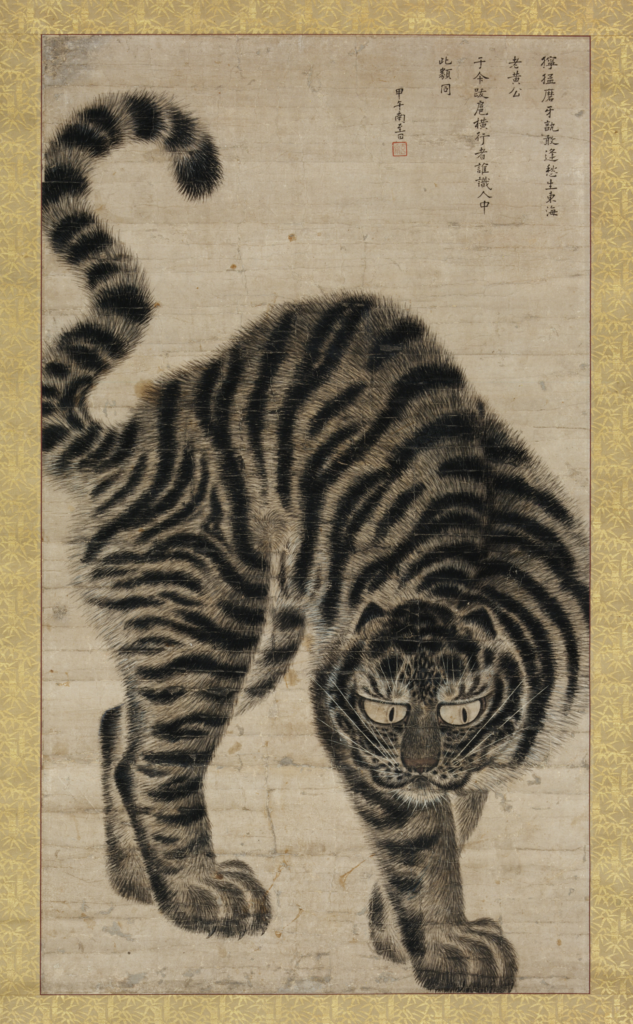
Korea has no wild tigers today — hunters killed the last Siberian tiger on the Korean peninsula in the early 20th century. Yet the tiger never left Korean culture. Instead, it lives on in folk paintings, proverbs, folk tales, Olympic mascots, and now idol group merchandise. Understanding why requires a journey through thousands of years of Korean history.
Part 1: The Tiger as Mountain God and Guardian
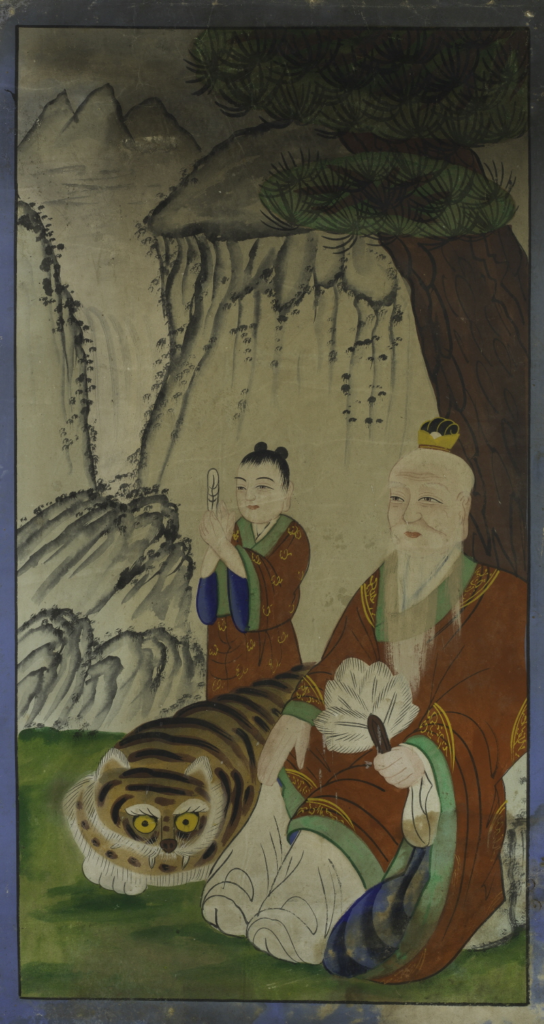
Long before Korea had a written history, people worshipped the tiger as the spirit of the mountains — the Sanshin (산신, Mountain God). Koreans considered mountains sacred in their shamanism (무속, musok), and the tiger served as their guardian.
This reverence shows up everywhere in traditional culture: in the paintings that hung in village shrines, in the stories that explained why harvests succeeded or failed, and in the rituals people performed before entering the forest. Furthermore, the Korean mountain tiger wasn’t simply feared. Unlike the Western lion — majestic and untouchable — the Korean tiger often carried a surprisingly human quality. He could learn. He could practice humility. A small child could even outwit him.
→ Dive deeper: Korean Tiger Wisdom: When Tigers Became Philosophers
Part 2: The Tiger Who Got Fooled — Korean Folk Humor
One of the most distinctive aspects of Korean tiger symbolism is humor. In a culture where people often feared the powerful, folk tales gave ordinary people a way to laugh at authority — and the tiger, as the strongest creature in the mountains, became the perfect stand-in.
The most famous example is the Dried Persimmon (곶감, gotgam) story. A crying child falls silent not because of the tiger growling outside, but because the mother offers a dried persimmon — leading the tiger to conclude that whatever a “gotgam” is, something must be even more terrifying than himself. However, these stories weren’t just silly entertainment. They carried real wisdom: cleverness beats brute strength, pride leads to downfall, and even the mightiest creature can face humbling circumstances.
→ Read the full folk tales: When Tigers Made Korea Laugh: The Dried Persimmon Tale and More
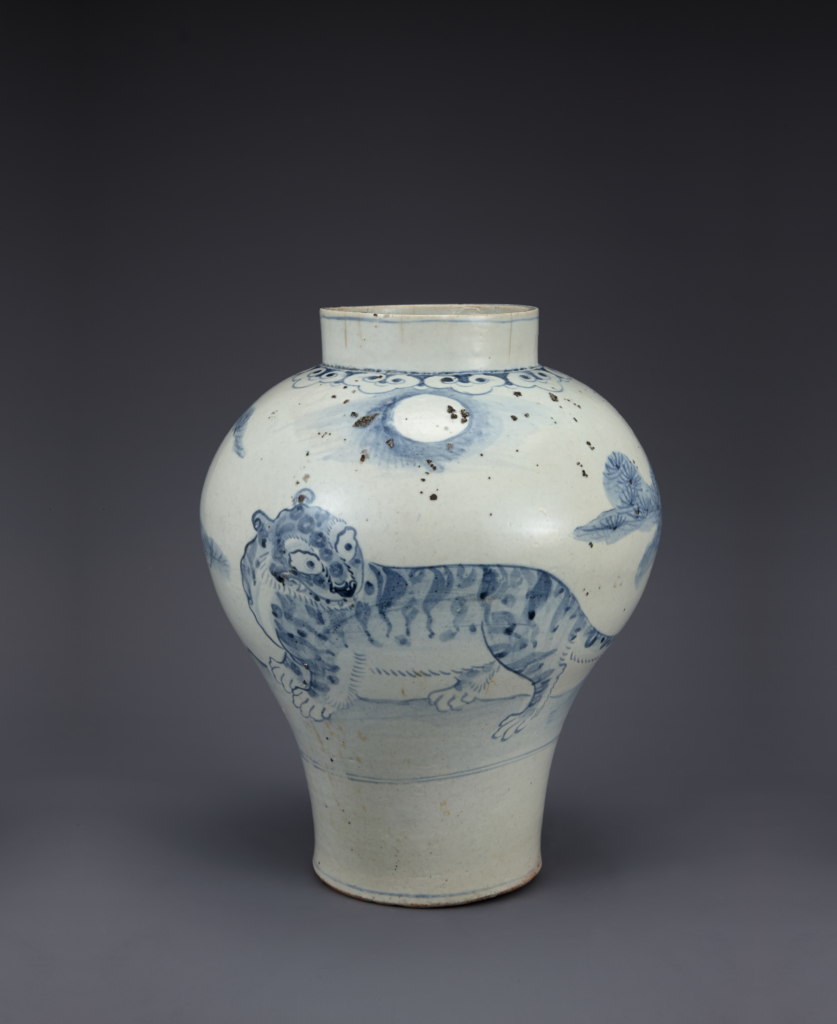
Part 3: The Laughing Tiger in Minhwa Folk Art
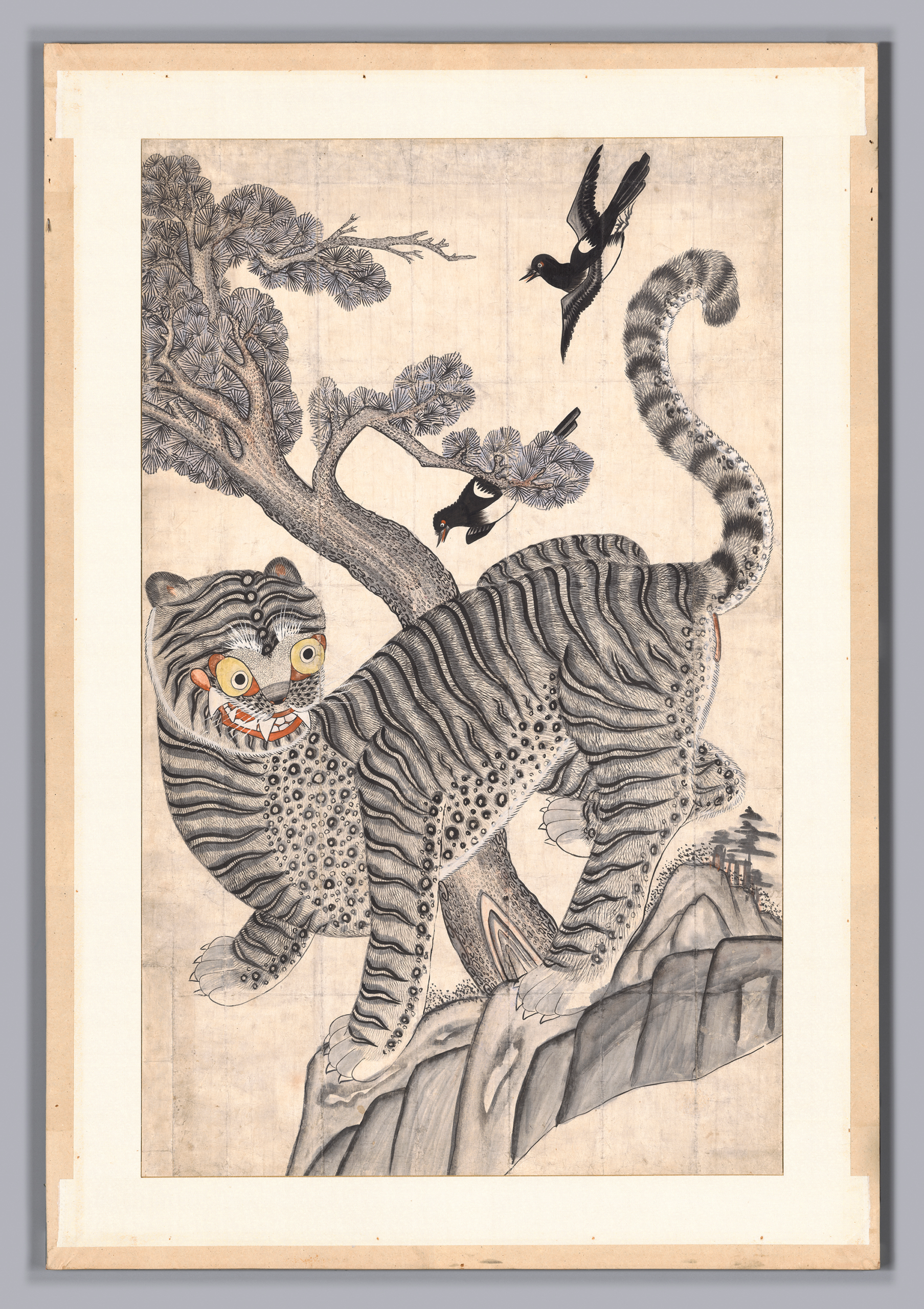
Walk through any museum of Korean folk art (민화, minhwa), and you’ll notice something unusual: the tigers are often grinning. Some sit awkwardly, others look almost cartoonish, and magpies (까치) frequently mock them.
This tradition of the “laughing tiger” stands as one of the most distinctive expressions of Korean aesthetic sensibility. While Chinese and Japanese artists typically portray tigers with ferocity, Korean minhwa painters make their tigers look like they’re in on the joke. In fact, art historians see this as a reflection of the Korean han (한) tradition — the coexistence of sorrow and laughter, of acknowledging hardship while refusing to surrender to it. In short, the tiger laughs because Koreans laugh.
→ Explore the full history: Why Koreans Laughed at Tigers: Korean Tiger Symbolism From Past to Present
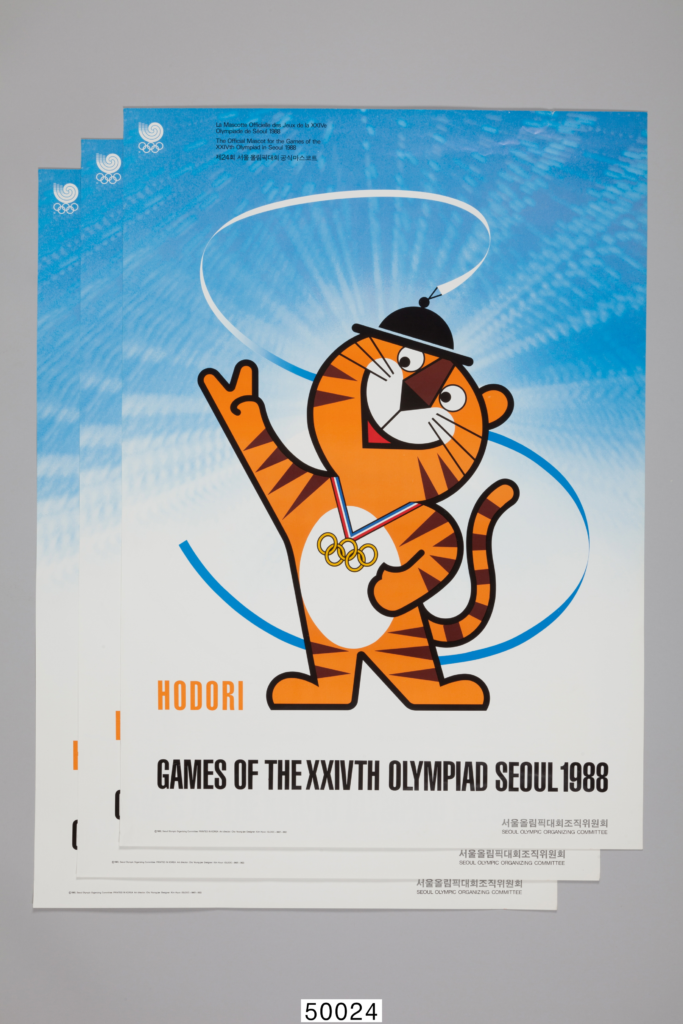
Part 4: The Tiger in Modern Korea — From Olympics to K-pop
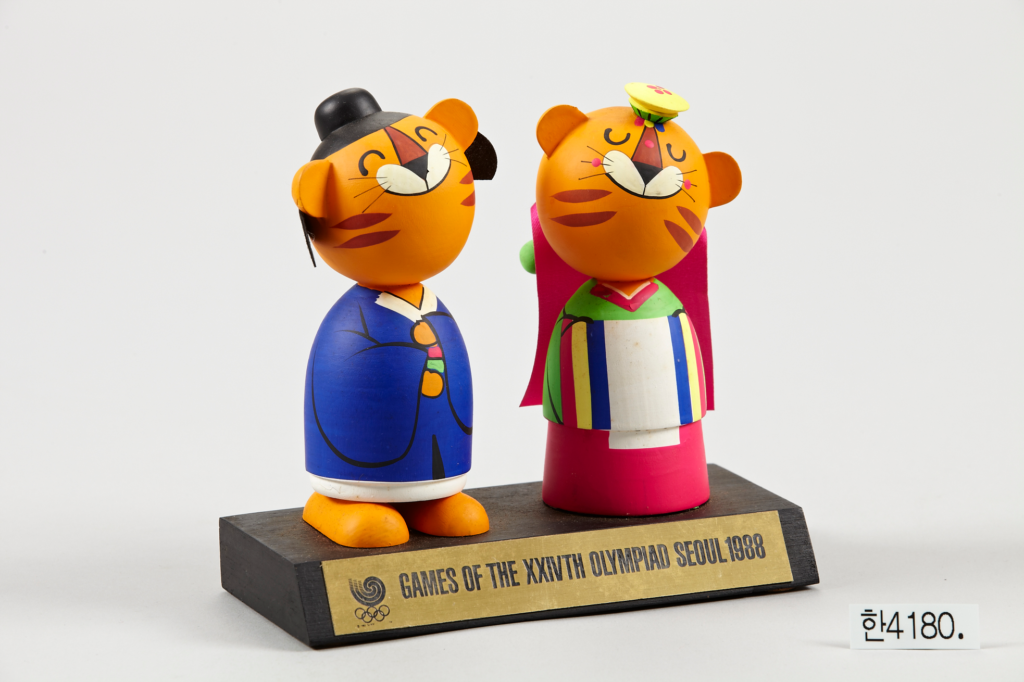
The tiger didn’t stay in folklore. In 1988, the Seoul Olympics introduced Hodori (호돌이) — a friendly, ribbon-wearing tiger cub — to the world. Korea made a deliberate choice: presenting itself as a nation with deep roots and a playful spirit, not just an economic miracle.
Today, the tiger lives on in K-pop and Korean animation. The character Derpy in the webtoon and Netflix series K-pop Demon Hunters embodies exactly this duality — ancient power expressed through a comically loveable form. For international fans, moreover, Derpy became an entry point into understanding why Koreans hold such an affectionate relationship with this animal.
→ See how the tiger became a K-pop icon: Korean Tiger Symbolism: Why Derpy Became the K-pop Demon Hunters’ Tiger
The Tiger’s Dual Nature: A Summary
Korean tiger symbolism is so rich precisely because it refuses to be one thing. The same animal is:
- A sacred mountain god who protects villages
- A bumbling fool outwitted by persimmons and grandmothers
- A philosophical figure who teaches wisdom through failure
- A beloved national mascot representing Korean identity to the world
This is not contradiction — it reflects how Koreans have always understood power: as something that humility, humor, and humanity must temper.
My Personal Experience
Growing up in Korea, tigers surrounded me — on snack packaging, in storybooks, in school murals. Nevertheless, I never thought deeply about why until I started this blog and began tracing the threads backward.
What surprised me most was the consistency of the tiger’s character across time. The same slightly embarrassed grin that appears in a Joseon-era minhwa painting also shows up in Hodori, in Derpy, and in the way Koreans talk about strength with a side of self-deprecation — proudly, but always ready to laugh at themselves in the same breath. Ultimately, the tiger didn’t change. Korea just kept carrying it forward.
Related Questions in This Series
- Korean Tiger Wisdom: When Tigers Became Philosophers
- When Tigers Made Korea Laugh: The Dried Persimmon Tale and More
- Why Koreans Laughed at Tigers: Korean Tiger Symbolism From Past to Present
- Korean Tiger Symbolism: Why Derpy Became the K-pop Demon Hunters’ Tiger
Shared by Oldtree of Mindgrove
Stories of Korea © 2026
Leave a Reply