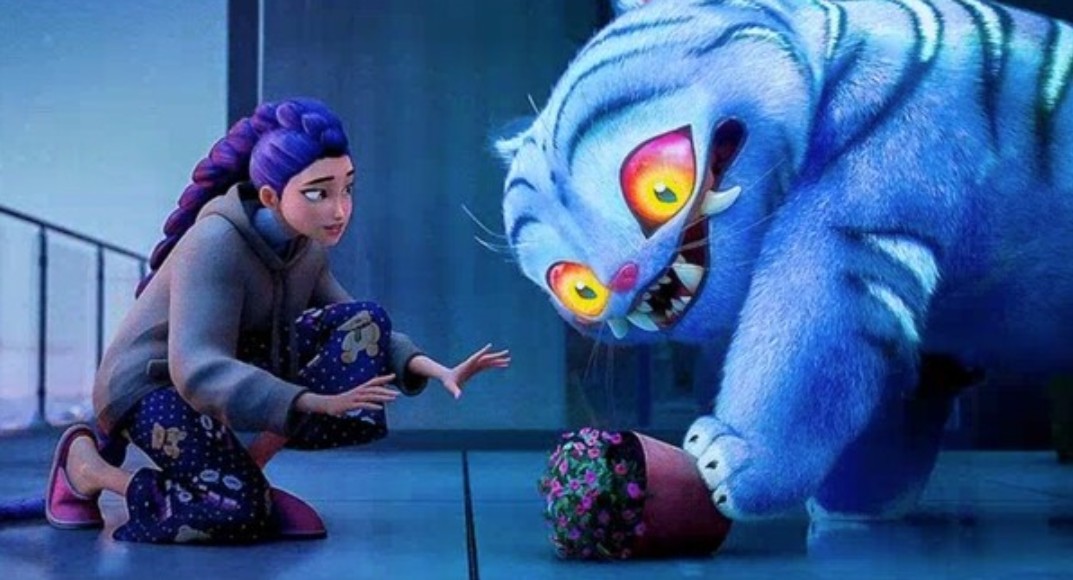
The Adorable Korean Tiger Character, Derpy
If you’ve been watching K-pop Demon Hunters, you’ve probably fallen in love with Derpy, the adorable tiger character who delivers messages between Jinwoo and Rumi. At first glance, Derpy appears intimidating and fierce, but as the story unfolds, this clumsy, lovable tiger wins hearts with its endearing personality. Derpy’s design is a perfect example of Korean tiger symbolism — how tigers in Korea represent both strength and humor in traditional culture.
But have you ever wondered why the creators chose a tiger as such an important character? The answer lies deep within Korean culture, where tigers hold a special place that goes back thousands of years.
As a Korean who grew up hearing countless tiger stories from my grandmother, I can tell you that tigers are woven into the very fabric of Korean identity. They’re not just animals – they’re symbols, protectors, and even comedic characters in our folklore. Let me take you on a journey to understand why tigers, and specifically characters like Derpy, resonate so deeply with Korean audiences.
When Tigers Were Real in Korea
Here’s something that might surprise you: Korea was once home to a thriving population of wild tigers. These magnificent creatures roamed the Korean peninsula freely, living in the mountains and forests. Sadly, Korean tigers are now extinct in South Korea, with only a few possibly remaining in the remote regions near Baekdu Mountain in North Korea. The last confirmed sighting of a wild Korean tiger in South Korea was in the 1920s during the Japanese colonial period.
Despite their physical absence, tigers have remained incredibly present in Korean consciousness. Why? Because for centuries, these animals were both feared and revered. They were real threats to people’s lives, but they also became powerful symbols of strength, courage, and protection.
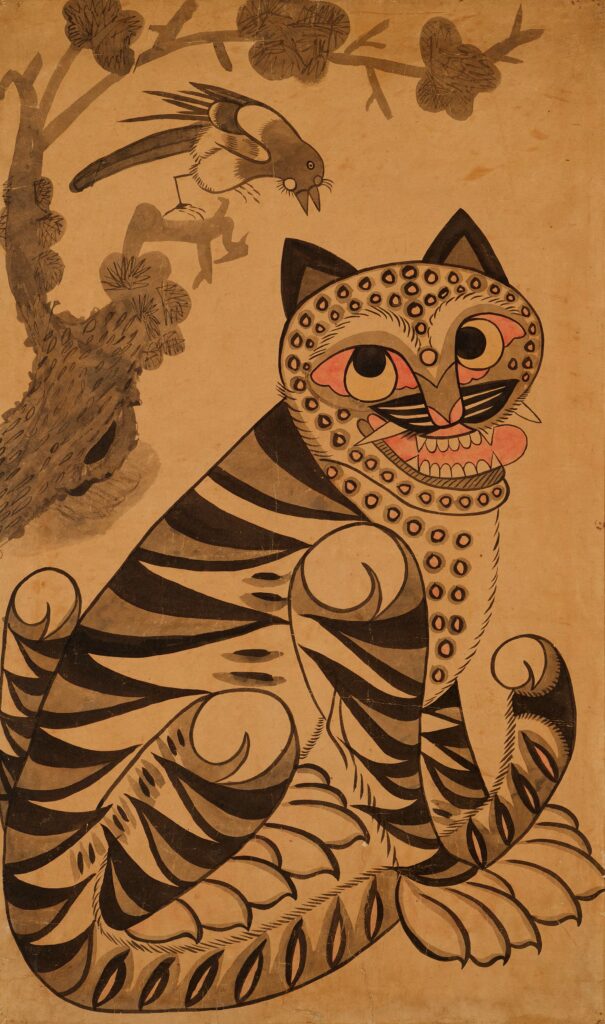
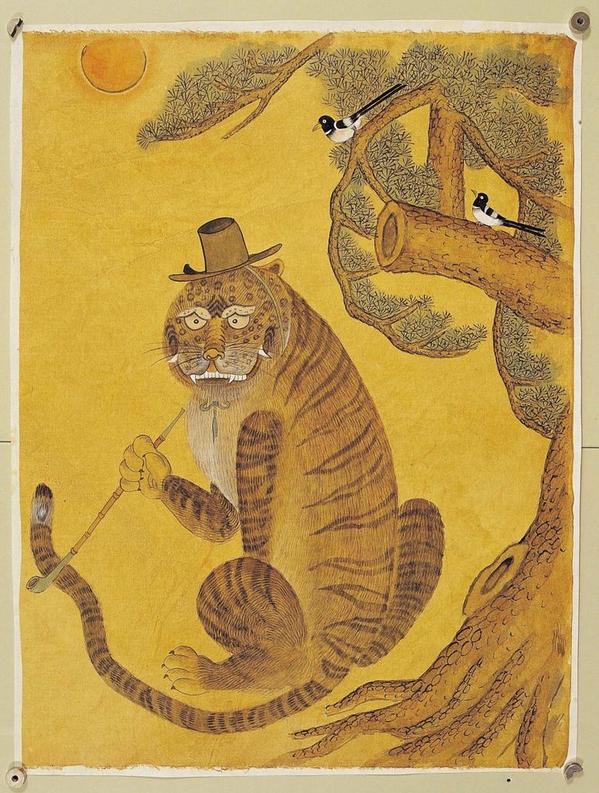
In K-pop Demon Hunters, Derpy appears alongside a magpie character, which is another deliberate cultural choice. While tigers have disappeared from Korea’s landscape, magpies remain common birds you can see throughout the country today. This pairing isn’t random – it’s based on a traditional Korean painting style called “Hojakdo” (호작도), which literally means “tiger and magpie painting.”
Hojakdo: Where Fierce Meets Funny
Hojakdo paintings are fascinating because they show a completely different side of tigers than you might expect. In these traditional artworks, tigers are often depicted in humorous, almost cartoonish ways. Instead of looking fierce and threatening, they appear clumsy, surprised, or even silly. The tiger might be looking up at a magpie in a tree with an expression that seems to say, “How did you get up there?”
This artistic tradition perfectly explains Derpy’s character design in K-pop Demon Hunters. Just like the tigers in Hojakdo paintings, Derpy starts off looking intimidating but quickly reveals a goofy, endearing personality. This isn’t just a creative choice – it’s the creators paying homage to centuries of Korean artistic tradition.
In traditional Korean culture, Hojakdo paintings had symbolic meanings too. The tiger often represented government officials or authority figures, while the magpie symbolized common people or good news. These paintings were believed to bring good fortune and ward off evil spirits, which is why you’d often find them hanging in homes during the New Year period.
The humor in Hojakdo reflects something important about Korean culture: the ability to find lightness even in fearsome things. Tigers could kill you, but Koreans chose to also laugh at them, to make them less terrifying through art. This same spirit lives on in characters like Derpy.
Hojakdo paintings are perhaps the clearest example of Korean tiger symbolism, where humor and reverence coexist in perfect balance.
Living With Tigers: Fear and Reality
To understand how significant tigers were in Korean life, you need to know about some historical terms. When someone was killed by a tiger, Koreans called it “hohwan” (호환), which literally means “tiger disaster.” This term was used alongside natural disasters like floods and famines – that’s how serious tiger attacks were.
The government took tiger threats so seriously that they created a special position called “Chakhogapsa” (착호갑사), which means “tiger-hunting inspector.” These were official government employees whose entire job was to hunt tigers and protect villages. Imagine that – a job title specifically for tiger hunting! This shows you just how common and dangerous tiger encounters were in historical Korea.
But here’s where it gets interesting: despite this fear, Koreans never tried to completely demonize tigers. Instead, they incorporated tigers into their stories, their language, and their humor. It’s a uniquely Korean approach – respecting the danger while also finding ways to live alongside it, at least culturally.
I remember my grandfather telling me that when he was young, people in remote mountain villages would still talk about tiger sightings. Even though encounters were becoming rare by then, the cultural memory remained strong. Tigers were the original “big scary thing” in Korean consciousness, yet they were also sources of pride and cultural identity.
This enduring respect mixed with fear shows the dual nature of Korean tiger symbolism that continues even without real tigers today.
Tigers in Korean Language
One of my favorite things about Korean culture is how tigers appear in our everyday expressions. When Koreans want to say “once upon a time” or “a long, long time ago,” we literally say “In the days when tigers smoked tobacco” (호랑이 담배 피던 시절).
Now, tigers obviously never smoked tobacco! But this whimsical phrase serves as a marker for “so long ago that even impossible things might have happened.” It’s used to start fairy tales and folk stories, immediately transporting listeners to a mythical time. Whenever Korean parents begin a bedtime story with this phrase, children know they’re about to hear something magical.
This expression shows the playful relationship Koreans have with tigers in storytelling. Tigers appear in countless Korean folktales – sometimes as fearsome predators, sometimes as wise creatures, and often as surprisingly foolish characters who get outsmarted by clever rabbits or humans.
There’s one particularly famous tale about a tiger who overhears a mother soothing her baby with dried persimmons (gotgam) and becomes convinced that “gotgam” must be a terrifying monster even scarier than himself! The full story is hilarious and perfectly captures Korean storytelling style – but I’ll save the complete version for our next article in this series. Just know that this tale has been making Koreans laugh for centuries, and it shows how we loved to make even fearsome tigers look foolish.
Why Derpy Feels So Right
Now you can start to see why Derpy isn’t just a random cute character – the tiger design is deeply intentional. The creators of K-pop Demon Hunters drew from a rich well of Korean cultural tradition when they designed this character. Derpy embodies:
– “The Hojakdo tradition” of humorous, approachable tigers
– “The messenger role” that tigers and magpies play in folklore
– “The protective aspect” of tigers in Korean belief systems
– “The modern Korean tendency” to make traditional symbols cute and accessible
For Korean viewers, seeing Derpy immediately activates these cultural associations. We recognize the Hojakdo aesthetic in the character design. We understand why a tiger is paired with a magpie. We appreciate the humor in making this fearsome traditional symbol into a clumsy, lovable character.
For international viewers, Derpy is simply adorable and entertaining. But knowing the cultural background adds so much more depth to the experience. You’re not just watching a cute tiger character – you’re seeing centuries of Korean culture, history, and artistic tradition condensed into one design.
A Glimpse Into Tiger Stories
Korean folklore is full of tiger stories that reveal our unique sense of humor and values. Beyond the famous dried persimmon tale I mentioned, there are stories of:
– “Grateful tigers” who remember kindness and repay it
– “Foolish tigers” who get tricked by clever humans
– “Wise tigers” who teach moral lessons
– “Protective tigers” who guard mountains and sacred places
Each of these story types reflects different aspects of how Koreans viewed tigers – not as simple monsters to be feared, but as complex beings worthy of respect, laughter, and even admiration.
In our next article, we’ll explore how Korea itself is shaped like a tiger, and what that geographic identity means for Korean culture. We’ll also look at how tigers appear in modern Korean life, from sports mascots to popular culture, and why they remain such powerful symbols even though the real animals are gone.
Your Tiger Journey Begins
I’d love to hear from you! Have you noticed other Korean cultural elements in K-pop Demon Hunters or other Korean media? Did you already know about the tiger’s importance in Korean culture, or was this new to you?
As someone who grew up with these tiger stories and symbols, I find it fascinating to see how they’re being reimagined for modern global audiences through characters like Derpy. It’s a beautiful example of how traditional culture can evolve and remain relevant across generations and borders.
Related Questions You Might Have
- [Korean Tiger Symbolism: The Complete Guide] — Start here for the full picture of how tigers became Korea’s most iconic symbol
- Korean Tiger Wisdom: When Tigers Became Philosophers — How Joseon-era folk tales turned the tiger into an unlikely teacher
- When Tigers Made Korea Laugh: The Dried Persimmon Tale and More — The folk stories where Korea’s mightiest animal keeps getting outsmarted
- Why Koreans Laughed at Tigers: Korean Tiger Symbolism From Past to Present — From minhwa folk paintings to modern culture, why the laughing tiger endures
Shared by Oldtree of Mindgrove
Stories of Korea © 2025
Comments
2 responses
[…] In Part 1, we discovered why the adorable Deofi from K-pop Demon Hunters actually roots itself in de… We learned about Hojakdo paintings, the phrase “when tigers smoked tobacco,” and how real tigers once roamed the peninsula. Now, let’s explore something even more fascinating: **Korean tiger identity** – how Korea itself embodies this magnificent animal and why this connection defines Korean cultural identity today. […]
[…] In Parts 1 and 2, we explored the cultural depth behind Deofi from K-pop Demon Hunters. We learned about Hojakdo paintings, discovered that Korea itself takes the shape of this majestic creature, and saw how these animals remain powerful symbols in modern life. […]