The Country That Looks Like a Tiger
In Part 1, we discovered why the adorable Derpy from K-pop Demon Hunters actually roots itself in deep Korean cultural traditions. We explored Hojakdo paintings, the famous phrase “when tigers smoked tobacco,” and the way real tigers once roamed the peninsula.
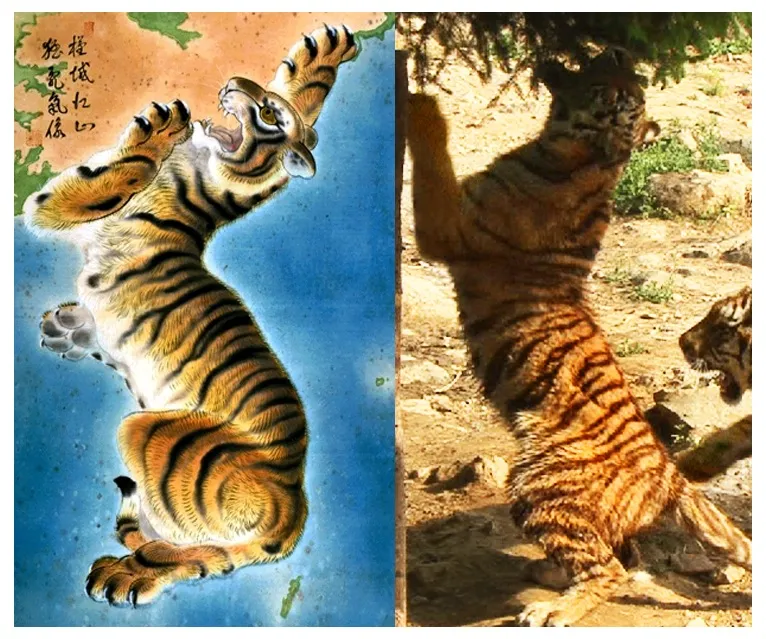
Now, let’s dive deeper into something even more fascinating: Korean tiger identity — the idea that Korea itself embodies the tiger, both in its geography and cultural imagination. Here’s something that surprises many people: the Korean peninsula is often described as having the shape of a tiger. While some see a rabbit, the version taught in Korean schools shows Korea standing upright like a tiger with its front paw raised. This geographic interpretation has become a powerful source of national pride, shaping how Koreans see themselves for generations.
This sense of identity connects directly to Korean tiger symbolism, which is full of humor, surprise, and cultural meaning. From old folktales where tigers were tricked by dried persimmons to modern symbols like Hodori, Korea’s beloved 1988 Olympic mascot, the playful and wise tiger has shaped how Koreans understand courage, wit, and even comedy.
Finding the Tiger in the Map
Look at a map of the Korean peninsula. The northern border with China forms the tiger’s head and raised front paw. The eastern coast creates the tiger’s back, running down its spine. The western coast curves to form the tiger’s belly and hind legs. And on the southeastern tip, there’s even a specific location representing the tiger’s tail.
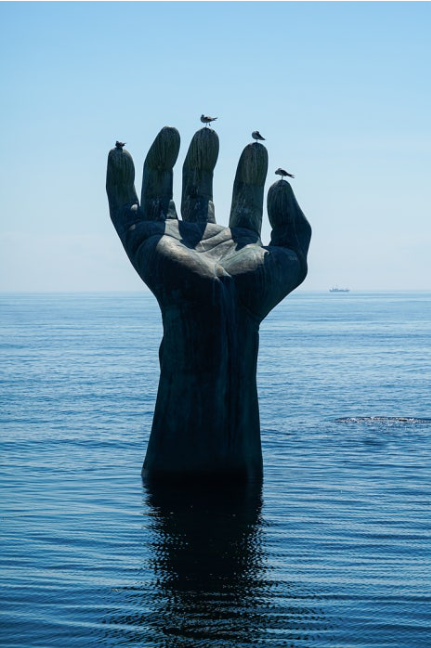
This geographic Korean tiger identity influenced place names across the country. On the southeastern coast, you’ll find a location called “Homigot” (호미곶), literally meaning “tiger’s tail cape.” The name directly references Korea’s tiger-shaped geography – this marks where the tail would be!
Homigot has become famous as one of the best places to watch the sunrise. Every New Year’s Day, thousands gather there to witness the first light of the year. A huge sculpture of two hands – one rising from the sea, another on land – symbolizes cooperation and harmony. But the location’s name itself constantly reminds us of how Koreans view their country through the tiger’s image.
Growing up, I learned this tiger-shaped geography concept in elementary school, and it always made me feel a certain pride. Our country wasn’t just any shape – it was a powerful tiger! This geographic identity connects to why these animals remain so important in our cultural consciousness, even long after they vanished from our mountains.
For more information about Korean geography and cultural symbols, visit [VisitKorea](https://english.visitkorea.or.kr) or explore the [National Museum of Korea](https://www.museum.go.kr/site/eng/home).
The Story Behind the Story
Here’s something fascinating about this tiger-shaped geography concept: it’s more modern than many people realize. Understanding its origins makes the story even more interesting.
The Historical Context:
Before the 1900s, Koreans used different metaphors to describe their peninsula. Historical records show our ancestors viewed the land as:
– An old man’s form (described in the Joseon-era text 《Taengni-ji》)
– A flounder’s domain (called “Jeopyeok” 접역, referencing mythical symbolism)
– Various other regional interpretations
The specific idea of our nation as tiger-shaped emerged in the early 20th century, during a time of significant change and national identity formation.
A Modern Symbol:
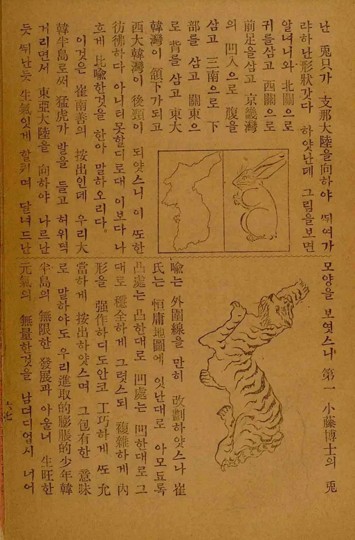
In 1900-1902, Japanese geologist Goto Bunjiro surveyed Korea and published papers describing the peninsula as rabbit-shaped, detailing which provinces formed which body parts.
In 1908, scholar Choi Nam-seon encountered this idea and responded in Korea’s first modern youth magazine, 《Sonyeon》 (Youth). He introduced an alternative view: Korea as tiger-shaped. This reframing emphasized strength, courage, and power – qualities Koreans wanted to see in their national identity.
How It Became Real:
The tiger-shape concept spread through education and culture, especially after liberation. In the 1970s-80s, it appeared prominently in textbooks. Professor An Cheon, who worked on textbook committees, later shared that he deliberately included the famous “Geunnyeok Gangsan Maengho Gisangdo” (槿域江山猛虎氣象圖) painting to express national spirit.
Generations of Korean children – including me – grew up learning this geography. We traced the tiger’s outline in school. We felt pride in our tiger-shaped homeland.
Why This Matters:
What began as a 20th-century idea transformed into genuine cultural identity. The concept may be modern, but the emotions it carries and the meaning it has acquired over more than a century are absolutely real.
When modern Koreans see our peninsula as tiger-shaped, we’re connecting to:
– The maps we studied in elementary school
– The national pride our teachers taught us
– The tiger spirit our culture celebrates
– The geographic identity that feels naturally true to us
– Characters like Derpy that tap into this consciousness
The Complexity Is Part of the Story:
Culture isn’t only about ancient traditions. Sometimes the most meaningful symbols are the ones communities actively choose and make their own. Korea’s tiger shape shows how:
– Communities create identity through shared belief
– Modern symbols can become genuinely meaningful
– Geography and culture intertwine
– National pride takes many forms
Yes, this is a 20th-century concept. And yes, it has become deeply meaningful to Korean identity. Both things are true, and that’s what makes it fascinating.
Tigers as Protectors and Guardians
Beyond geography and folklore, tigers have served as symbols of protection in Korean culture for centuries. This protective aspect appears in multiple forms:
In Spiritual Traditions:
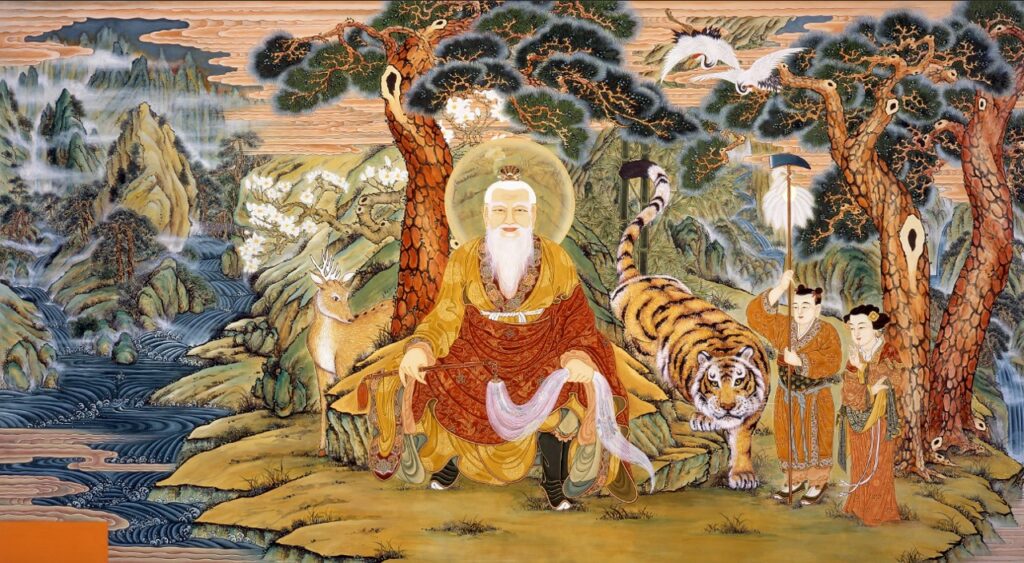
Korean shamanism, which influenced much of traditional spiritual practice, often featured tigers as sacred beings associated with mountain spirits. The mountain god (Sansin, 산신) appears frequently as an old man with a tiger by his side. Even today, if you visit old Buddhist temples in Korea’s mountains, you’ll often find a small shrine dedicated to the mountain spirit, featuring tiger imagery.
This wasn’t just decorative. People believed that tigers protected the mountains and the natural world. They served as intermediaries between the human realm and the spirit realm. A tiger wasn’t just a dangerous predator – it was a guardian with spiritual power.
In Daily Life:
In traditional Korean culture, people believed tiger images warded off evil spirits. Families placed them at gates or on walls to protect homes and villages. During important celebrations like New Year, they would hang tiger paintings or decorations to bring good fortune and protection for the coming year.
This protective symbolism appears in K-pop Demon Hunters too. Derpy isn’t just a cute messenger – the character also serves as a guardian figure, protecting and guiding the main characters. This echoes centuries of tradition where tigers played protective roles.
The 1988 Seoul Olympics: Hodori
One of the most famous modern examples of Korean tiger symbolism came in 1988. Hodori, the mascot of the Seoul Olympics, appeared as a friendly, smiling tiger wearing a traditional Korean hat (sangmo).
The Olympic organizers wanted a mascot that would represent Korean strength, spirit, and cultural identity to the world. They chose perfectly.
Hodori became incredibly popular, not just in Korea but internationally. The mascot appeared on everything from merchandise to stamps to commemorative coins. For many people around the world, Hodori provided their first introduction to the connection between Korea and tigers.
I was young during the 1988 Olympics, but I remember Hodori being everywhere – on TV, in stores, on posters. It was a moment of national pride, and the tiger stood at the center. Even today, older Koreans have fond memories of Hodori and what it represented: Korea showing itself to the world with confidence and joy.
The designers didn’t choose to make it look fierce or intimidating. Like the tigers in Hojakdo paintings, Hodori was friendly and approachable. This reflects the Korean approach to tigers – respect for their power, but also finding ways to make them friendly and accessible.

Tigers in Modern Korean Life
Today, even though wild tigers no longer roam Korea, their cultural presence burns stronger than ever. You’ll see tiger imagery everywhere in modern life:
Sports Teams:
Many Korean sports teams use tigers as mascots. The Kia Tigers baseball team stands as one of the most popular in the Korean Baseball Organization. Their logo features a fierce tiger, and fans wear tiger-striped clothing to games. The connection between Korean identity and tigers makes this animal a natural choice for teams wanting to project strength and pride.
Pop Culture:
Beyond Derpy in K-pop Demon Hunters, tigers appear frequently in Korean dramas, webtoons, and games. Sometimes they’re fierce guardians, sometimes cute companions, but they’re almost always present in some form. Korean creators know that tiger imagery resonates with audiences on a deep level.
Cute Character Culture:
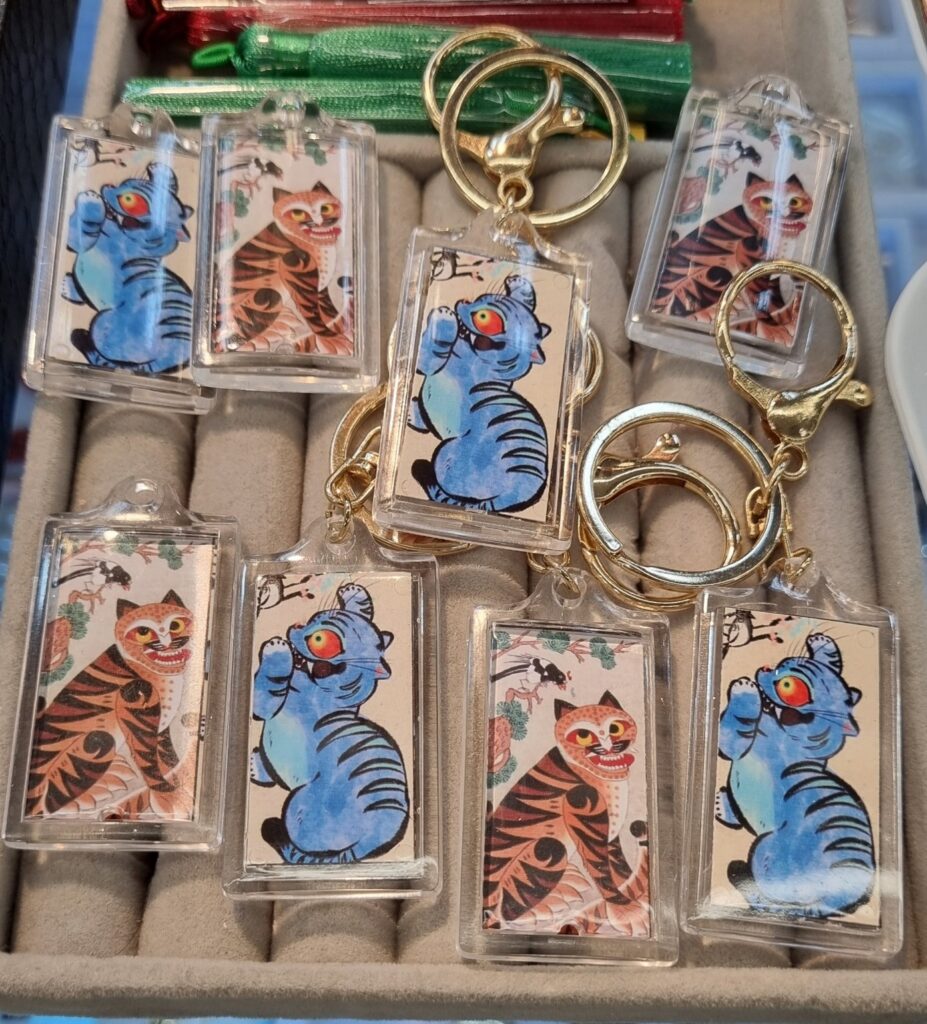
In contemporary Korean pop culture, tigers appear frequently but with a modern twist. Creators often portray them as cute and approachable rather than purely fierce. You’ll see tiger-themed cafes, tiger character merchandise, and tiger emoji and stickers that Koreans love using in messaging apps.
This trend toward “cute tigers” perfectly aligns with Derpy’s character design. It takes the traditional, powerful symbol and makes it accessible and lovable for modern audiences – especially younger generations who never knew real tigers but still feel that cultural connection.
The Tiger Spirit in Korean Character
There’s a Korean concept that’s hard to translate directly: “호랑이 기상” (horangi gisang), which roughly means “tiger spirit” or “tiger temperament.” It refers to a bold, brave character – someone who faces challenges head-on and doesn’t back down.
When Koreans want to compliment someone’s bravery or determination, they might say that person has “tiger spirit.” It’s a deeply positive trait, associated with the best qualities of tigers: strength, courage, and confidence.
This concept shows how deeply tigers are embedded in Korean psychology. We don’t just see tigers as animals or symbols – we aspire to embody tiger qualities in our own lives and characters.
In sports, you’ll hear commentators talk about athletes showing “tiger spirit” when they play with exceptional determination. In business, leaders who take bold risks might receive praise for their “tiger spirit.” It’s become shorthand for a particular kind of Korean strength and boldness.
Why Tigers Still Matter Today
You might wonder: why do tigers remain so important in Korean culture when they’ve been extinct in South Korea for over a century? Why haven’t they faded into historical curiosity?
The answer lies in what tigers represent:
Identity: The tiger-shaped peninsula means every Korean grows up knowing “we are tigers.” It’s part of national identity.
Continuity: Tigers connect modern Koreans to their ancestors. The same stories, the same symbols, the same pride – it creates cultural continuity across generations.
Values: Tigers represent qualities Koreans admire: strength, courage, protection, and even humor (remember the Hojakdo tradition). These values don’t go out of style.
Uniqueness: Tigers are distinctly Korean. While other cultures have their own important animals, the tiger is especially central to Korean identity in a way that makes it irreplaceable.
When you see Derpy in K-pop Demon Hunters, you’re seeing all of this compressed into one character. The designers didn’t just pick a cute animal – they picked THE animal that carries centuries of cultural meaning and modern national identity.
Tigers in Language: More Expressions
In Part 1, I mentioned “호랑이 담배 피던 시절” (when tigers smoked tobacco). But Korean has dozens of tiger-related expressions we use in daily conversation:
– “호랑이 없는 굴에 여우가 왕노릇한다” (In a den without tigers, the fox acts as king) – When truly capable people are absent, lesser ones take charge
– “호랑이도 제 말 하면 온다” (Speak of the tiger and it will come) – Similar to “speak of the devil”
– “호랑이 굴에 들어가야 호랑이를 잡는다” (You must enter the tiger’s den to catch a tiger) – Nothing ventured, nothing gained; you must take risks to achieve great things
These sayings keep tigers present in daily Korean conversation, even though the actual animals are gone. Every time someone uses one of these expressions, they’re continuing a tradition that goes back centuries.
From Geography to Pop Culture: The Complete Picture
Now you understand the full scope of Korean tiger culture:
– Geographic identity: Korea takes a tiger’s shape (modern but meaningful)
– Spiritual protection: Tigers as guardians and protectors
– National symbols: From Hodori to sports teams
– Daily language: Dozens of tiger expressions
– Pop culture: From traditional Hojakdo to modern characters like Derpy
– Personal values: “Tiger spirit” as an aspirational trait
All of these layers exist simultaneously in Korean consciousness. When a Korean sees Derpy, we’re not just seeing a cute character – we’re seeing our country’s shape, our cultural values, and our modern identity all wrapped into one.
For international fans, understanding these layers transforms how you experience Korean content. That tiger character isn’t random. That tiger reference isn’t just decoration. It’s tapping into something profound that lives in Korean hearts today.
What’s Next: The Stories That Made Us Laugh
We’ve explored how tigers shaped Korean geography and modern culture. But the real magic of Korean tiger culture lies in the stories – the tales told for centuries around evening fires, passed from grandparents to grandchildren, making Koreans laugh and think for generations.
In Part 3, we’re diving into the most beloved tiger tale in Korean culture: the complete story of the dried persimmon that I teased in Part 1. Trust me, it’s hilarious, it’s clever, and it perfectly captures Korean humor and storytelling style.
We’ll also explore touching stories of grateful tigers who repaid human kindness, showing that these fearsome predators could also teach lessons about loyalty and honor.
Get ready to laugh, be moved, and understand why these stories have survived for centuries!
Your Thoughts?
Before we move to the stories, I’d love to hear from you:
– Can you see the tiger shape in the Korean peninsula now?
– Have you noticed tiger symbolism in other Korean dramas or content you’ve watched?
– Does your culture have a similar geographic or animal identity?
For Korean readers: What’s your personal connection to tiger symbolism? Do you have a favorite tiger-related memory or family story?
Understanding Derpy and other tiger characters is understanding Korea itself. These aren’t just cute designs – they’re expressions of national identity, cultural pride, and meaningful traditions.
Related Questions You Might Have
- [Korean Tiger Symbolism: The Complete Guide] — Start here for the full picture of how tigers became Korea’s most iconic symbol
- Korean Tiger Wisdom: When Tigers Became Philosophers — How Joseon-era folk tales turned the tiger into an unlikely teacher
- When Tigers Made Korea Laugh: The Dried Persimmon Tale and More — The folk stories where Korea’s mightiest animal keeps getting outsmarted
- Korean Tiger Symbolism: Why Derpy Became the K-pop Demon Hunters’ Tiger — How the ancient laughing tiger found a new home in K-pop animation
Shared by Oldtree of Mindgrove
Stories of Korea © 2025
Comments
2 responses
[…] Parts 1 and 2, we explored the cultural depth behind Derpy from K-pop Demon Hunters. We learned about Hojakdo […]
[…] Coming Up Next: In Part 2, we’ll discover why Koreans see their entire country as a tiger, exp…You’ll understand why every Korean feels a special connection to this magnificent animal – even though we’ve never seen one in the wild. […]